
Loading, please wait...
LOT 1094
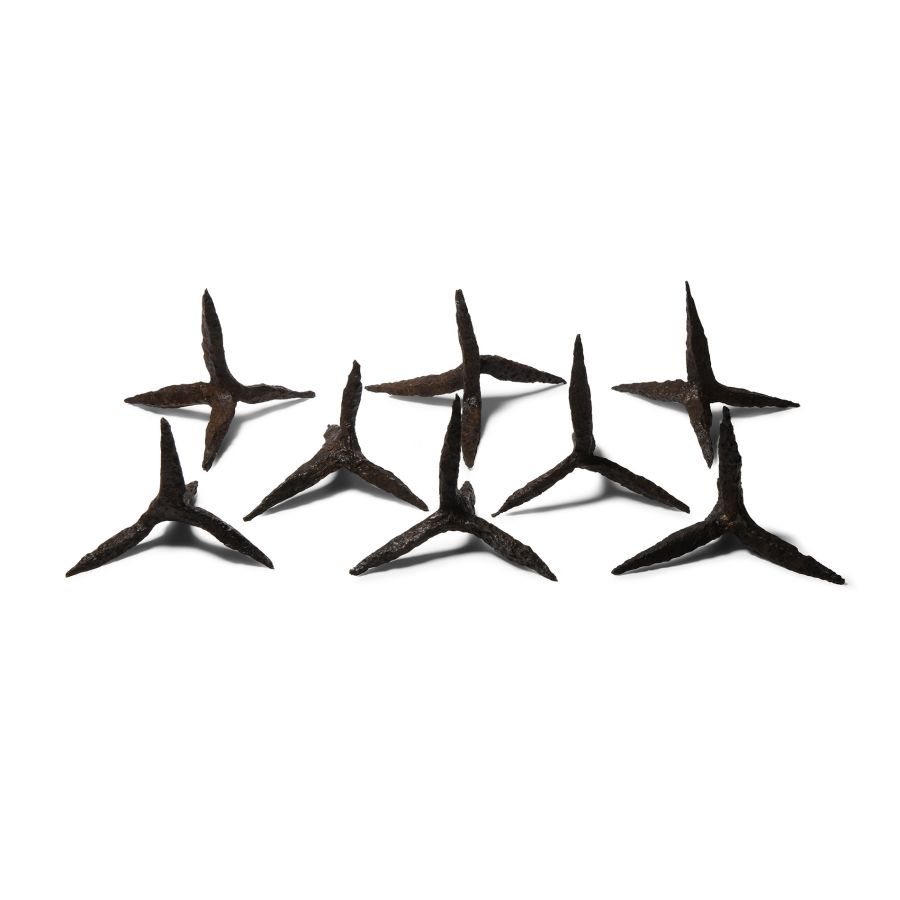
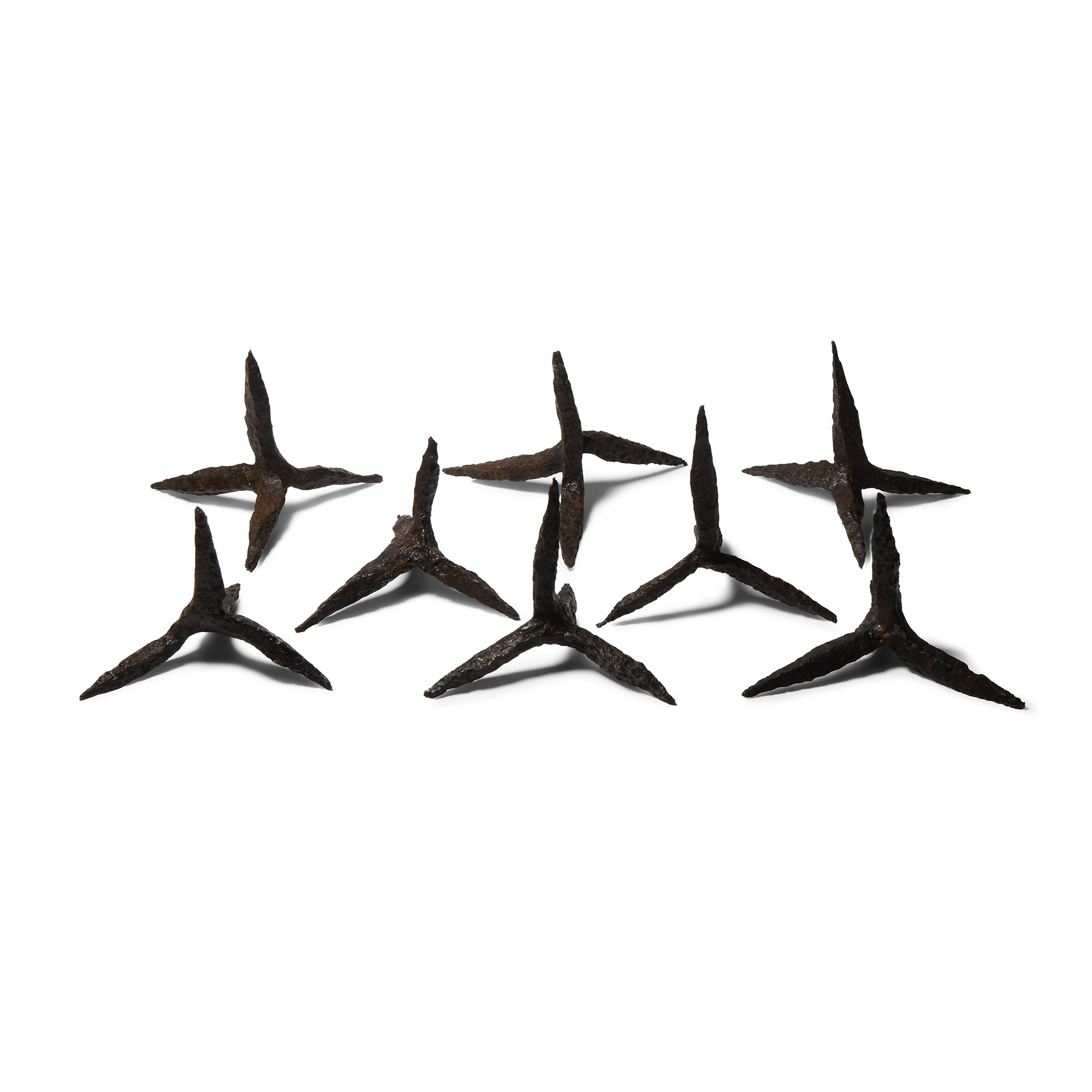
Roman Iron Anti-Cavalry Caltrop Group
3RD-4TH CENTURY A.D.
3 1/4 - 3 5/8 in. (494 grams total, 83-92 mm).
Comprising eight caltrops, hand-forged with square-section spikes. [8, No Reserve]
ProvenanceAcquired 1971-1972.
From the collection of the vendor's father.
Property of a London, UK, collector.
Cf. Beutler, F. et al., Der Adler Roms. Carnuntum und die Armee der Cäsaren, Bad-Deutsch-Altenburg, 2017, item 204, for type.
FootnotesCaltrops were scattered on battlefields in an effort to stop or slow advancing enemy cavalry or foot soldiers; regardless of how a caltrop lands, one spike is always facing upwards. Caesar used widely them at Alesia (Caes., BG 7.73; 82): 'Stakes a foot long, with iron hooks attached to them, were entirely sunk in the ground before these, and were planted in every place at small intervals; these they called spurs'.
CONDITIONTimeLine Auctions follows a vetting process to ensure the authenticity and legality of all items, reinforcing our commitment to integrity and responsible trading. Each antiquity, antique, and coin lot undergoes thorough examination by a vetting committee of at least ten external specialists, professional trade association members, scientists, and archaeologists: Our Vetting Process
AUCTIONS:
TimeLine is a leading auction house specialising in antiquities, ancient art, collectables, natural history, coins, medals, and books. Our auctions offer museums, collectors, historians, and enthusiasts the opportunity to acquire unique and historically significant pieces.
-
.jpg)
Evans Transitional 34-Shot Musket
1866-1867 A.D.Sold for (Inc. bp): £1,404
By Evans Repeating Co, with 71 cm (28") round barrel with 34 shot tubular magazine in butt and hinged back-sight, two-piece wood stock with steel butt plate, sling swivels, and collars; action working well and believed only 150 made. 3.85 kg, 117 cm
Acquired from M J Noble Ltd, UK, 2015. The Kusmirek Collection, UK. Accompanied by copies of the purchase invoice and listing.
Sold as an exempt item under Section 58 (2) of the Firearms Act, 1968, to be held as a curiosity or ornament. No license required but buyer must be over 18 years of age. Overseas bidders should note that, due to UK regulations governing export of all firearms, overseas buyers will need to make arrangements for shipping this lot out of the UK directly, by air freight, with a specialist company or agent. -
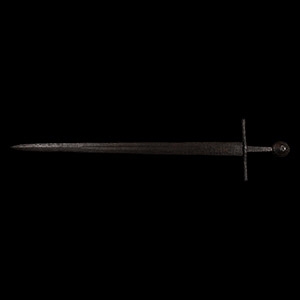
Medieval Iron Single-Handed Sword
Late 13th-early 14th century A.D.Sold for (Inc. bp): £3,640
Of Oakeshott Type XII or XIII with a double-edged, well-balanced tapering blade, shallow fullers and a parallel-sided straight lower guard of cross style 2; medium tang and disc pommel of type K with chamfered sides; the blade with later inlaid markings, one side with Passau wolf, the other side with cross within a circle; cleaned and conserved. 1.39 kg, 95 cm
fine condition, restored.
Acquired 1990s-early 2000s. East Anglian private collection. Accompanied by an academic report by Dr Raffaele D'Amato.
The sword’s blade presents analogies with a sword of type XIIIa (Aleksic, 2007, pl.7,1) sharing the same type of pommel and the same length of the fuller. The sword, found in the Danube near the village Visnjica, is now in the City Museum, Belgrad, and presents a cross and a wolf impressed on the blade and inlaid with a yellow metal. -
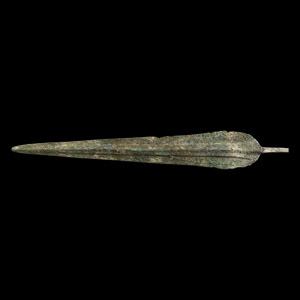
Luristan Bronze Sword Blade
1st millennium B.C.Estimate: £200 - 300 (+bp*)
Opening Bid: £60
Comprising a narrow leaf-shaped blade with midrib and lateral channels, rounded shoulders, short tang with attachment hole. 445 grams, 45.5 cm
Ex German collection, Cologne, formed 1980s-1990. The Kusmirek Collection, UK.
The metalworking techniques used in making bronze weapons in early Iran were very complex. Surfaces were often finished in repoussé work, and some of the weapons were chased, others engraved. The function of the ridges here was not only decorative, however, but principally to reduce suction and thus allow the blade to be withdrawn speedily. The ruling elites of warrior horsemen were buried in the graves with their weapons and horses which are the main sources of the Luristan and North-Western bronze weapons.
