
Loading, please wait...
LOT 0854
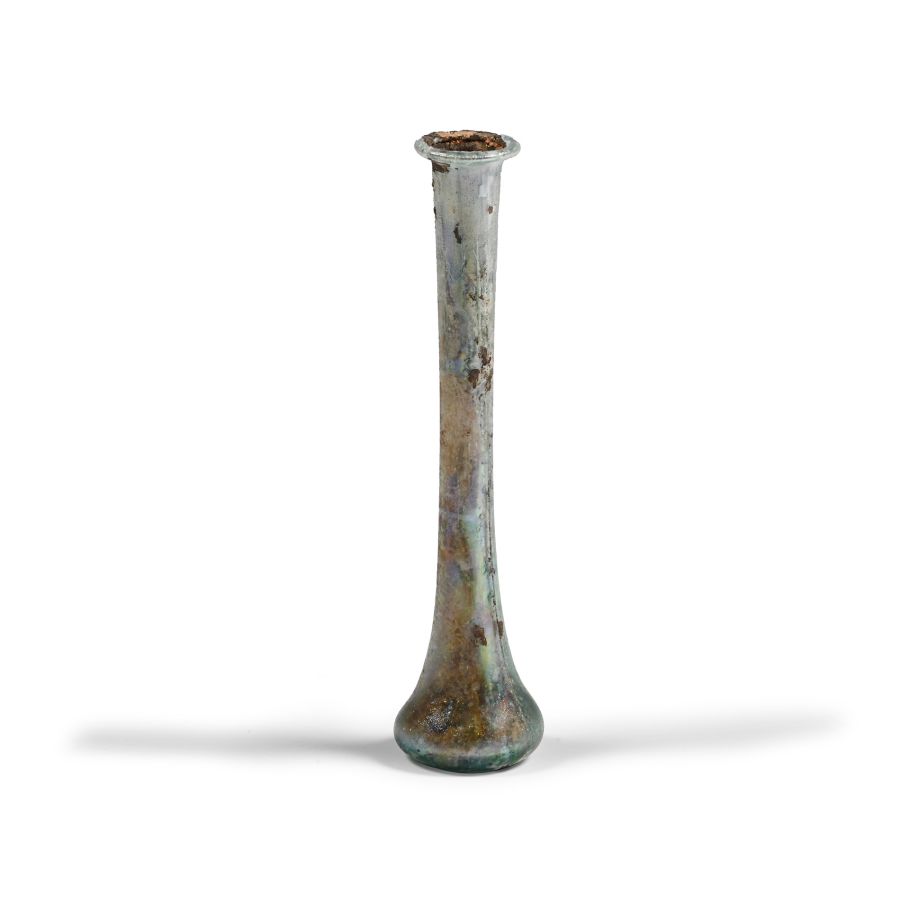
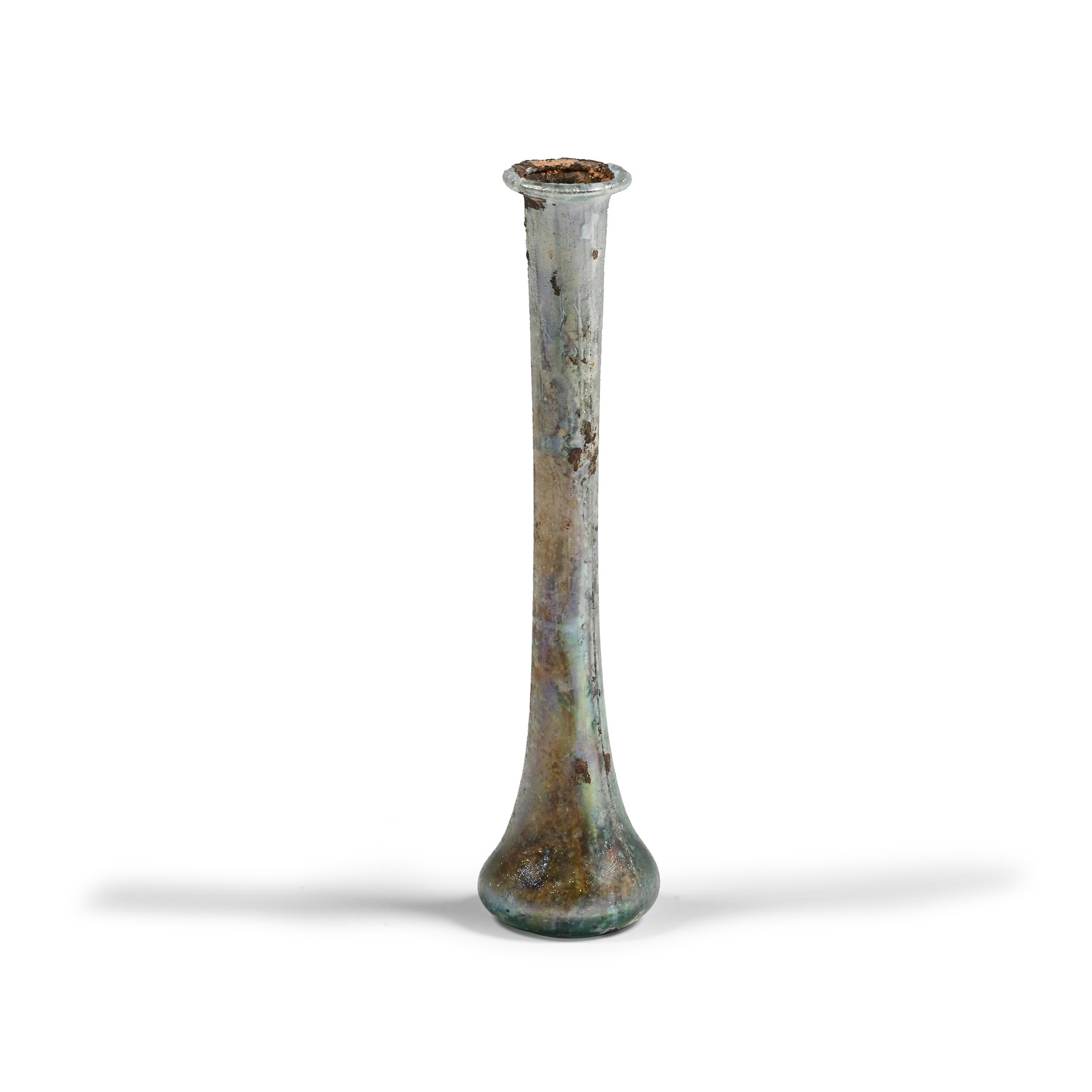
Roman Iridescent Glass Vial
3RD-4TH CENTURY A.D.
3 1/2 in. (7.72 grams, 88 mm high).
Greenish-light blue glass, long and narrow body, splayed rim.
ProvenanceAcquired 1980-2015.
Ex Abelita family collection.
Cf. Filarska, B., Szkla Starozytne (Ancient Glass) II vol., Warszawa, 1972, II, cat.279, pl.XLVII,6, for similar vial.
FootnotesDuring the early Roman period the glass-making techniques used by the Greeks were continued. Much of the glass was buried and as a result acquired an attractive lustrous patination. Roman glass became a medium for the promotion of the emperor and imperial propaganda, as well as being used as containers for various uses. Glass blowing, a new technique, meant that quantities of identical bottles could be produced.
CONDITIONTimeLine Auctions follows a vetting process to ensure the authenticity and legality of all items, reinforcing our commitment to integrity and responsible trading. Each antiquity, antique, and coin lot undergoes thorough examination by a vetting committee of at least ten external specialists, professional trade association members, scientists, and archaeologists: Our Vetting Process
AUCTIONS:
TimeLine is a leading auction house specialising in antiquities, ancient art, collectables, natural history, coins, medals, and books. Our auctions offer museums, collectors, historians, and enthusiasts the opportunity to acquire unique and historically significant pieces.
-
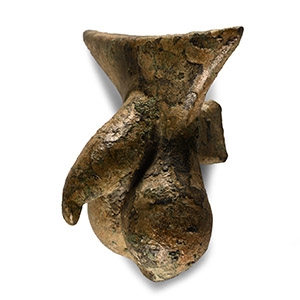
Roman Bronze Phallic Amulet
1st century A.D.-3rd century A.D.Sold for (Inc. bp): £715
Appliqué formed as male genitalia, hollow to the reverse with fixing peg. 52.5 grams, 40 mm
Private collection of Mr S.A., Switzerland, 1990s, thence by descent. -
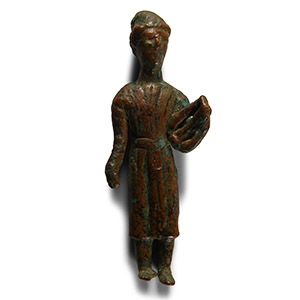
Gallo-Roman Bronze Statuette of a Lyre Player
Circa 2nd century A.D.Sold for (Inc. bp): £221
Standing wearing a three-quarter-length striped tunic belted at the waist and a tight-fitting cap, lyre resting on the left forearm. 59 grams, 77 mm
From a collection acquired on the UK art market from various auction houses and collections mostly before 2000. From an important Cambridgeshire estate; thence by descent. -
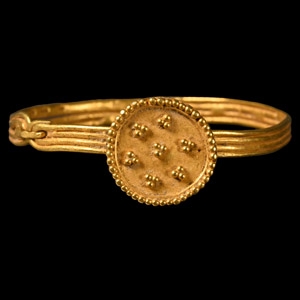
Late Roman Gold Bracelet for a Baby
Circa 4th-6th century A.D.Sold for (Inc. bp): £572
Comprising a penannular band formed of four wires soldered together, the rounded ends joined together with a simple loop; raised conical bezel with discoid face, set with seven granule clusters; Eastern Empire. 4.58 grams, 37 mm
From a private family collection formed in the 1970s.
