
Loading, please wait...
LOT 0837
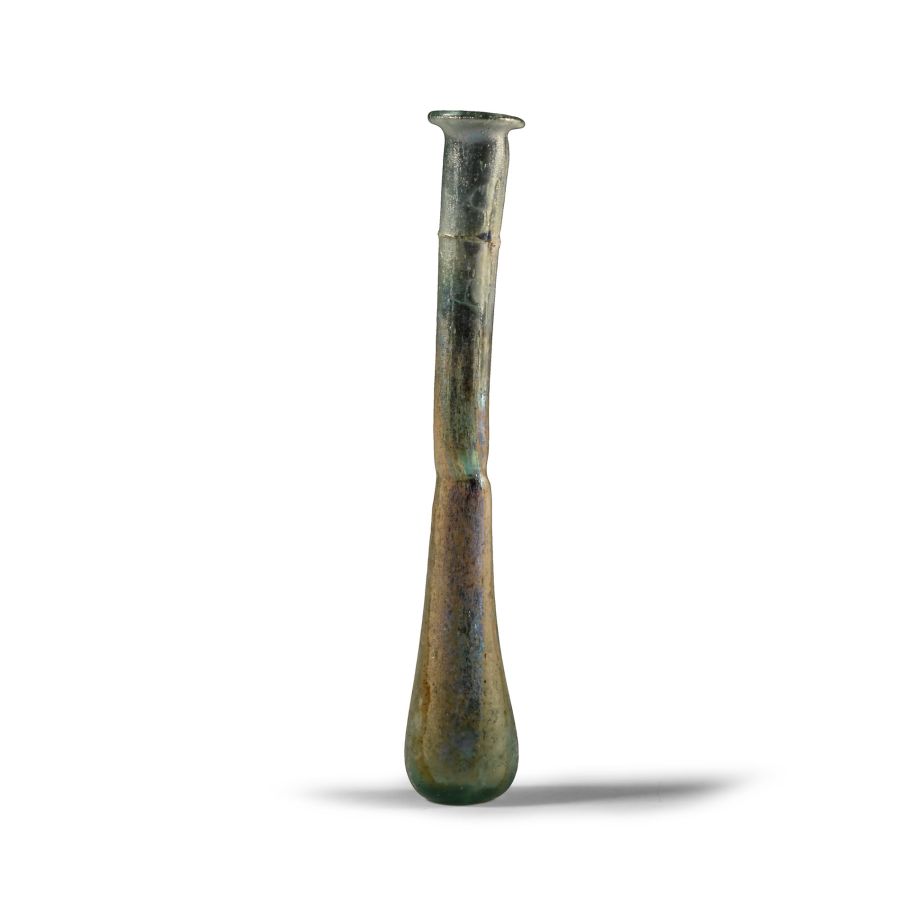
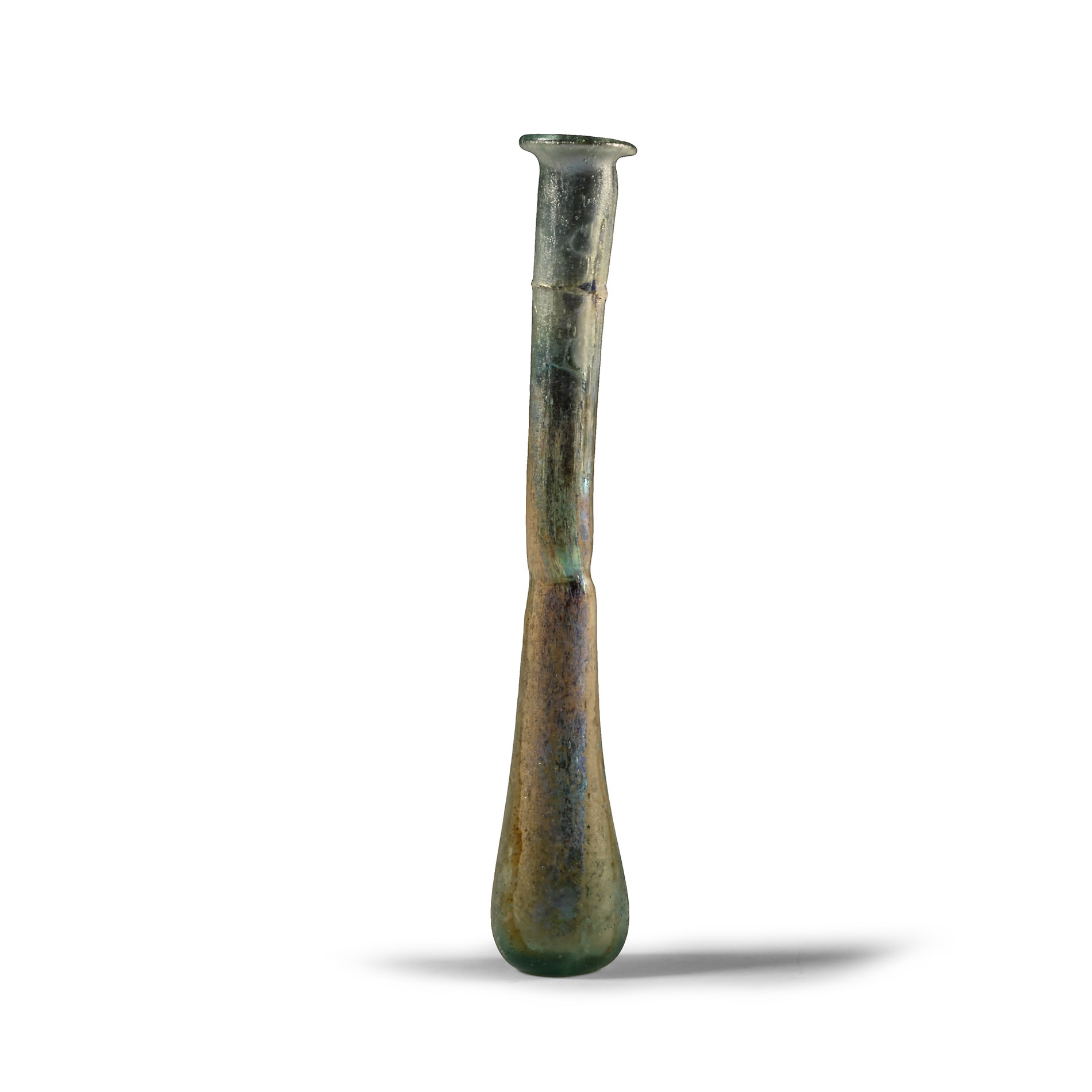
Roman Iridescent Glass Unguentarium
1ST-4TH CENTURY A.D.
41/8 in. (7.47 grams, 10.5 cm).
Tall and slender iridescent vessel with bulb to the base and flared rim. [No Reserve]
ProvenanceAcquired 1980-2015.
Ex Abelita family collection.
Cf. Whitehouse, D., Roman Glass in the Corning Museum of Glass, vol.1, New York, 1997, item 259.
CONDITIONTimeLine Auctions follows a vetting process to ensure the authenticity and legality of all items, reinforcing our commitment to integrity and responsible trading. Each antiquity, antique, and coin lot undergoes thorough examination by a vetting committee of at least ten external specialists, professional trade association members, scientists, and archaeologists: Our Vetting Process
AUCTIONS:
TimeLine is a leading auction house specialising in antiquities, ancient art, collectables, natural history, coins, medals, and books. Our auctions offer museums, collectors, historians, and enthusiasts the opportunity to acquire unique and historically significant pieces.
-
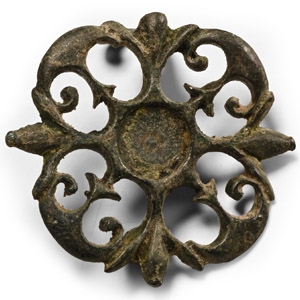
Roman Bronze Plate Brooch
2nd-3rd century A.D.Sold for (Inc. bp): £104
Openwork body composed of four pelta-shaped motifs separated by floral motifs, radiating from a central recessed disc; catch and pin-lugs to the reverse. 6.63 grams, 33 mm
Ex German art market, 2000s. Acquired from an EU collector living in London. From the collection of Surrey, UK, gentleman. -
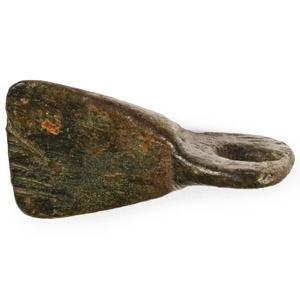
Romano-British Bronze Axe-Shaped Votive Pendant
1st-2nd century A.D.Sold for (Inc. bp): £78
With trapezoidal blade and pierced lug above; 1.21 grams, 17 mm
Found near Wetwang, East Yorkshire, UK, in 2005. Ian Wilkinson collection, Nottinghamshire, UK. -
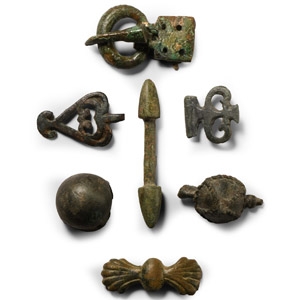
Roman and Later Artefact Group
2nd-3rd century A.D. and laterSold for (Inc. bp): £46
Comprising: a heart-shaped openwork mount; a pelta-shaped openwork mount with stud to the reverse; a buckle; a domed strap divider; a conical strap-slider(?) with rope decoration; a decorative mount with foliate sprays; a bar with conical finials. 60 grams total, 21-56 mm
Property of the vendor's grandfather, thence by family descent, circa 1985. From the private collection of a New York, USA gentleman.
