
Loading, please wait...
LOT 0670
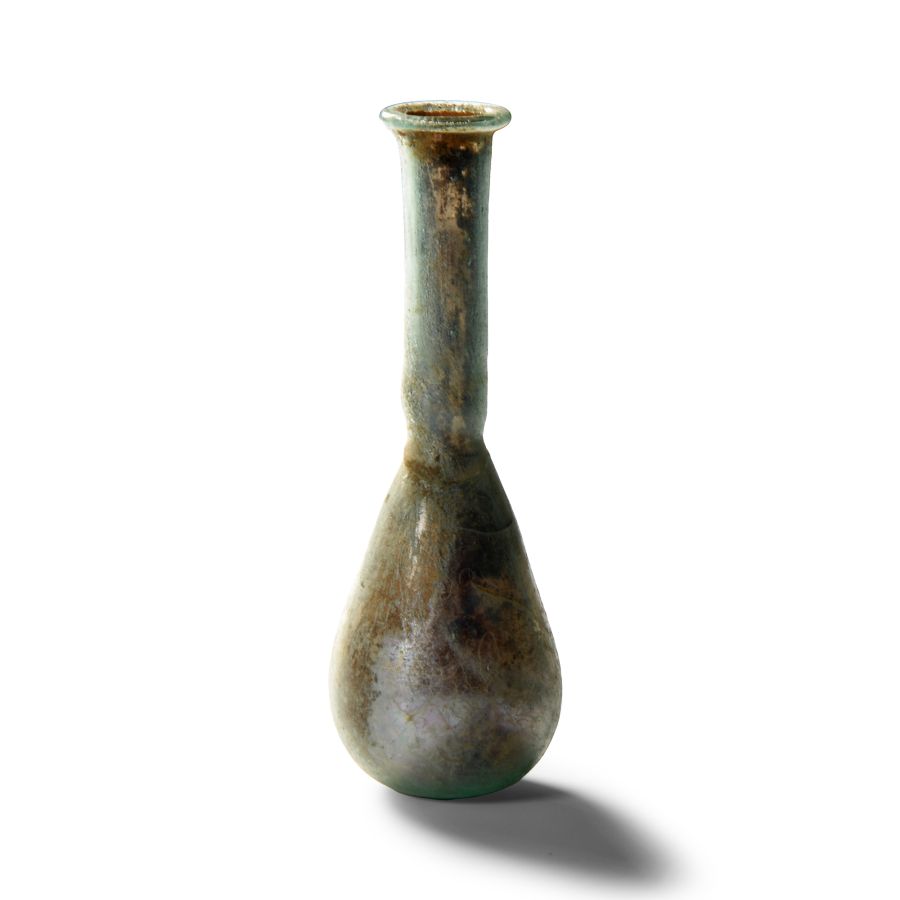
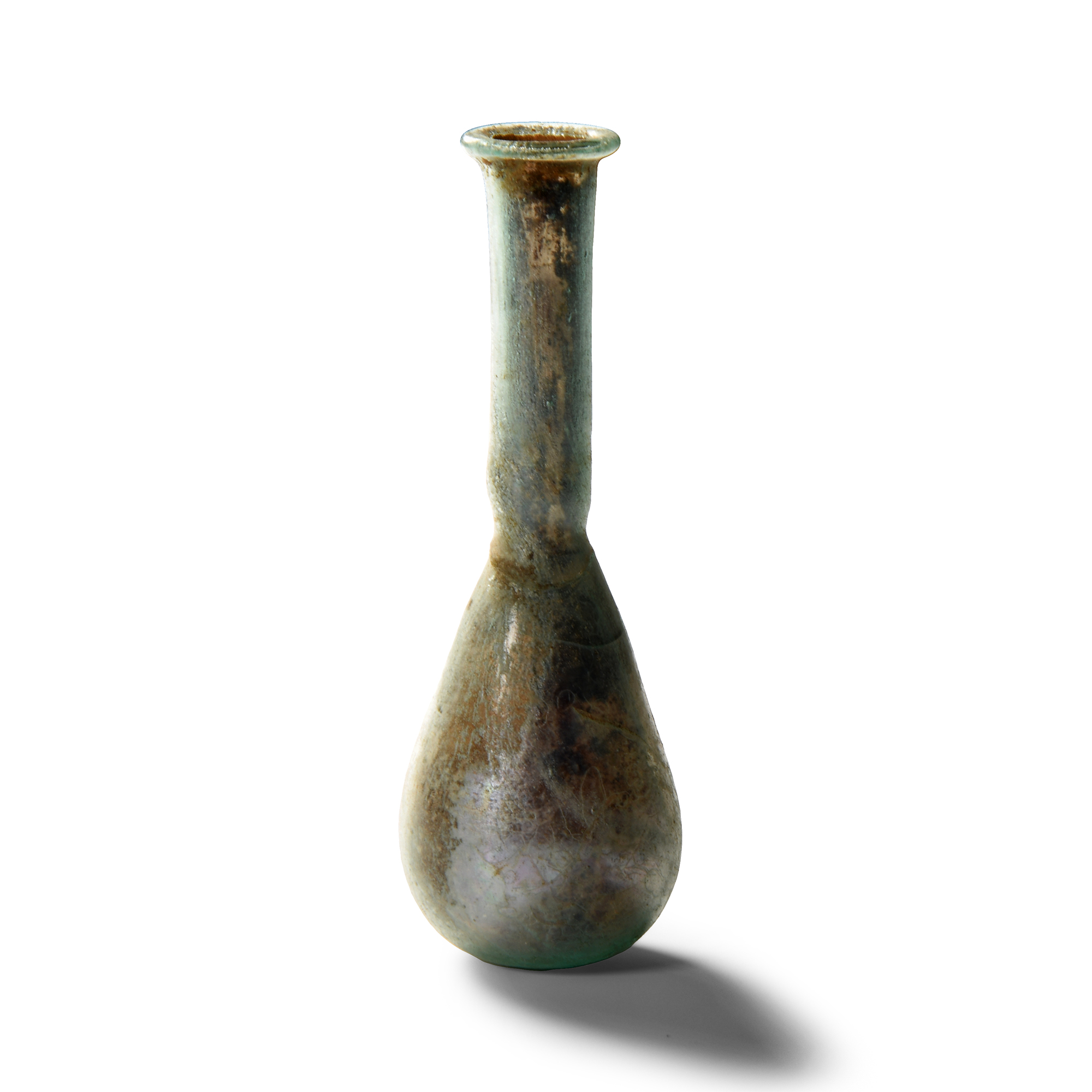
Roman Iridescent Glass Unguentarium
1ST-2ND CENTURY A.D.
3 1/4 in. (10.5 grams, 81 mm).
With piriform body and flat base, narrow neck and everted rim. [No Reserve]
ProvenanceAcquired 1980-2015.
Ex Abelita family collection.
Cf. Whitehouse, D., Roman Glass in the Corning Museum of Glass, vol.2, New York, 2001, item 772.
CONDITIONTimeLine Auctions follows a vetting process to ensure the authenticity and legality of all items, reinforcing our commitment to integrity and responsible trading. Each antiquity, antique, and coin lot undergoes thorough examination by a vetting committee of at least ten external specialists, professional trade association members, scientists, and archaeologists: Our Vetting Process
AUCTIONS:
TimeLine is a leading auction house specialising in antiquities, ancient art, collectables, natural history, coins, medals, and books. Our auctions offer museums, collectors, historians, and enthusiasts the opportunity to acquire unique and historically significant pieces.
-
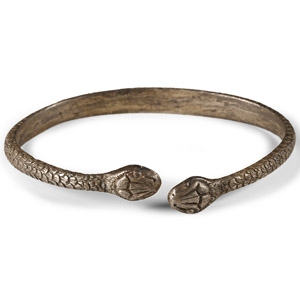
Romano-Egyptian Silver Snake Bracelet
30 B.C.-323 A.D.Sold for (Inc. bp): £1,170
Penannular type with serpent-head ends, scale detailing. 25.4 grams, 74 mm
Ex German art market, 2000s. Acquired from an EU collector living in London. From the collection of Surrey, UK, gentleman. -
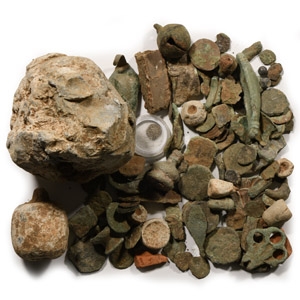
Romano-British 'Ipswich Area' Artefact Collection
1st century B.C.-4th century A.D.Sold for (Inc. bp): £46
Including vessel fragments, a lead weight, a small silver coin and other items. 6.16 kg total, 1-10.1 cm
Found Suffolk, UK. -
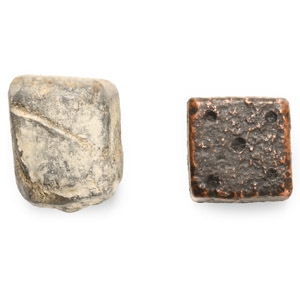
Roman 'Yorkshire' Bronze and Lead Gaming Dice Group
2nd-4th century A.D.Sold for (Inc. bp): £78
Comprising one cuboid dice with markings disposed 1:6, 2:5, 3:4; one rectangular block with sprue to one end, surface abraded. 36.9 grams total, 12-16 mm
Found whilst searching with a metal detector in Yorkshire, UK.
