
Loading, please wait...
LOT 0886
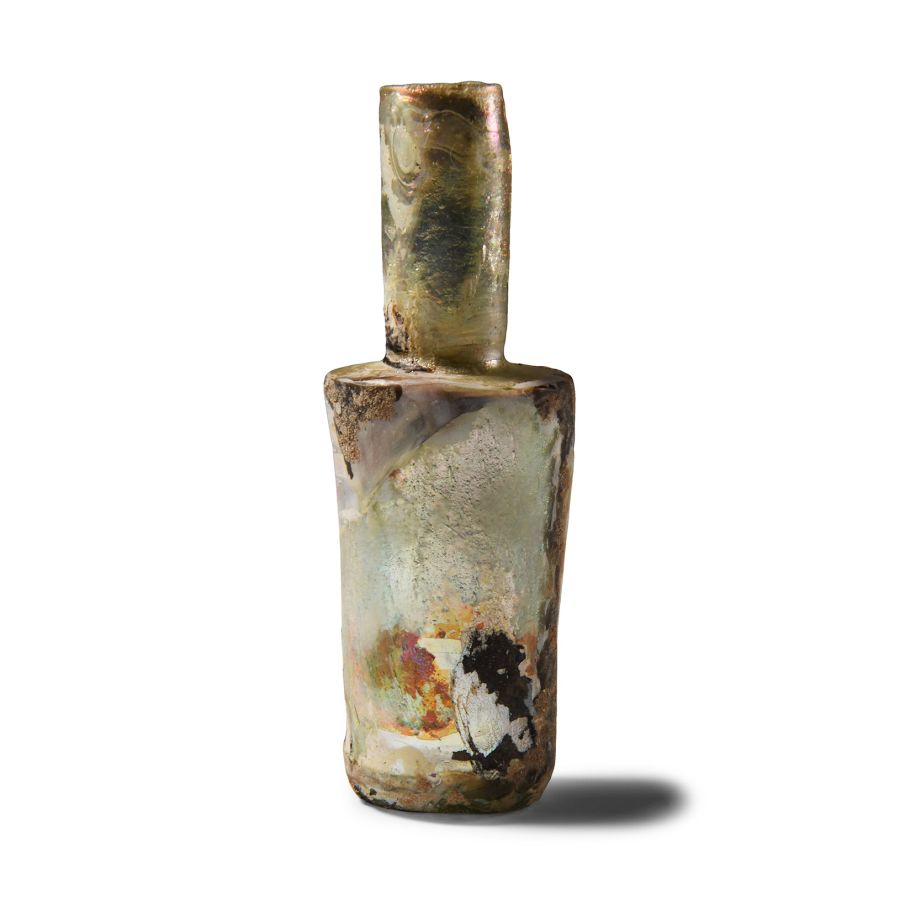
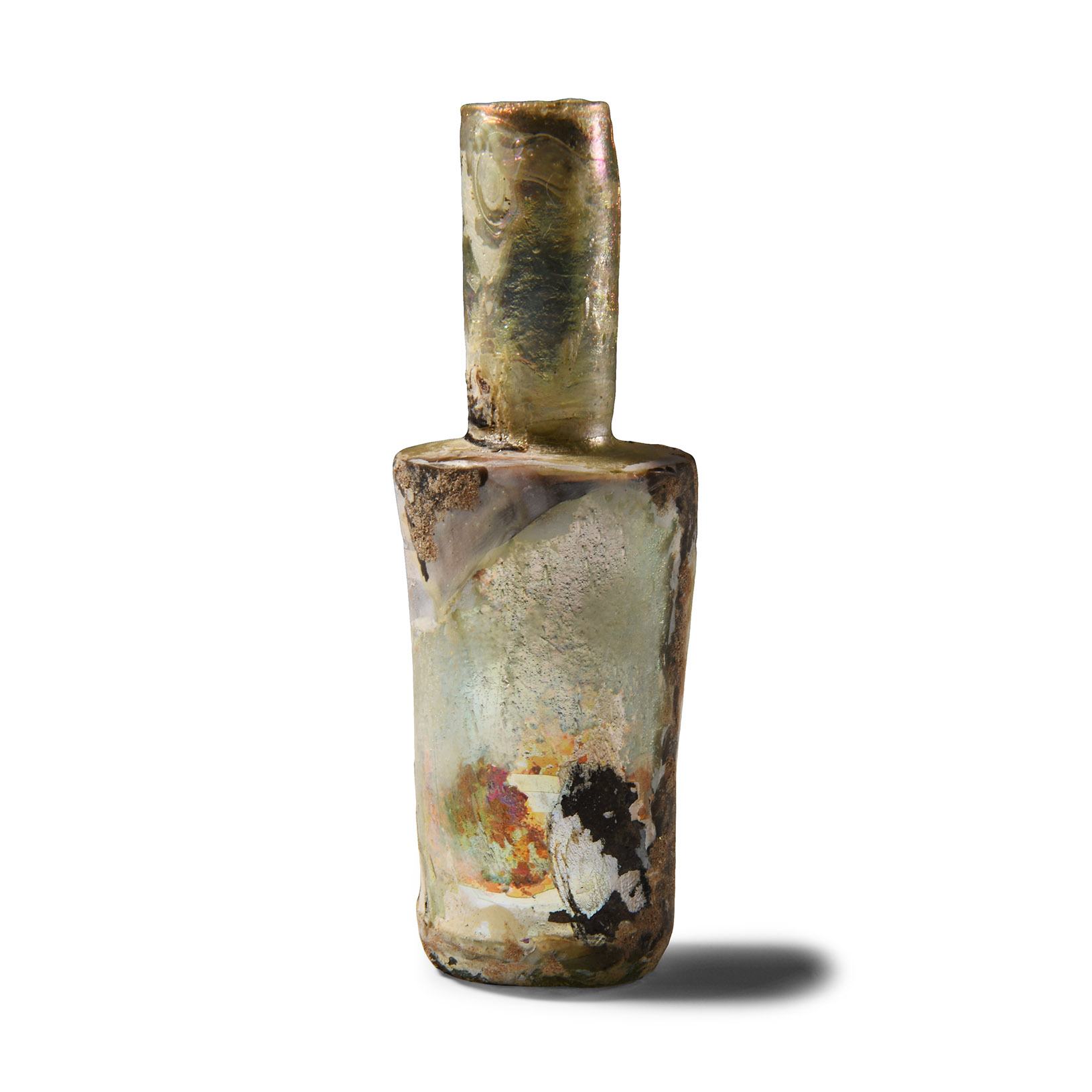
Roman Iridescent Glass Perfume Vessel
1ST-4TH CENTURY A.D.
3 7/8 in. (28 grams, 97 mm).
Tall tubular flask with flat shoulder and rim, dimple to the base; iridescent surface. [No Reserve]
ProvenanceFrom an old Suffolk, UK, collection, 1990s.
Property of an Essex gentleman.
TimeLine Auctions follows a vetting process to ensure the authenticity and legality of all items, reinforcing our commitment to integrity and responsible trading. Each antiquity, antique, and coin lot undergoes thorough examination by a vetting committee of at least ten external specialists, professional trade association members, scientists, and archaeologists: Our Vetting Process
AUCTIONS:
TimeLine is a leading auction house specialising in antiquities, ancient art, collectables, natural history, coins, medals, and books. Our auctions offer museums, collectors, historians, and enthusiasts the opportunity to acquire unique and historically significant pieces.
-
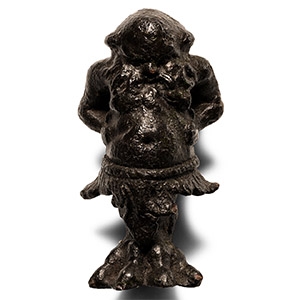
Roman Bronze Silenus Statuette Casket Fitting
2nd century B.C.-1st century A.D.Sold for (Inc. bp): £338
Standing wearing a hide skirt held up with rope, lion's claw foot below. arched bracket to rear. 124 grams, 63 mm
From a collection acquired on the UK art market from various auction houses and collections mostly before 2000. From an important Cambridgeshire estate; thence by descent. -
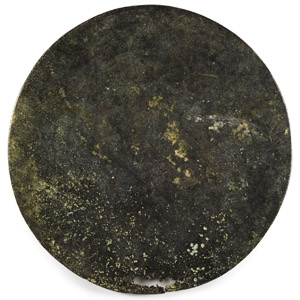
Roman Bronze Mirror
1st-2nd century A.DSold for (Inc. bp): £72
Discoid plaque with one polished face, slightly raised rim; cracked. 100 grams, 11.5 cm
From a collection acquired on the UK art market from various auction houses and collections mostly before 2000. From an important Cambridgeshire estate; thence by descent. -
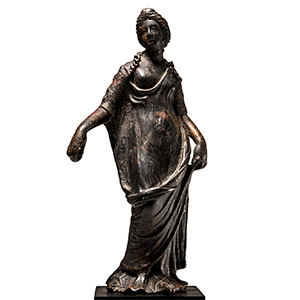
Roman Bronze Figurine of Venus
Circa 50 A.D.Sold for (Inc. bp): £5,980
The figure standing with her head turned slightly to the right, elegant hair falling to the shoulders in two long tresses; chiton draped around the left shoulder and sagging to expose the right breast; left hand holding a fold of the robe at her thigh, right hand slightly extended holding an apple; toes exposed beneath the fringe of her robe; mounted on a custom-made stand. 1.17 kg total, 27.3 cm high including stand
European private collection, acquired 1980s, or before. Subsequently British private collection, acquired late 1990s from the previous. Acquired directly from the above by the current owner. This lot has been checked against the Interpol Database of stolen works of art and is accompanied by search certificate no.12052-210844.
