
Loading, please wait...
LOT 0716
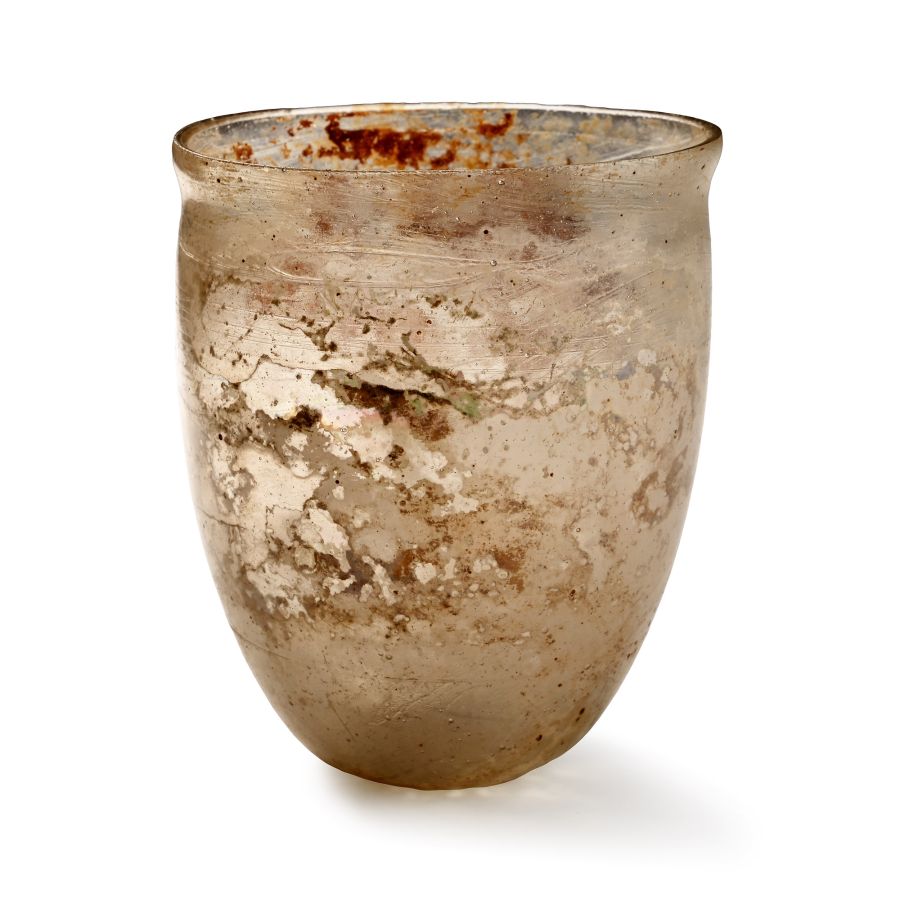
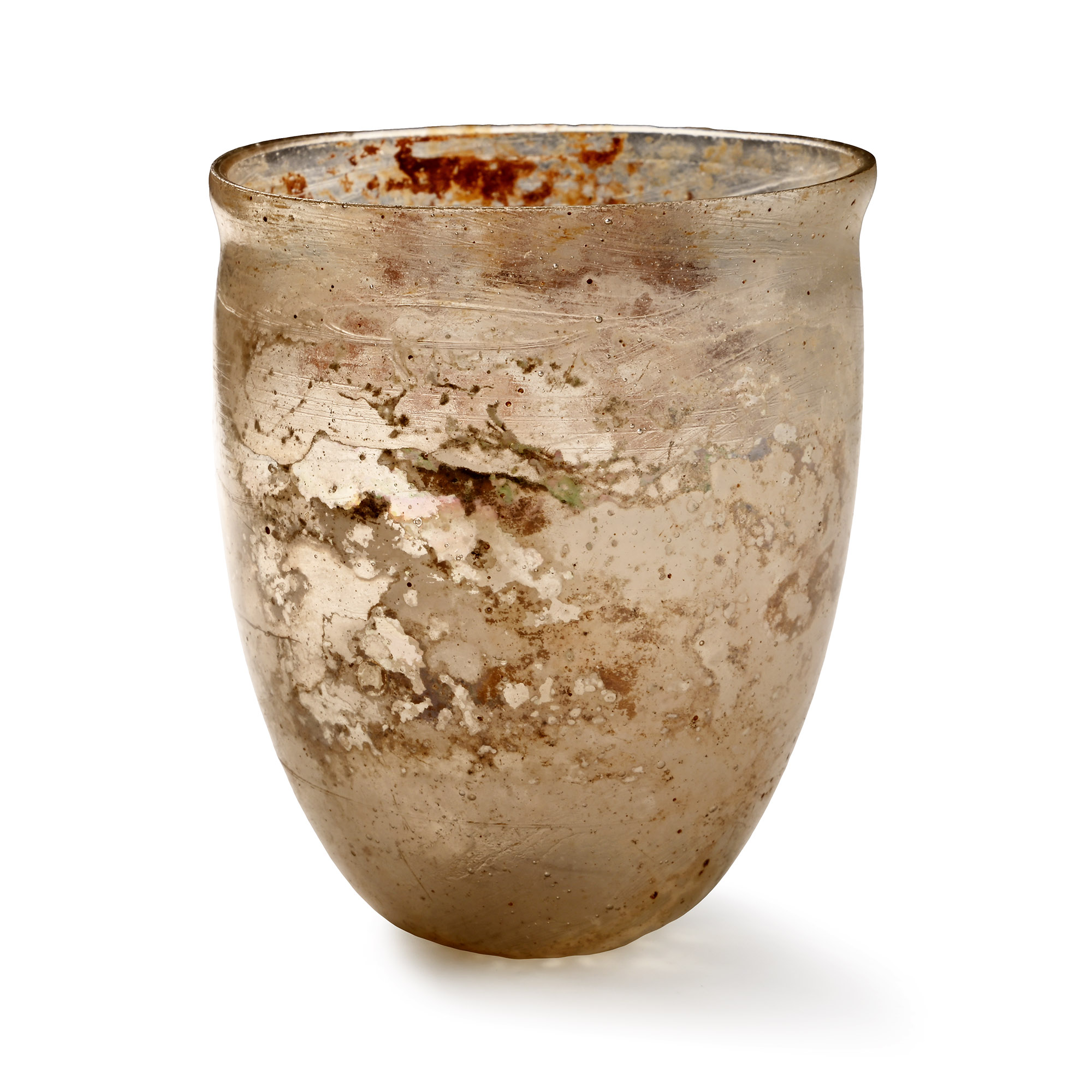
Roman Iridescent Glass Flask
1ST-4TH CENTURY A.D.
2 3/4 in. (34.58 grams, 70 mm).
Aqua glass drum-shaped jar with everted rim and rounded base.
ProvenanceAcquired Christie's, London, Antiquities, Works of Art and Important Renaissance Bronzes, Plaquettes and Limoges Enamels, 8 July 1981, no.617 (part).
From a private Wiltshire, UK, collection.
Accompanied by a copy of the relevant Christie's catalogue pages.
Cf. The British Museum, museum number 135304, for similar; Corning Museum of Glass, accession numbers 70.1.9 and 54.1.119, for similar.
CONDITIONTimeLine Auctions follows a vetting process to ensure the authenticity and legality of all items, reinforcing our commitment to integrity and responsible trading. Each antiquity, antique, and coin lot undergoes thorough examination by a vetting committee of at least ten external specialists, professional trade association members, scientists, and archaeologists: Our Vetting Process
AUCTIONS:
TimeLine is a leading auction house specialising in antiquities, ancient art, collectables, natural history, coins, medals, and books. Our auctions offer museums, collectors, historians, and enthusiasts the opportunity to acquire unique and historically significant pieces.
-
.jpg)
Roman Green Glass Bead Necklace String
1st-4th century A.D. and laterSold for (Inc. bp): £65
Restrung designer necklace string of tubular, tabular, oblate and other types with annular pendant centrepiece. 10.9 grams, 37.5 cm
London, UK, collection, 2000s. -
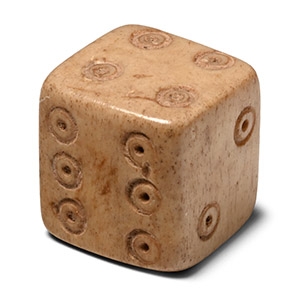
Roman Bone Gaming Dice
1st-2nd century A.D.Sold for (Inc. bp): £156
With incised ring-and-dot markings disposed 1:6, 2:5, 3:4. 5.42 grams, 14 mm
From a collection of gaming items, formed 1980-1990s. -
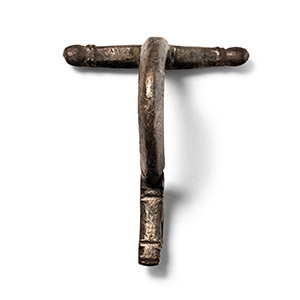
Roman Silver Crossbow Brooch
3rd century A.D.Sold for (Inc. bp): £39
Comprising a hexagonal-section crossbar with collars and bulb finials, slot for a hinged pin, trapezoid-section bow, rectangular foot with incised geometric ornament, catch to the reverse; socket at top of bow to accept a separate knop. 15.8 grams, 50 mm
Acquired on the UK art market before 2000. Property of an Essex, UK, gentleman.
This is a very early form of crossbow brooch, showing very clearly its origin in the mid-Roman P-shaped bow brooch.
