
Loading, please wait...
LOT 0162
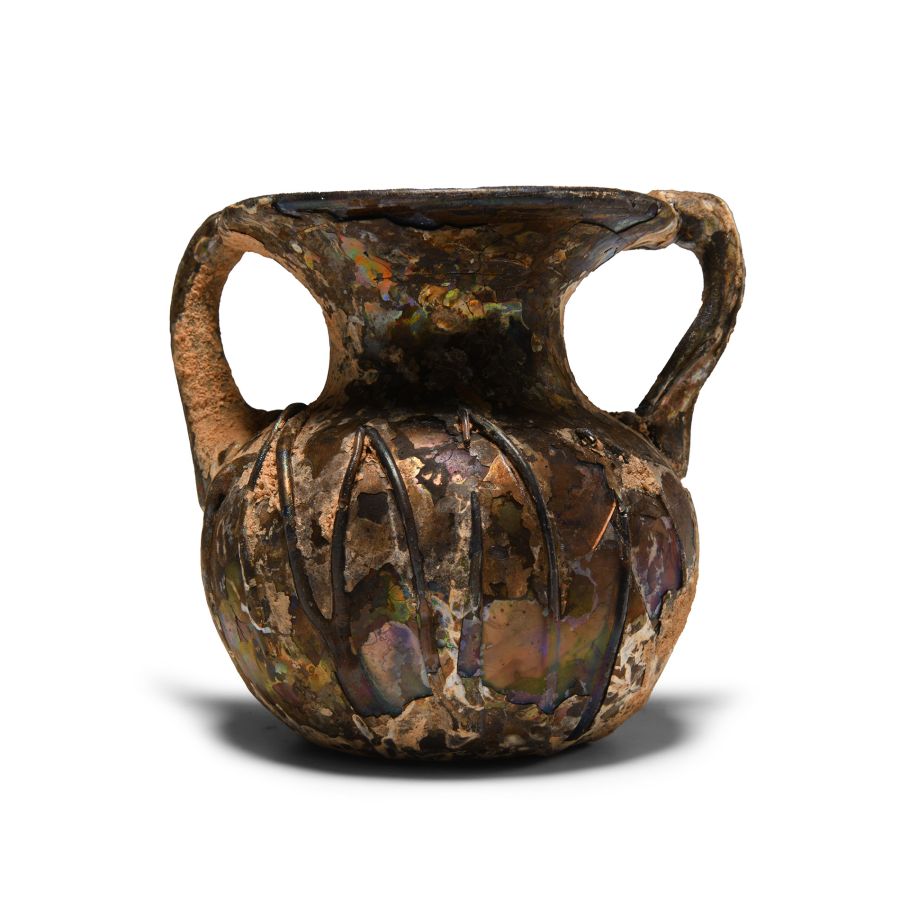
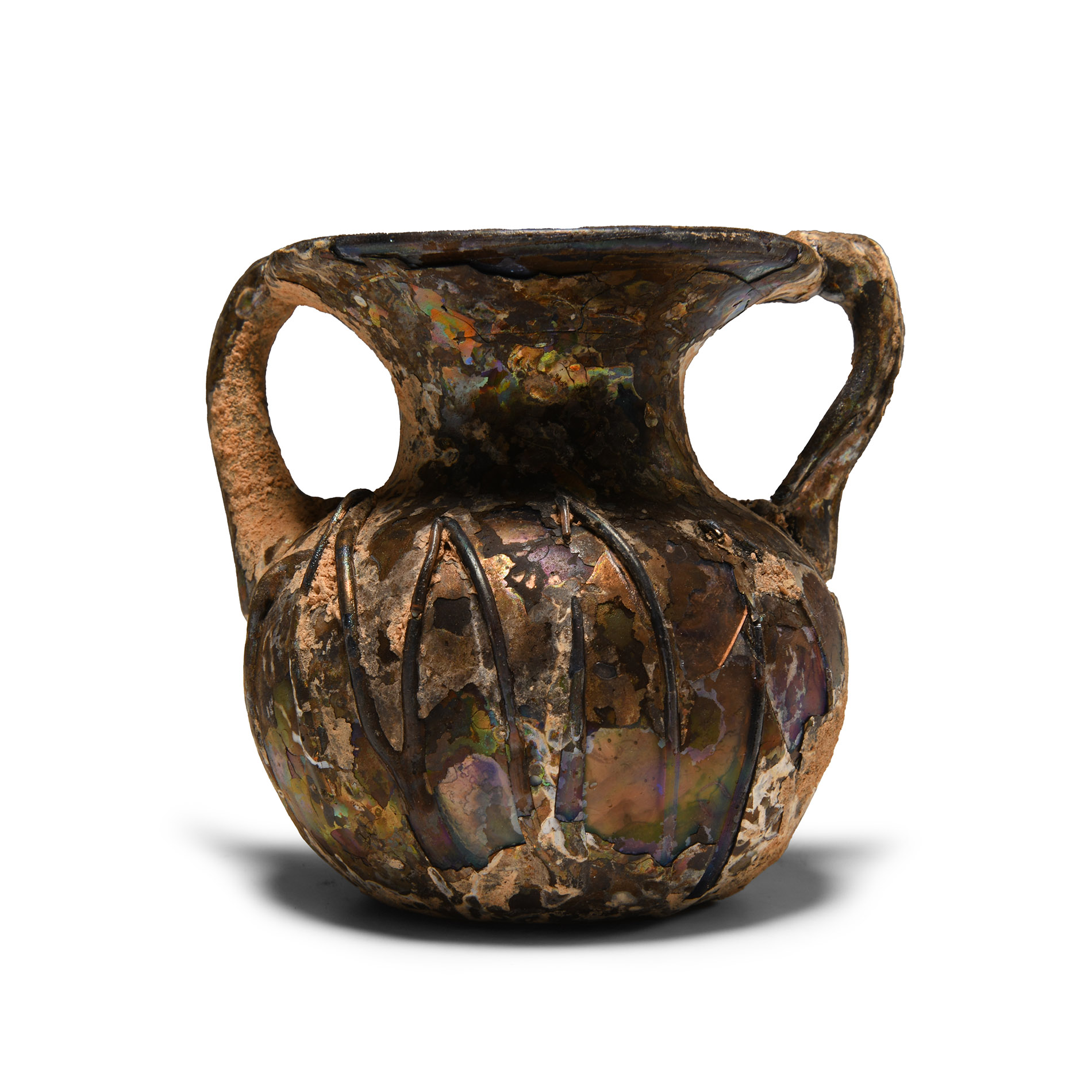
Roman Iridescent Aubergine Glass Jar with Two Handles
4TH CENTURY A.D.
3 in. (51 grams, 76 mm).
With squat bulbous body, dimple base, flared trumpet neck; applied trails to the shoulder, two strap handles.
ProvenanceEx property of a late Japanese collector, 1970-2000s.
LiteratureCf. Whitehouse, D., Roman Glass in the Corning Museum of Glass, vol.1, New York, 1997, item 690, for type.
CONDITIONTimeLine Auctions follows a vetting process to ensure the authenticity and legality of all items, reinforcing our commitment to integrity and responsible trading. Each antiquity, antique, and coin lot undergoes thorough examination by a vetting committee of at least ten external specialists, professional trade association members, scientists, and archaeologists: Our Vetting Process
AUCTIONS:
TimeLine is a leading auction house specialising in antiquities, ancient art, collectables, natural history, coins, medals, and books. Our auctions offer museums, collectors, historians, and enthusiasts the opportunity to acquire unique and historically significant pieces.
LOT 0162
Roman Iridescent Aubergine Glass Jar with Two Handles
Estimate £700 - 900€810 - 1,040 (for guidance only)$950 - 1,220 (for guidance only)
-
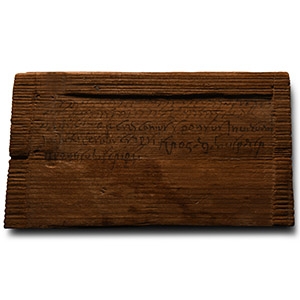
Roman Inked Wooden Legal Document Signed by Felicianus in Actum
Late 4th century A.D.Sold for (Inc. bp): £7,800
A reused tablet with a recessed panel on one side, the lower part absent, on the upper rim one of originally 3 holes necessary for binding together of the tablets of the document, 5 lines in Roman cursive on the recessed panel containing the end of a the record of a legal document in a formulaic legal language; part of a legal document which consisted of two (diptychon) or three tablets (triptychon), with the indication where it was done (actum in …) followed by the so-called chirographum (signature line) of a person called Felicianus, letter forms point to a date in the second half of the 4th century AD; with a recessed slot to verso. 12.4 grams, 14.7 cm
From an important London collection since 1975. Accompanied by a collection of six 1970s photographs of the the tablet.
The contract follows standard Roman legal formulae. -
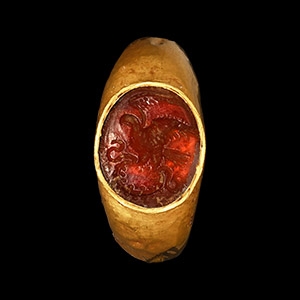
Roman Gold Ring with Gemstone
1st-2nd century A.D. and laterSold for (Inc. bp): £2,860
Hollow-formed finger ring with broad plaque; with a later gemstone of an eagle and snake within a wreath; supplied with a museum-quality impression. 2.28 grams, 24.52 mm overall, 16.95 mm internal diameter (approximate size British I, USA 4 1/4, Europe 7.44, Japan 7)
Acquired in the mid 1980s-1990s. From the family collection of Mr S.A., Switzerland, thence by descent. Private collection since the late 1990s. This lot has been checked against the Interpol Database of stolen works of art and is accompanied by a search certificate number no.12107-218183. -
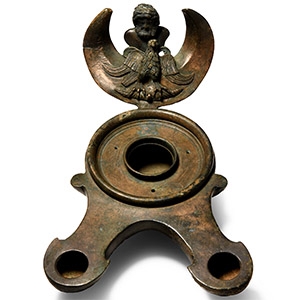
Very Large Roman Bronze Oil Lamp with Jupiter and Eagle
3rd-4th century A.D.Sold for (Inc. bp): £8,450
With a rounded body and double nozzle with volutes; the body flat with engraved volutes, raised rim and basal ring; to the rear a large crescent with Jupiter (Greek Zeus) to the centre and his eagle with spread wings before him; the god depicted with thick locks and voluminous beard, the eagle with detailed plumage and finely detailed face; accompanied by a custom-made display stand. 1.67 kg, 25.7 wide (3.08 kg total,18 cm high including stand)
Old private British collection, pre-1965. Property of a gentleman; acquired in the UK before 2000. Accompanied by a copy of an old black and white photograph. Accompanied by an academic report by Dr Raffaele D’Amato. This lot has been checked against the Interpol Database of stolen works of art and is accompanied by search certificate number no.12034-215425.
Here Jupiter is represented with his attributes connected with the crescent of goddess Luna. According to Bailey, all lamps in the category to which the map belongs, were intended for suspension. Lamps with multiple nozzles gave more light and thus were suitable for lighting large spaces.
