
Loading, please wait...
LOT 0077
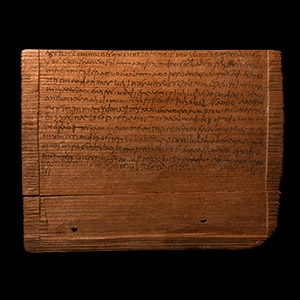
Roman Inked Wooden 'Will of Pomponius Maximinianus' Tablet
CIRCA 320 A.D.
7 5/8 - 7 7/8 in. (64 grams total, 19.5-20 cm wide).
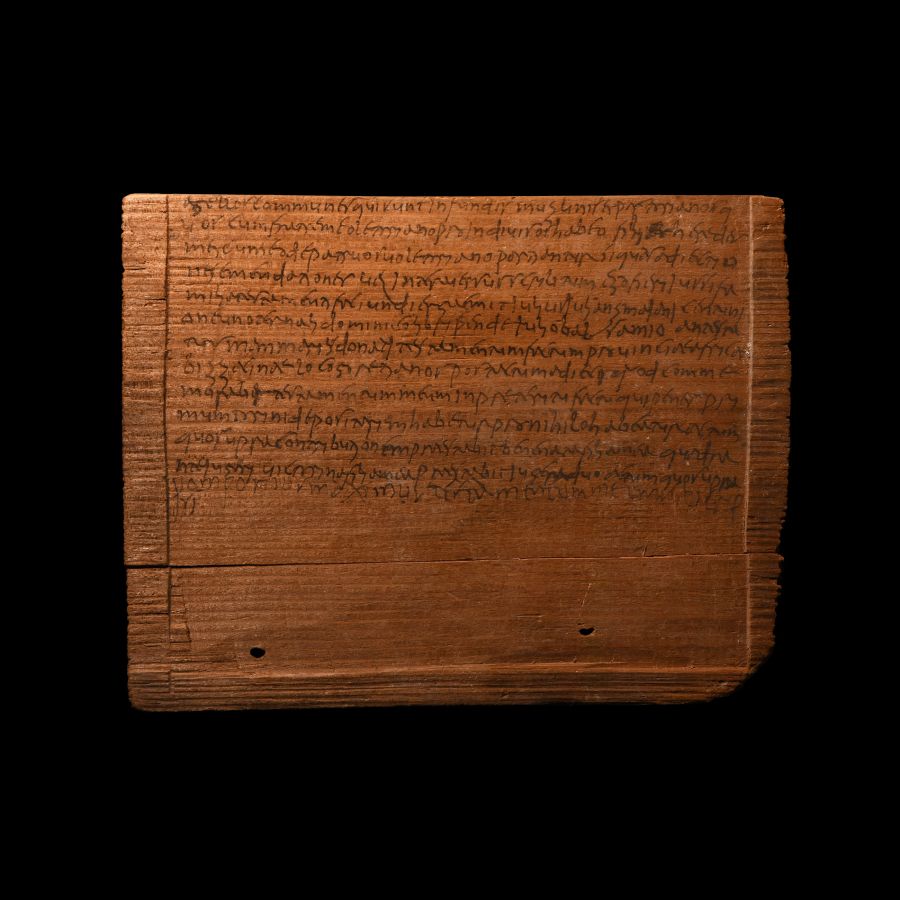
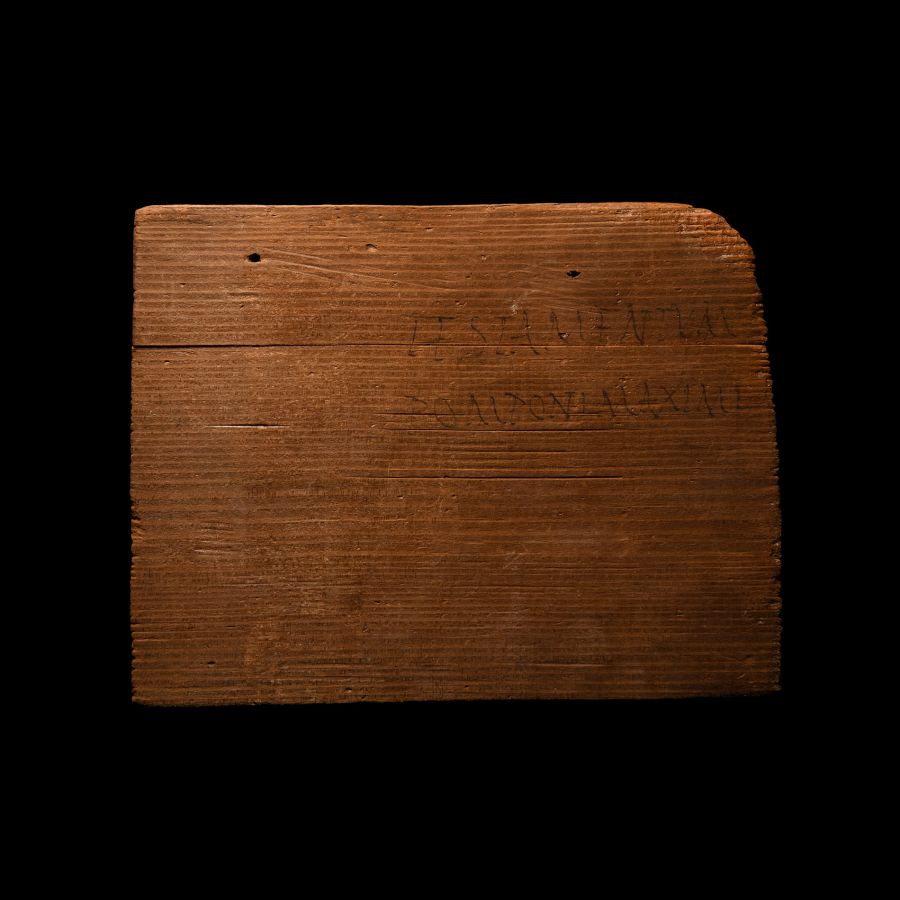
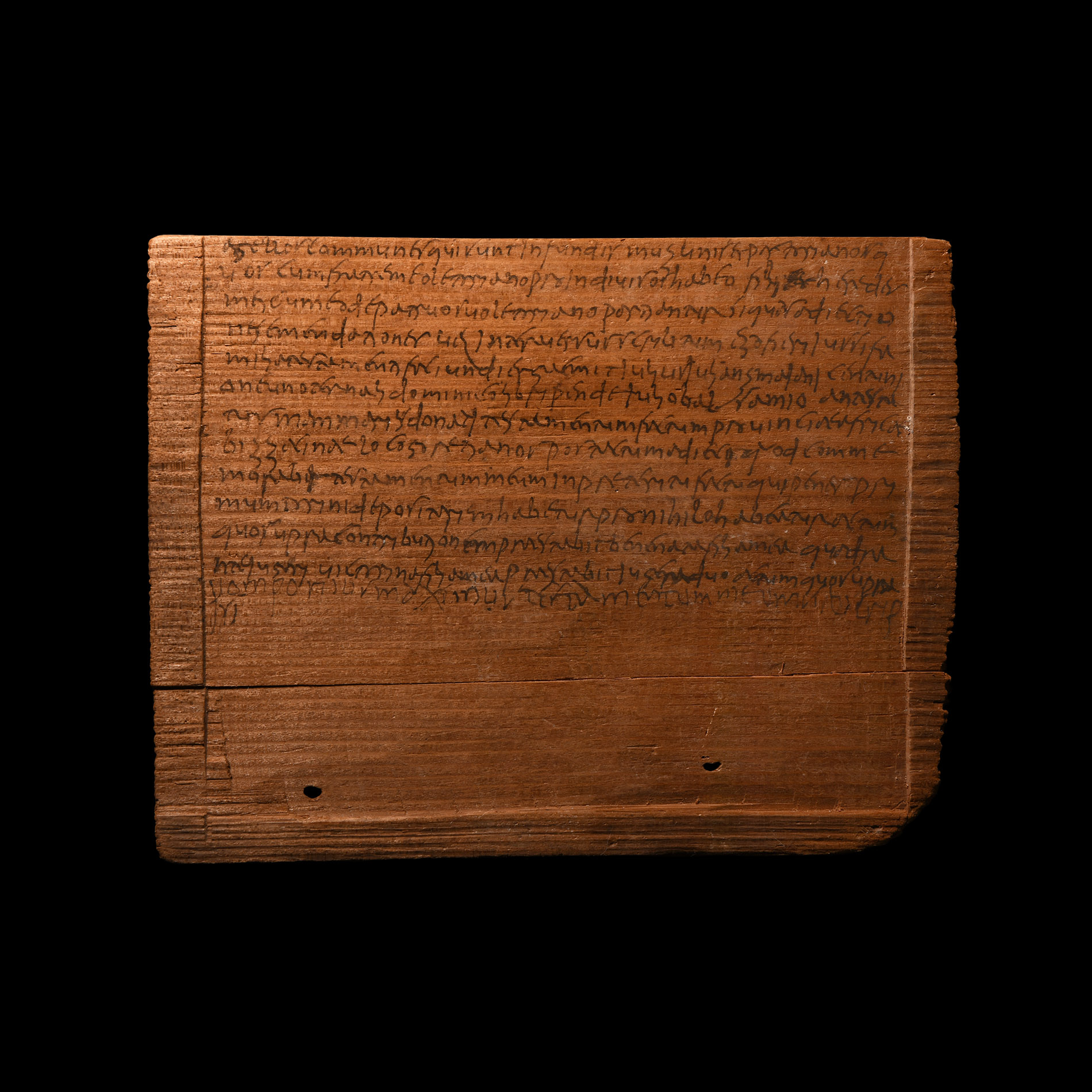
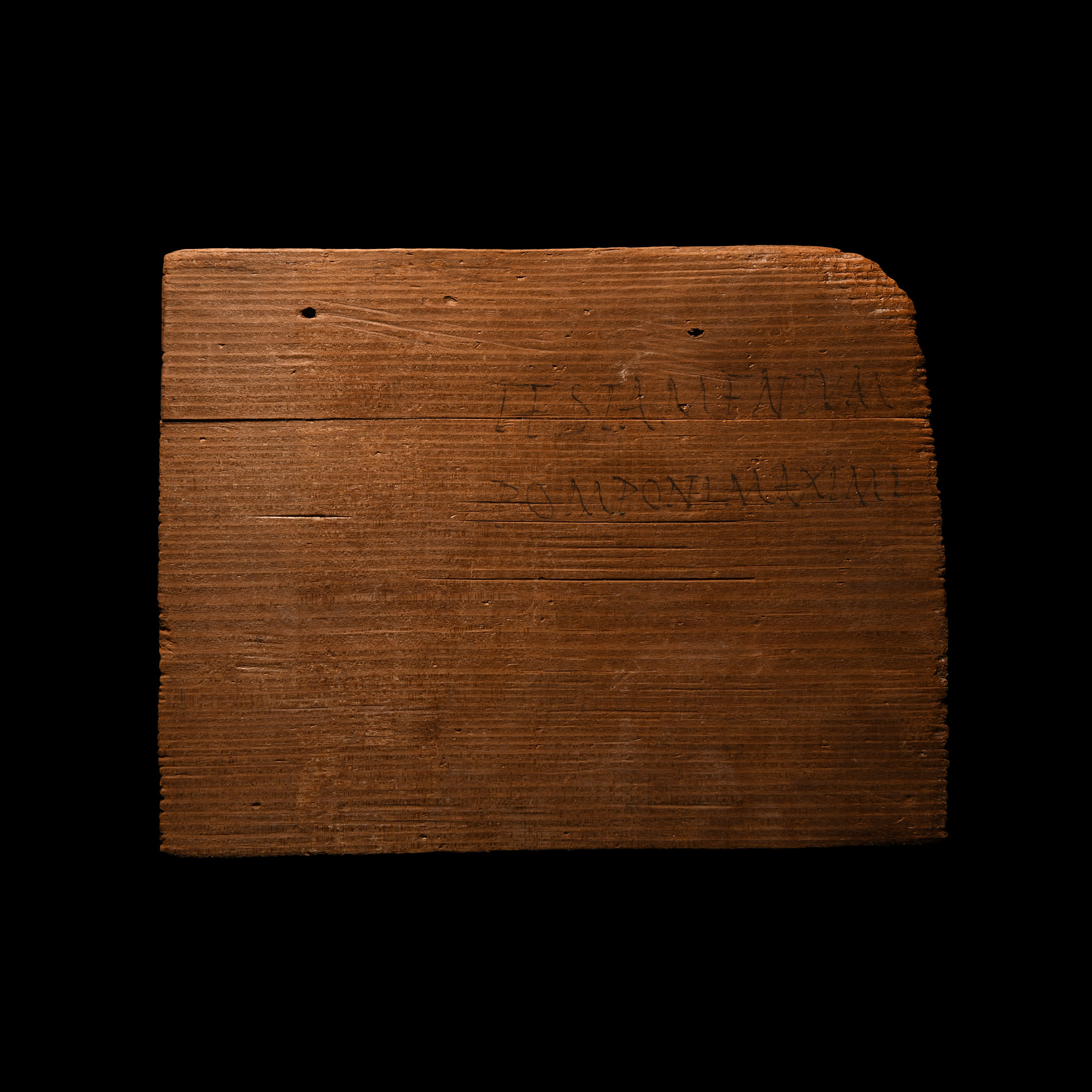
Two adjoining parts of an inked wooden tablet, comprising 13 lines of text to the recessed upper face with two piercings to the lower edge; the reverse with an inked inscription reading 'TESTAMENTVUM / POMPONIMAXIMI' (the will of Pomponius Maximus); the 13 lines of inked cursive text following the grain of the wood, the text containing instructions from a will concerning the inheritance of fields on the Mustulo estate (fundus Mustulo), to a Iulius Dancharrus (son of the testator); a field with eight fig-trees, bought from a Iulius Castricius, and several sheep to 'my beloved daughter Zabullania'. [2, No Reserve]
ProvenanceFrom an important London collection since 1975.
This lot has been checked against the Interpol Database of stolen works of art and is accompanied by searcher certificate no. 200269.
Rothenhoefer, P., Neue römische Rechtsdokumente aus dem Byzacena-Archiv / New Roman Legal Documents from the Byzacena Archive, (forthcoming).
LiteratureSee Thomas, J. D., Vindolanda: The Latin Writing Tablets, Britannia Monograph Series No 4, London, 1983, for examples of wooden tabulae re-used as writing surfaces; for examples of testamentary documents on wooden tablets that have survived, see FIRA III, p.47, for Anthony Silvanus from 142 AD, also see BGU VII 1695 for Safinnius Herminus; for another from Transfynydd, North Wales, see Arch. Camb. 150, pp.143-156.
FootnotesThe text is written in a very formulaic language typical of Roman legal-documents (among other things, familia testamenti faciundi erga emit Iul. Maianus: the entire possessions, in order to make a will, was bought by Iul. Maianus).
CONDITIONTimeLine Auctions follows a vetting process to ensure the authenticity and legality of all items, reinforcing our commitment to integrity and responsible trading. Each antiquity, antique, and coin lot undergoes thorough examination by a vetting committee of at least ten external specialists, professional trade association members, scientists, and archaeologists: Our Vetting Process
AUCTIONS:
TimeLine is a leading auction house specialising in antiquities, ancient art, collectables, natural history, coins, medals, and books. Our auctions offer museums, collectors, historians, and enthusiasts the opportunity to acquire unique and historically significant pieces.
LOT 0077
Roman Inked Wooden 'Will of Pomponius Maximinianus' Tablet
Sold for (Inc. bp): £5,200
-
Roman Bronze Tankard Handle Group
Circa 1st-4th century A.D.Estimate: £100 - 140 (+bp*)
Opening Bid: £40
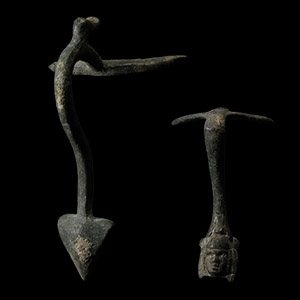
Comprising two differently sized handles, one featuring a female mask, the other with a leaf-shaped terminal and stylised duck's head to the apex of the bow. 411 grams total, 11.4-18 cm
Acquired 1990s-early 2000s. East Anglian private collection. -
Roman Bronze Oinochoe with Lion Protome
1st century B.C.-1st century A.D.Sold for (Inc. bp): £4,680
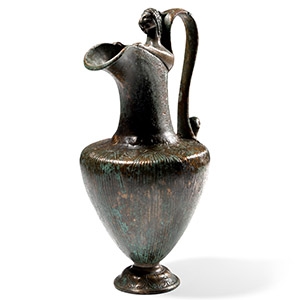
The conical body decorated with overlapping petal-shaped panels, tapering neck with a wide spout, high arching handle with acanthus leaves, bust of a youthful male with long hair below (possibly Bacchus) the upper part terminating with a lion protome with the extended forelegs resting on the rim of the vessel, the high flaring foot possibly added later. 797 grams, 22.5 cm high
Excellent condition
Private collection, Rosenheim, Germany, 1960s. Accompanied by an academic report by Dr Raffaele D’Amato. This lot has been checked against the Interpol Database of stolen works of art and is accompanied by search certificate no.11734-201200.
Considering the primary function of oinochoe as drinking jugs, the images decorating them were often related to the god of wine, Bacchus, here probably represented as young Dionysus accompanied by a lion. -
Roman Inked Wooden 'Will of Pomponius Maximinianus' Tablet
Circa 320 A.D.Sold for (Inc. bp): £5,200
Two adjoining parts of an inked wooden tablet, comprising 13 lines of text to the recessed upper face with two piercings to the lower edge; the reverse with an inked inscription reading 'TESTAMENTVUM / POMPONIMAXIMI' (the will of Pomponius Maximus); the 13 lines of inked cursive text following the grain of the wood, the text containing instructions from a will concerning the inheritance of fields on the Mustulo estate (fundus Mustulo), to a Iulius Dancharrus (son of the testator); a field with eight fig-trees, bought from a Iulius Castricius, and several sheep to 'my beloved daughter Zabullania'. 64 grams total, 19.5-20 cm wide
From an important London collection since 1975. This lot has been checked against the Interpol Database of stolen works of art and is accompanied by searcher certificate no. 200269.
The text is written in a very formulaic language typical of Roman legal-documents (among other things, familia testamenti faciundi erga emit Iul. Maianus: the entire possessions, in order to make a will, was bought by Iul. Maianus).
