
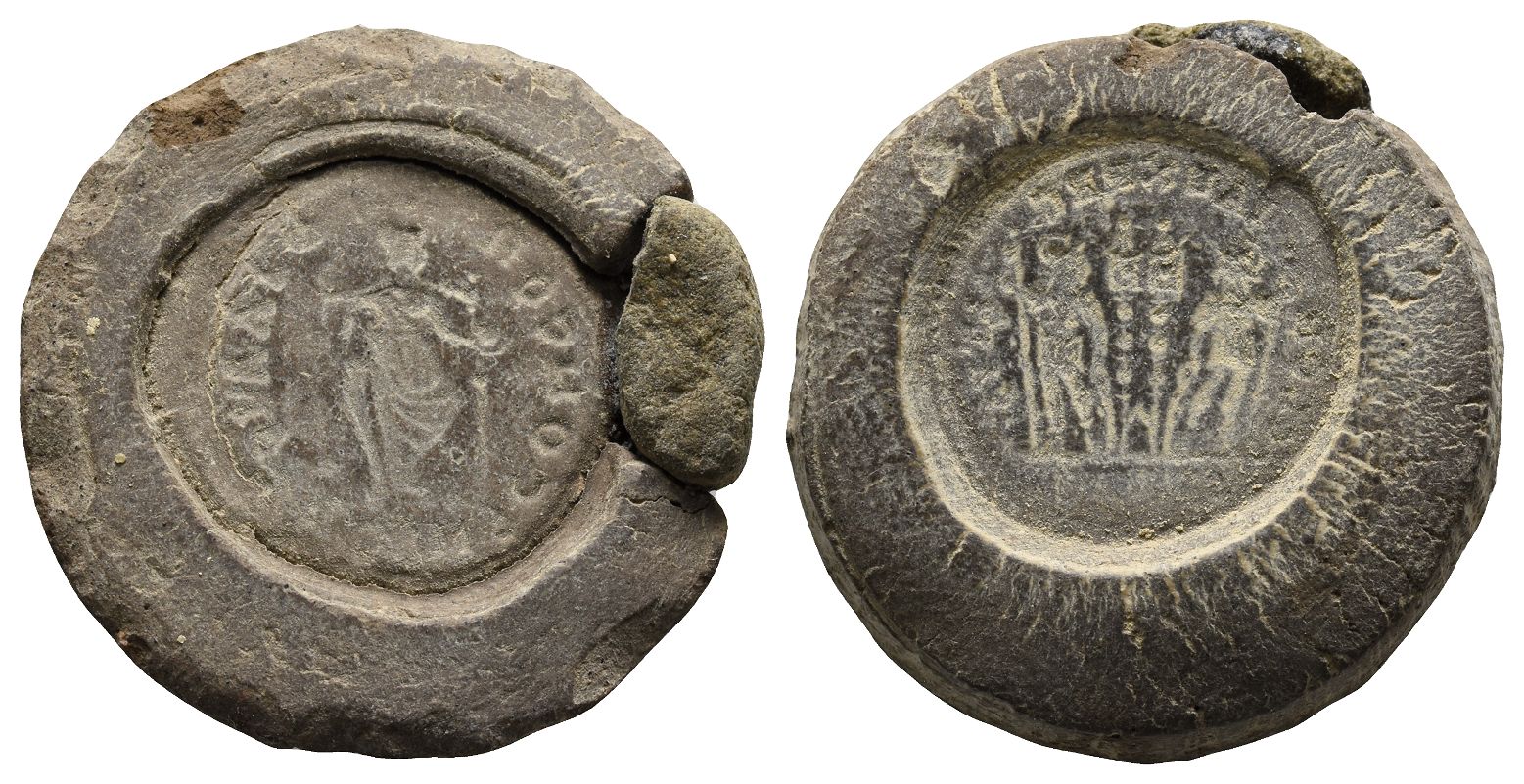
LOT 3248
Roman Imperial, Terracotta Forger's Casting Mould. 4th century AD.
CONCORDIA AVG, Constantinopolis seated facing, head to left, holding Victory on globe and sceptre / GLORIA EXERCITVS, two soldiers facing one another, holding reversed spear and resting hand on shield; between them, two standards. Condition as seen. Casting mould sharing two reverse types.(5.53gr, 28mm, 9h.).
ProvenanceFrom the collection of a gentleman, acquired on the London art market in the 1990s.
FootnotesWith an impression of the obverse on one side, and the reverse on the other, of the coin being counterfeited this ancient forger's casting mould would have been stacked with others, the molten metal being poured from above and allowed to cool.
TimeLine Auctions follows a vetting process to ensure the authenticity and legality of all items, reinforcing our commitment to integrity and responsible trading. Each antiquity, antique, and coin lot undergoes thorough examination by a vetting committee of at least ten external specialists, professional trade association members, scientists, and archaeologists: Our Vetting Process
AUCTIONS:
TimeLine is a leading auction house specialising in antiquities, ancient art, collectables, natural history, coins, medals, and books. Our auctions offer museums, collectors, historians, and enthusiasts the opportunity to acquire unique and historically significant pieces.
-
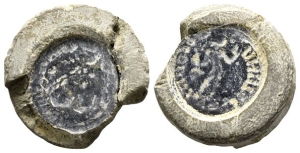
Roman Imperial, Terracotta Forger's Casting Mould. 4th century AD.
Sold for (Inc. bp): £26
Laureate bust or head to right / SOLI INV-[...], radiate Sol standing facing, head to left, right hand raised and holding globe(?) in left. 5.01gr, 27mm, 8h.
Condition as seen.
From the collection of a gentleman, acquired on the London art market in the 1990s.
With an impression of the obverse on one side, and the reverse on the other, of the coin being counterfeited this ancient forger's casting mould would have been stacked with others, the molten metal being poured from above and allowed to cool. -
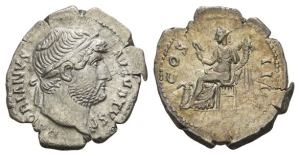
Hadrian AR Denarius. AD 117-138.
Sold for (Inc. bp): £130
Rome mint; struck circa AD 126-127. HADRIANVS AVGVSTVS, laureate head to right, with slight drapery on left shoulder / COS III, Annona (or Abundantia) seated to left, holding reaping hook in right hand and cornucopia in left; at feet to left, modius with grain ears. RIC II.3 854; Cohen 379; BMCRE 385. 2.60gr, 19mm, 6h.
Good Very Fine.
Ex German art market, 2000s. Acquired from an EU collector living in London. From the collection of a Surrey, UK, gentleman. -
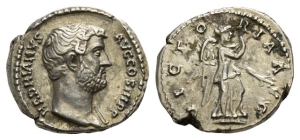
Hadrian AR Denarius. AD 117-138.
Estimate: £180 - 240 (+bp*)
Opening Bid: £90
Rome mint; struck AD 134-138. HADRIANVS AVG COS III P P, bare head to right, drapery on far shoulder / VICTORIA AVG, Victory standing to right, drawing out fold of dress and holding branch downwards. RIC II 282 var. (bust type). 3.41gr, 18mm, 7h.
Good Very Fine.
Property of a North London, UK, gentleman.
