
Loading, please wait...
LOT 0671
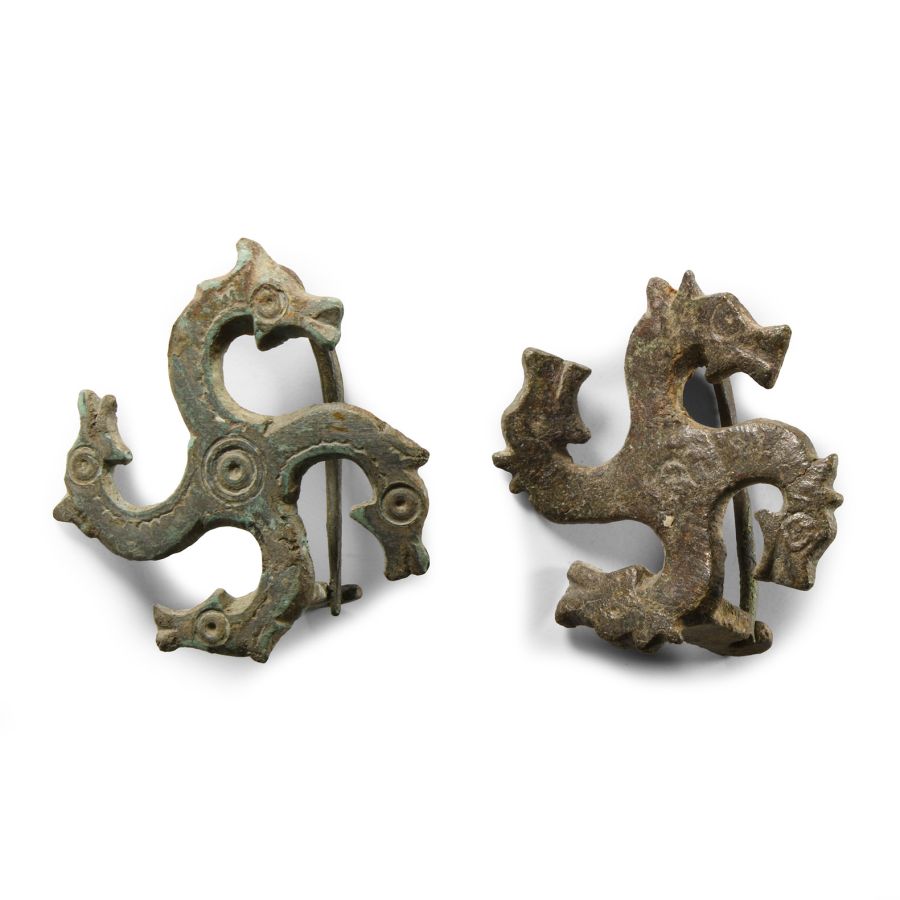
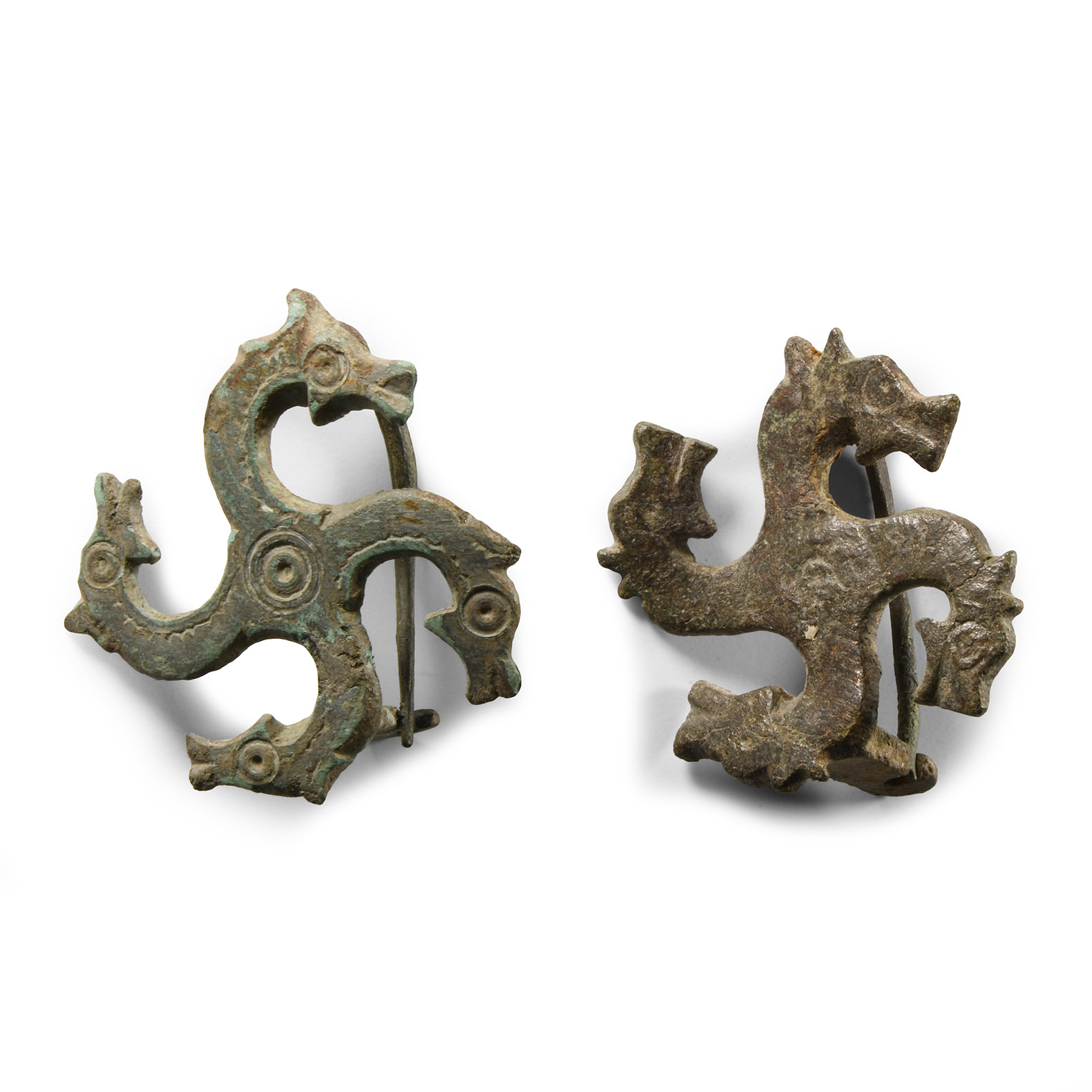
Roman Horse-Headed Plate Brooch Group
3RD-4TH CENTURY A.D.
1 1/2 - 1 5/8 in. (26 grams total, 37-40 mm).
Gammadion brooches each with horse-head finials and central ring-and-dot motif. [2, No Reserve]
ProvenanceUK art market, acquired prior to 1980.
Property of a Scottish collector, acquired in 2013.
TimeLine Auctions follows a vetting process to ensure the authenticity and legality of all items, reinforcing our commitment to integrity and responsible trading. Each antiquity, antique, and coin lot undergoes thorough examination by a vetting committee of at least ten external specialists, professional trade association members, scientists, and archaeologists: Our Vetting Process
AUCTIONS:
TimeLine is a leading auction house specialising in antiquities, ancient art, collectables, natural history, coins, medals, and books. Our auctions offer museums, collectors, historians, and enthusiasts the opportunity to acquire unique and historically significant pieces.
-
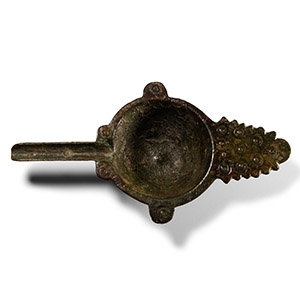
Roman Bronze Oil Lamp Filler
3rd-4th century A.D.Sold for (Inc. bp): £780
Decorative lamp filler with deep conical bowl, two lateral D-shaped lugs to the rim, U-section filler channel, flat handle to the rear with ring-and-dot detailing. 107 grams, 15.5 cm
From a collection acquired on the UK art market from various auction houses and collections mostly before 2000. From an important Cambridgeshire estate; thence by descent. -
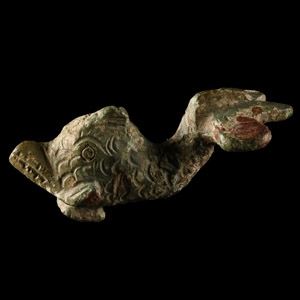
Roman Bronze Dolphin Statuette
Circa 2nd-3rd century A.D.Sold for (Inc. bp): £98
Modelled in the round with scale detailing, pellet eyes, rectangular mounting lug. 25.4 grams, 44 mm
Property of the vendor's grandfather, thence by family descent, circa 1985. From the private collection of a New York, USA gentleman. -
.jpg)
Roman Bronze Ring with Sol Gemstone
Circa 1st century B.C.-3rd century A.D.Sold for (Inc. bp): £1,235
With inset carnelian cloison, intaglio Sol standing with whip. 5.17 grams, 20.88 mm overall, 17.37 mm internal diameter (approximate size British L, USA 5 3/4, Europe 11.24, Japan 10)
Acquired before 2000. From the collection of a European gentleman living in the UK.
