
Loading, please wait...
LOT 0160
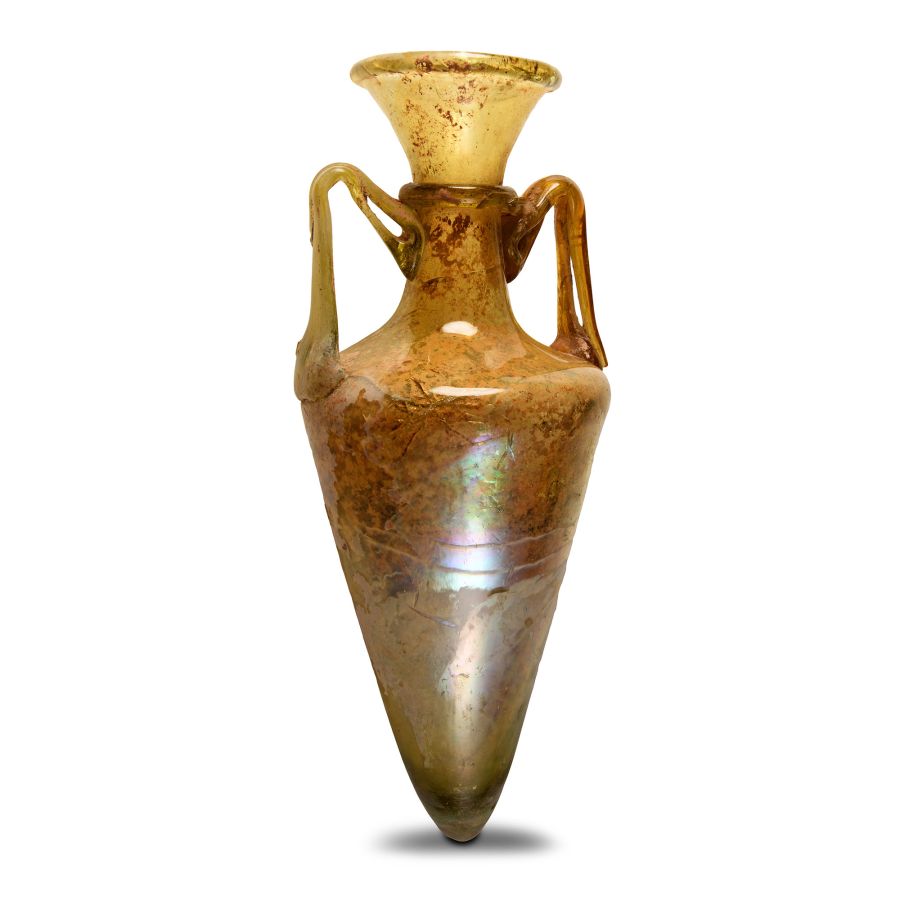
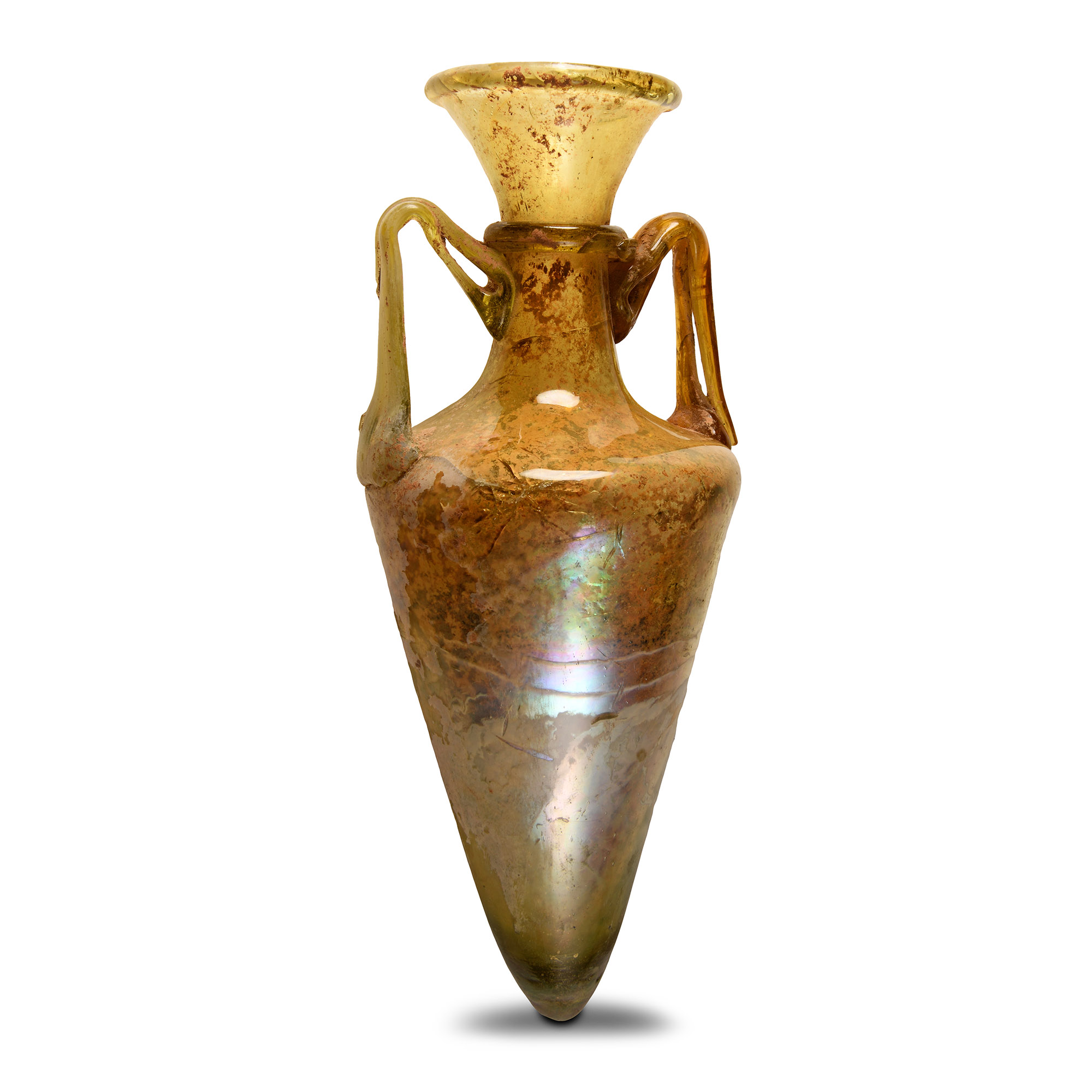
Roman Honey-Coloured Glass Amphora
1ST-4TH CENTURY A.D.
7 1/8 in. (7 7/8 in.) (97 grams, 18 cm (220 grams total, 20 cm including stand)).
With broad rounded shoulder tapering to a conical foot, cylindrical neck and everted mouth with rolled rim, applied trail handles and collar; tip restored; supplied with a display stand.
ProvenanceEx property of a late Japanese collector, 1970-2000s.
This lot has been checked against the Interpol Database of stolen works of art and is accompanied by a search certificate number no.12108-217865.
Cf. Lightfoot, C.S., Ancient Glass in the National Museums of Scotland, Edinburgh, 2007, item 307, for type.
CONDITIONTimeLine Auctions follows a vetting process to ensure the authenticity and legality of all items, reinforcing our commitment to integrity and responsible trading. Each antiquity, antique, and coin lot undergoes thorough examination by a vetting committee of at least ten external specialists, professional trade association members, scientists, and archaeologists: Our Vetting Process
AUCTIONS:
TimeLine is a leading auction house specialising in antiquities, ancient art, collectables, natural history, coins, medals, and books. Our auctions offer museums, collectors, historians, and enthusiasts the opportunity to acquire unique and historically significant pieces.
-
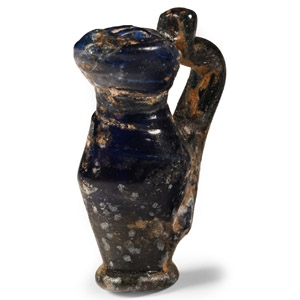
Roman Blue Glass Miniature Flagon
3rd-4th century A.D.Sold for (Inc. bp): £65
Lamp-work glass miniature ewer with applied strap handle. 4.19 grams, 29 mm
Acquired from Red House Antiques, York, UK, 2008. Ian Wilkinson collection, Nottinghamshire, UK. -
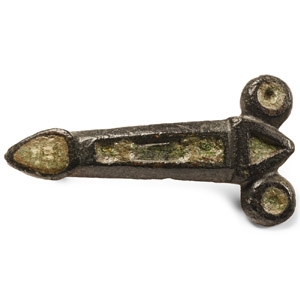
Roman Enamelled Bronze Phallic Mount
2nd century A.D.Sold for (Inc. bp): £195
With segmented enamelled cells to the obverse, two attachment studs to the reverse. 3.8 grams, 33 mm
Found West Row, Mildenhall, Suffolk, UK. Property of a Kent lady collector. -
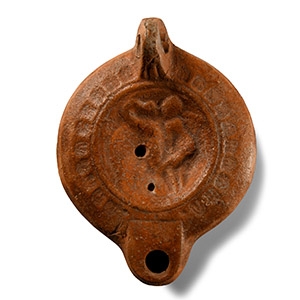
Roman Oil Lamp with Leda and The Swan
2nd century A.D.Estimate: £200 - 300 (+bp*)
Opening Bid: £100
A Roman North African terracotta oil lamp with grooved ring handle; discus decorated with the mythological scene depicting Leda and the swan embracing. 77 grams, 10.3 cm
Dr Suzanne Gozlan, thence by descent. Suzanne Gozlan (1921-2022), a doctor of History and Archaeology, served as a professor at the Ecole Normale d'Instituteurs de Chartres and lectured at the University of Paris 4 Sorbonne. Property of a Bristol, UK, gentleman.
In Greek mythology, Leda was the wife of King Tyndareus and queen of Sparta. According to the myth, Zeus, the king of the gods, was captivated by Leda's beauty and appeared before her in the form of a swan. He then either raped or seduced her and impregnated her. The same night, Leda slept with her husband who also impregnated her, as a result of these two unions she laid two eggs, each containing one set of twins. According to later Greek mythology Leda bore Helen (of Troy) and Polydeuces, children of Zeus, while at the same time bearing Castor and Clytemnestra, children of her husband.
