
Loading, please wait...
LOT 0134
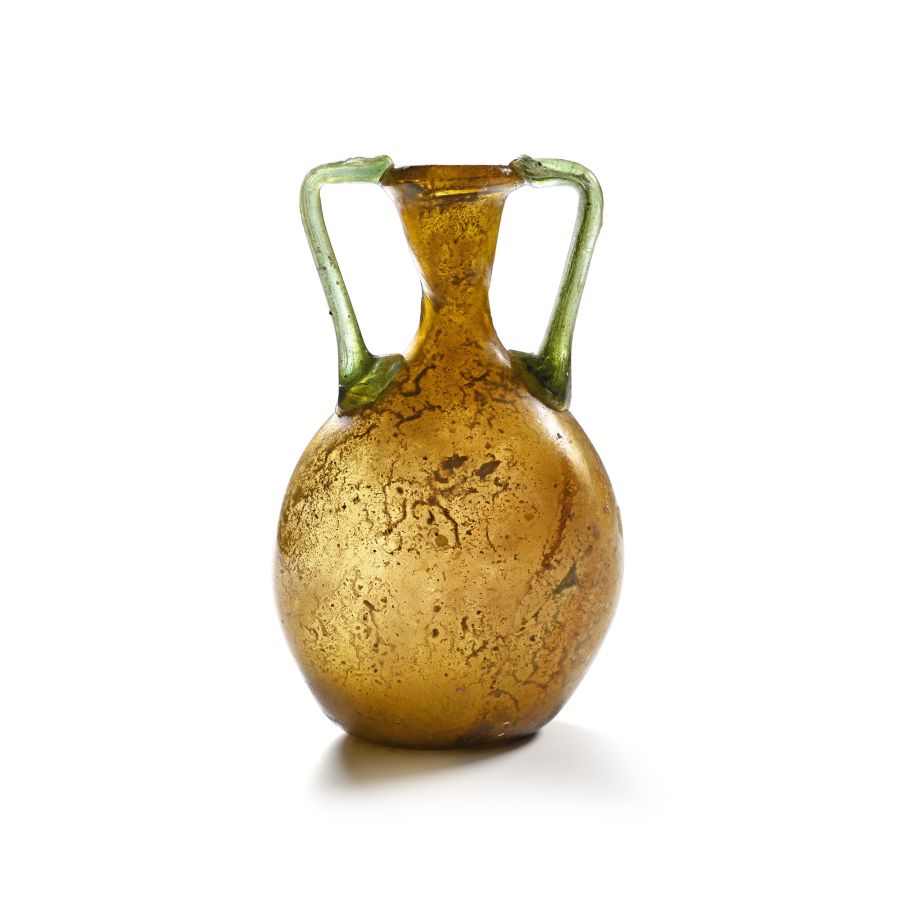
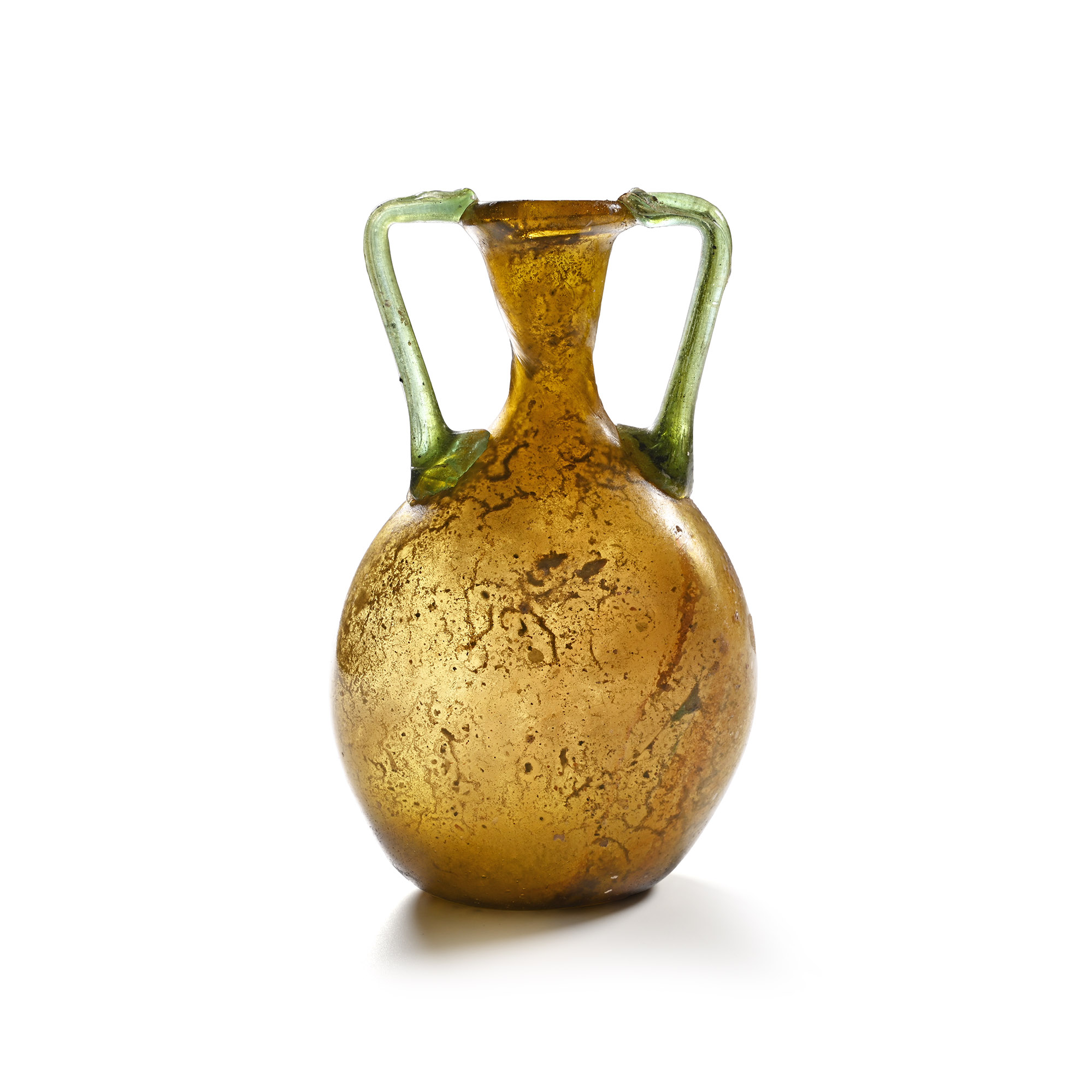
Roman Honey and Green Double-Handled Glass Pilgrim's Flask
1ST-4TH CENTURY A.D.
5 1/2 in. (105 grams, 13.9 cm).
Amphoriskos with flat disc-shaped body, tubular neck with flared rim, two lateral knee-shaped handles to the shoulder.
ProvenanceFrom an important London collection of glass, 1990s.
This lot is accompanied by an illustrated lot declaration signed by the Head of the Antiquities Department, Dr Raffaele D'Amato.
Cf. Lightfoot, C.S., Ancient Glass in National Museums Scotland, Edinburgh, 2007, item 270, for type.
CONDITIONTimeLine Auctions follows a vetting process to ensure the authenticity and legality of all items, reinforcing our commitment to integrity and responsible trading. Each antiquity, antique, and coin lot undergoes thorough examination by a vetting committee of at least ten external specialists, professional trade association members, scientists, and archaeologists: Our Vetting Process
AUCTIONS:
TimeLine is a leading auction house specialising in antiquities, ancient art, collectables, natural history, coins, medals, and books. Our auctions offer museums, collectors, historians, and enthusiasts the opportunity to acquire unique and historically significant pieces.
LOT 0134
Roman Honey and Green Double-Handled Glass Pilgrim's Flask
Sold for (Inc. bp): £1,170
-
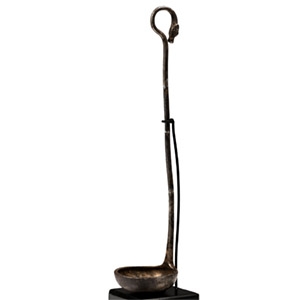
Roman Silver Ladle with Beast Finial
1st-3rd century A.D.Estimate: £1,000 - 1,400 (‡+bp*)
Opening Bid: £450
With broad bowl and in-turned rim, square-section long handle looped at the end with a beast-head finial; repaired and mounted on a custom-made display stand. 70 grams, 22.5 cm (317 grams total, 25.5 cm including stand)
Acquired in the mid 1980s-1990s. Private collection, Switzerland, thence by descent. Private collection, since the late 1990s. This lot is accompanied by an illustrated lot declaration signed by the Head of the Antiquities Department, Dr Raffaele D'Amato. -
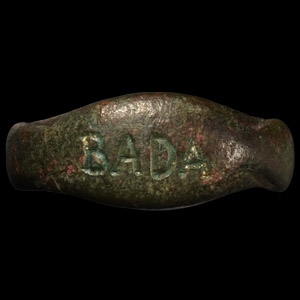
Late Roman Bronze Ring with BADA
4th-5th century A.D.Sold for (Inc. bp): £39
With expandable hoop and narrow bezel inscribed with 'BADA'. 4.14 grams, 23.09 mm overall, 19.53 mm internal diameter (approximate size British R 1/2, USA 8 3/4, Europe 19.38, Japan 18)
Ex German art market, 2000s. Acquired from an EU collector living in London. From the collection of a Surrey, UK, gentleman. This lot is accompanied by an illustrated lot declaration signed by the Head of the Antiquities Department, Dr Raffaele D'Amato. -
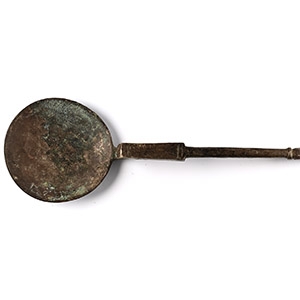
Roman Swan-Necked Silver Spoon
1st-3rd century A.D.Sold for (Inc. bp): £520
Round-section stem with balustered finial and rectangular plaque to the other end, shallow round bowl. 20.6 grams, 12.9 cm
Private collection, Switzerland, 1992. Thence by descent. Private collection, since the late 1990s. This lot is accompanied by an illustrated lot declaration signed by the Head of the Antiquities Department, Dr Raffaele D'Amato.
