
Loading, please wait...
LOT 0753
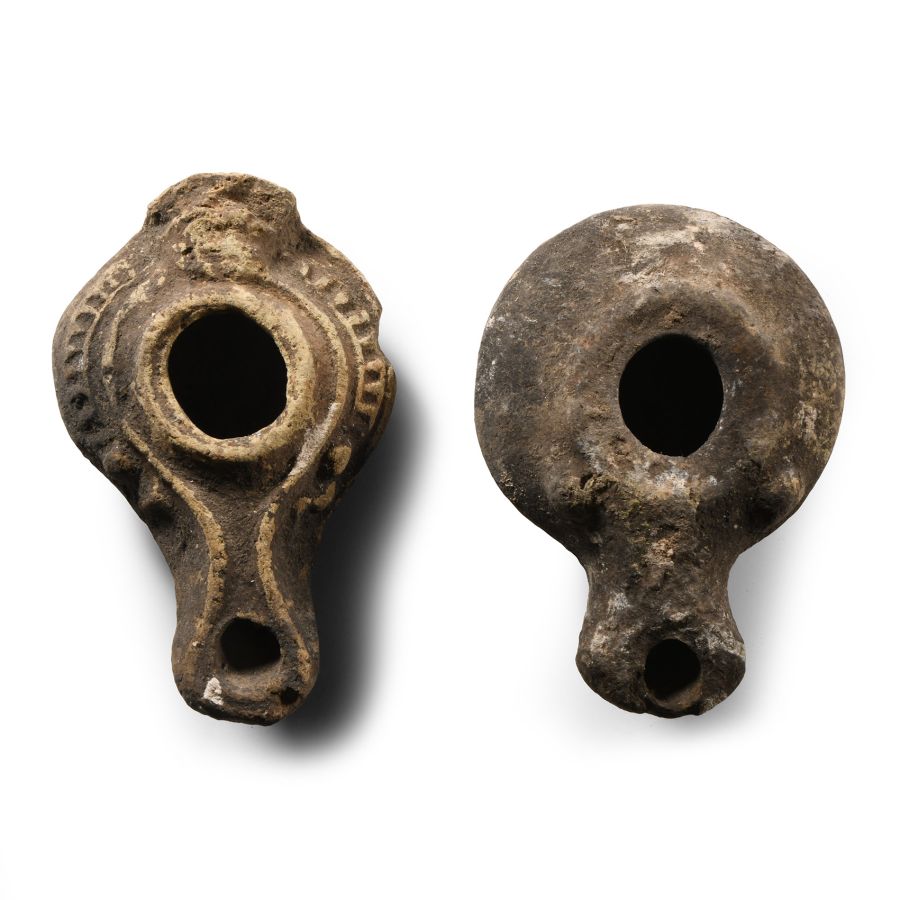
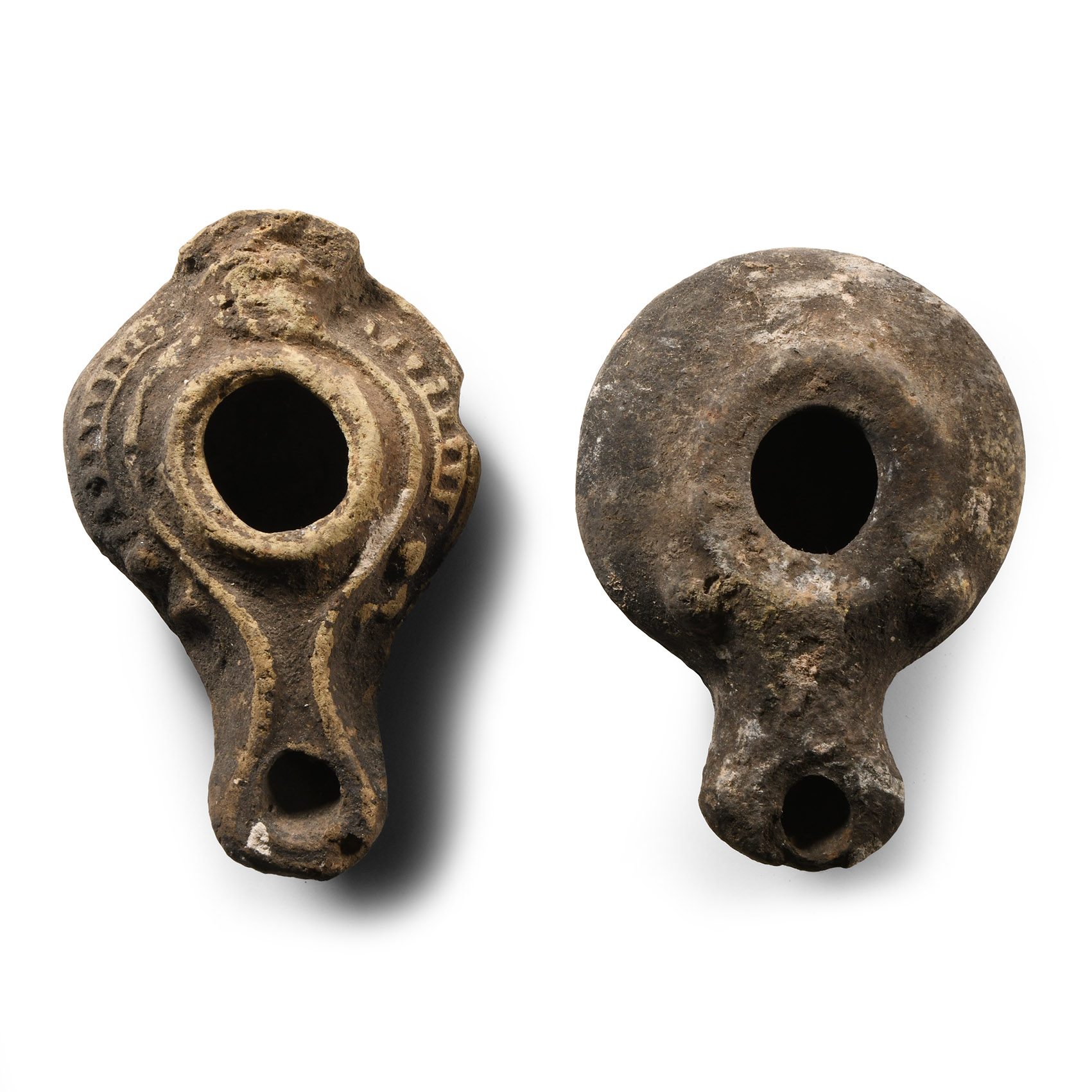
Roman Holy Land Terracotta Oil Lamp Group
1ST-2ND CENTURY A.D.
3 3/4 - 4 in. (167 grams total, 9.5-10.2 cm).
Each with broad squat body, raised rim to the discus, extended nozzle and basal ring. [2, No Reserve]
ProvenanceFrom a collection acquired on the UK art market from various auction houses and collections mostly before 2000.
From an important Cambridgeshire estate; thence by descent.
TimeLine Auctions follows a vetting process to ensure the authenticity and legality of all items, reinforcing our commitment to integrity and responsible trading. Each antiquity, antique, and coin lot undergoes thorough examination by a vetting committee of at least ten external specialists, professional trade association members, scientists, and archaeologists: Our Vetting Process
AUCTIONS:
TimeLine is a leading auction house specialising in antiquities, ancient art, collectables, natural history, coins, medals, and books. Our auctions offer museums, collectors, historians, and enthusiasts the opportunity to acquire unique and historically significant pieces.
-
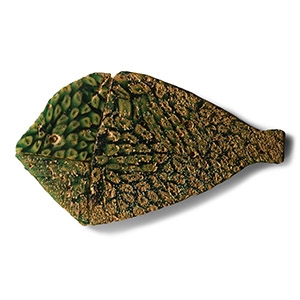
Roman Millefiori Fish Palette
1st century A.D.Sold for (Inc. bp): £468
Flat fish-shaped panel formed from three different sections of millefiori glass, drilled socket for an inset eye (absent). 22.1 grams, 94 mm
Acquired on the German art market, 1989-1995. with The Museum Gallery, 19 Bury Place, London, WC1, UK, 1998-2003. Property of a London based academic, 2003-present. -
.jpg)
Roman Translucent Glass Bowl
3rd century A.D.Sold for (Inc. bp): £494
Translucent aqua glass with moulded texture to the outer face. 209 grams, 16 cm wide
From the collection of a late East Anglian teacher and antiquarian who retired to the Isle of Wight in Hampshire, UK. He amassed a large collection of objects between the 1960s-1980s. -
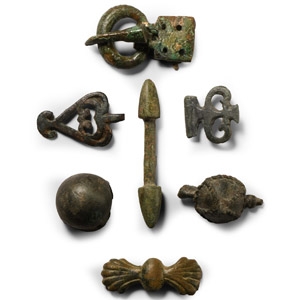
Roman and Later Artefact Group
2nd-3rd century A.D. and laterSold for (Inc. bp): £46
Comprising: a heart-shaped openwork mount; a pelta-shaped openwork mount with stud to the reverse; a buckle; a domed strap divider; a conical strap-slider(?) with rope decoration; a decorative mount with foliate sprays; a bar with conical finials. 60 grams total, 21-56 mm
Property of the vendor's grandfather, thence by family descent, circa 1985. From the private collection of a New York, USA gentleman.
