
Loading, please wait...
LOT 1012
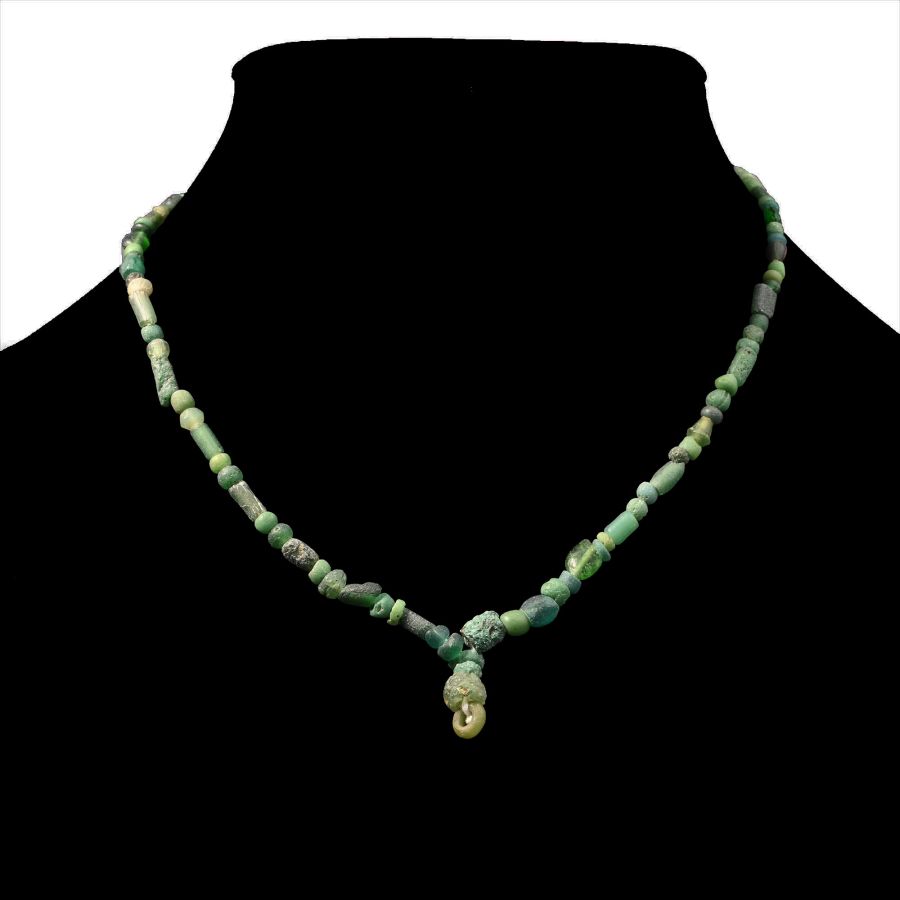
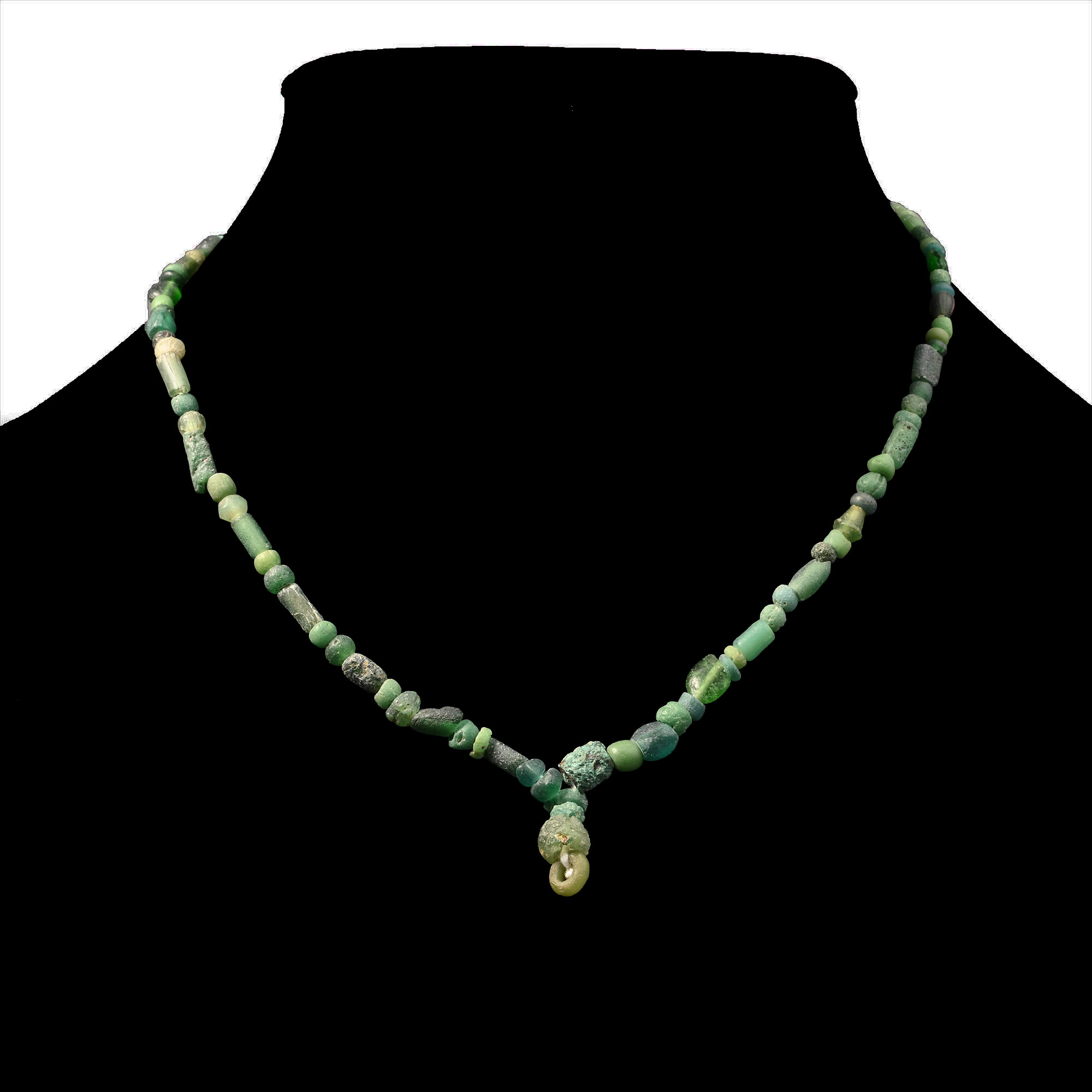
Roman Green Glass Bead Necklace String
1ST-4TH CENTURY A.D. AND LATER
14 3/4 in. (10.9 grams, 37.5 cm).
Restrung designer necklace string of tubular, tabular, oblate and other types with annular pendant centrepiece. [No Reserve]
ProvenanceLondon, UK, collection, 2000s.
CONDITIONTimeLine Auctions follows a vetting process to ensure the authenticity and legality of all items, reinforcing our commitment to integrity and responsible trading. Each antiquity, antique, and coin lot undergoes thorough examination by a vetting committee of at least ten external specialists, professional trade association members, scientists, and archaeologists: Our Vetting Process
AUCTIONS:
TimeLine is a leading auction house specialising in antiquities, ancient art, collectables, natural history, coins, medals, and books. Our auctions offer museums, collectors, historians, and enthusiasts the opportunity to acquire unique and historically significant pieces.
-

Late Roman Bronze Ring Bezel with Menorah and Symbols
4th-6th century A.D.Sold for (Inc. bp): £520
Discoid with a raised bar on the reverse, on the upper face a large menorah flanked by lulav and shofar. 0.75 grams, 9 mm
UK collection since the 1990s. -
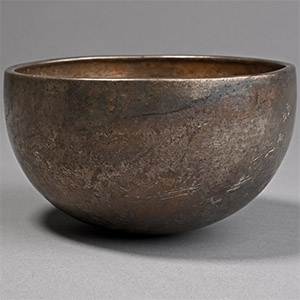
Roman or Gandharan Silver Cup
Circa late 1st century B.C.-early 1st century A.D.Estimate: £1,500 - 2,000 (+bp*)
Opening Bid: £750
Hemispherical in profile with rounded underside, thickened rim. 232 grams, 11.4 cm
Acquired from a private UK collection prior to 1979. Ex Julian Sherrier collection, a leading figure in Gandharan art. with Christie's, New York, sale 2337, 14th September 2010, no.41 (part). Accompanied by the original Christie's lot ticket. -
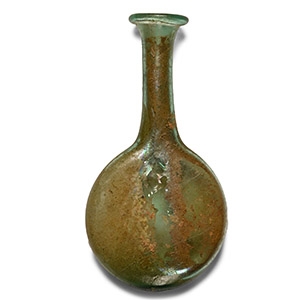
Roman Glass Vessel
2nd-3rd century A.D.Sold for (Inc. bp): £91
With flattened discoid body and tall neck with flared mouth, applied rim. 20.5 grams, 10.6 cm
From a London, UK, collection, 1990s. This lot is accompanied by an illustrated lot declaration signed by the Head of the Antiquities Department, Dr Raffaele D’Amato.
Glass flasks, such as this example, were used as containers for ointments, powders, balms, and other expensive liquids such as perfumes. These flattened spherical vessels were often utilised by pilgrims to carry water on their travels. This particular form appears to be a predecessor to twin-handled pilgrim flasks, which became commonplace later in the 3rd and 4th centuries.
