
Loading, please wait...
LOT 0859
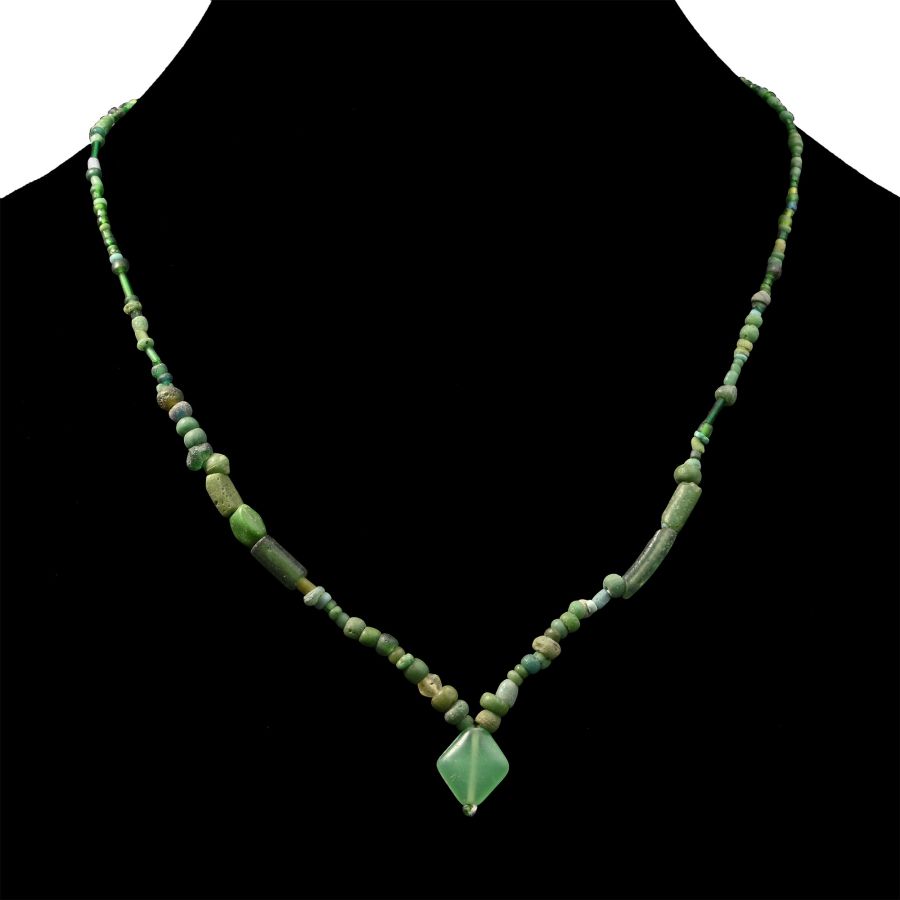
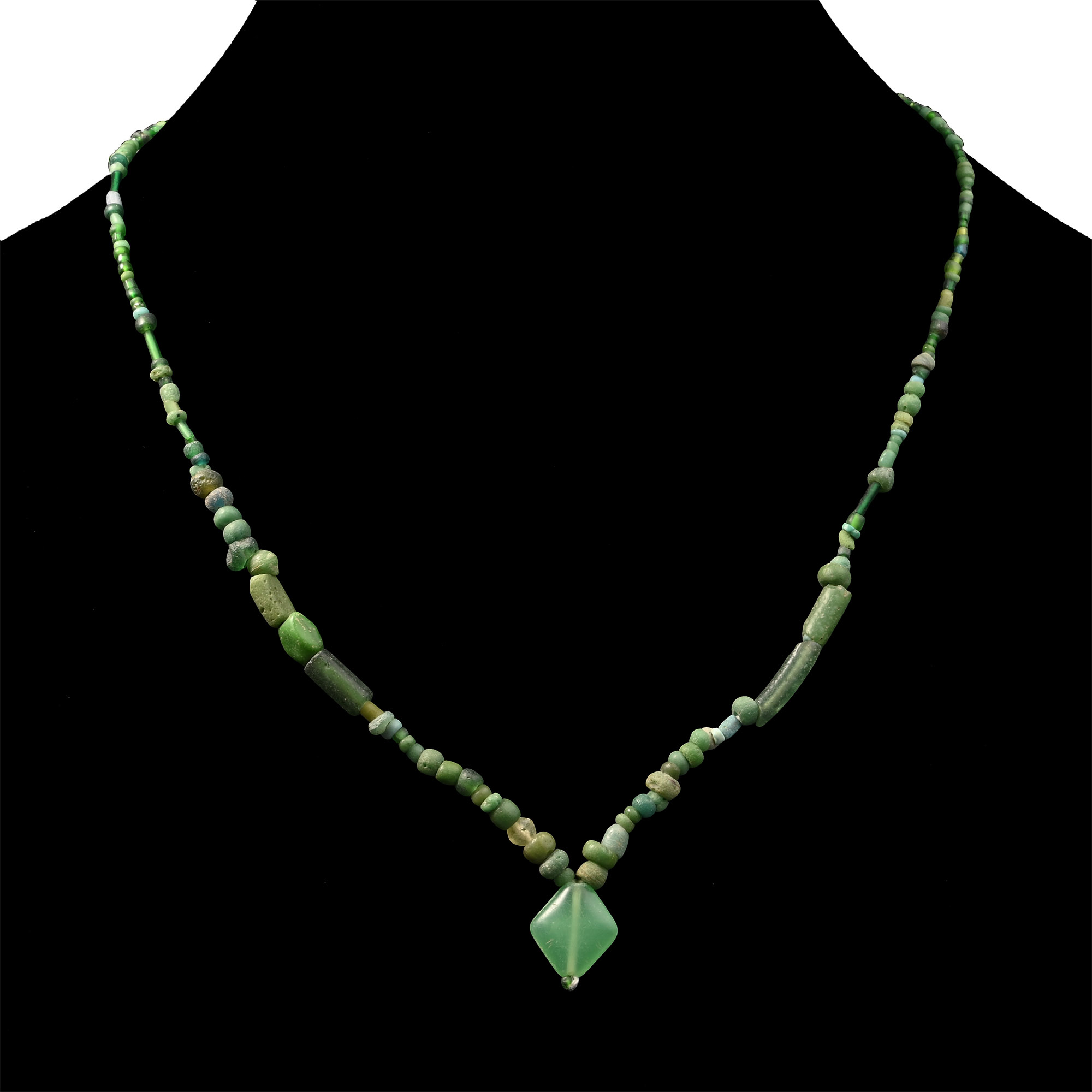
Roman Green Glass Bead Necklace String
1ST-4TH CENTURY A.D. AND LATER
15 3/4 in. (10.6 grams, 40 cm).
Restrung designer necklace string of tubular, oblate and other types with lozengiform pendant centrepiece. [No Reserve]
ProvenanceLondon, UK, collection, 2000s.
CONDITIONTimeLine Auctions follows a vetting process to ensure the authenticity and legality of all items, reinforcing our commitment to integrity and responsible trading. Each antiquity, antique, and coin lot undergoes thorough examination by a vetting committee of at least ten external specialists, professional trade association members, scientists, and archaeologists: Our Vetting Process
AUCTIONS:
TimeLine is a leading auction house specialising in antiquities, ancient art, collectables, natural history, coins, medals, and books. Our auctions offer museums, collectors, historians, and enthusiasts the opportunity to acquire unique and historically significant pieces.
-
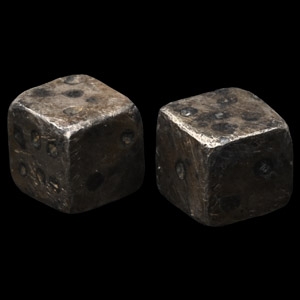
Roman Silver Niello Inlaid Gaming Dice Pair
1st-4th century A.D.Sold for (Inc. bp): £312
Pair of cuboid dice, each with niellod markings disposed 1:6, 2:4, 3:5. 8.12 grams total, 7 mm each
Ex German art market, 2000s. Acquired from an EU collector living in London. From the collection of a Surrey, UK, gentleman. -
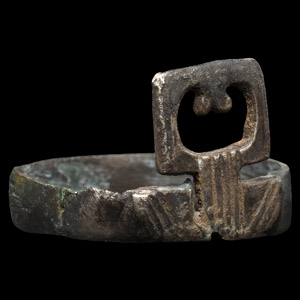
Roman Silver Key Ring
1st-4th century A.D.Sold for (Inc. bp): £52
Comprising a wide hoop with openwork key bezel. 2.54 grams, 21.27 mm overall, 18.70 mm internal diameter (approximate size British Q 1/2, USA 8 1/4, Europe 18.12, Japan 17)
Ex German art market, 2000s. Acquired from an EU collector living in London. From the collection of a Surrey, UK, gentleman. -
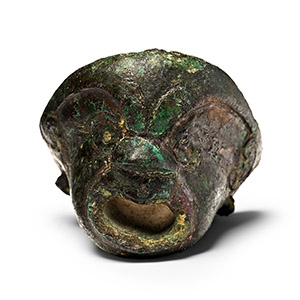
Roman Bronze Actor's Mask Mount
1st-2nd century A.D.Sold for (Inc. bp): £33
Formed as a comic actor's mask (maschera), with exaggerated scooped mouth and grotesque features, hollow to the reverse; perhaps a pouring spout. 62.7 grams, 40.5 mm
Acquired on the UK art market before 2000. Property of an Essex, UK, gentleman.
