
Loading, please wait...
LOT 0824
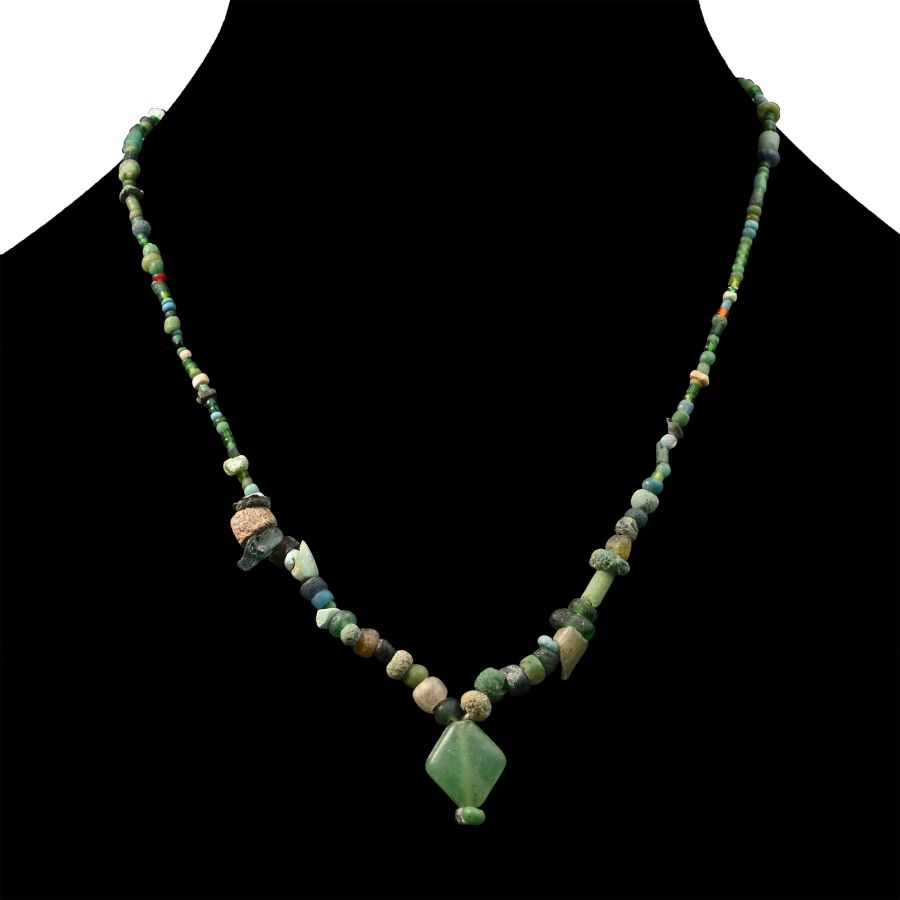
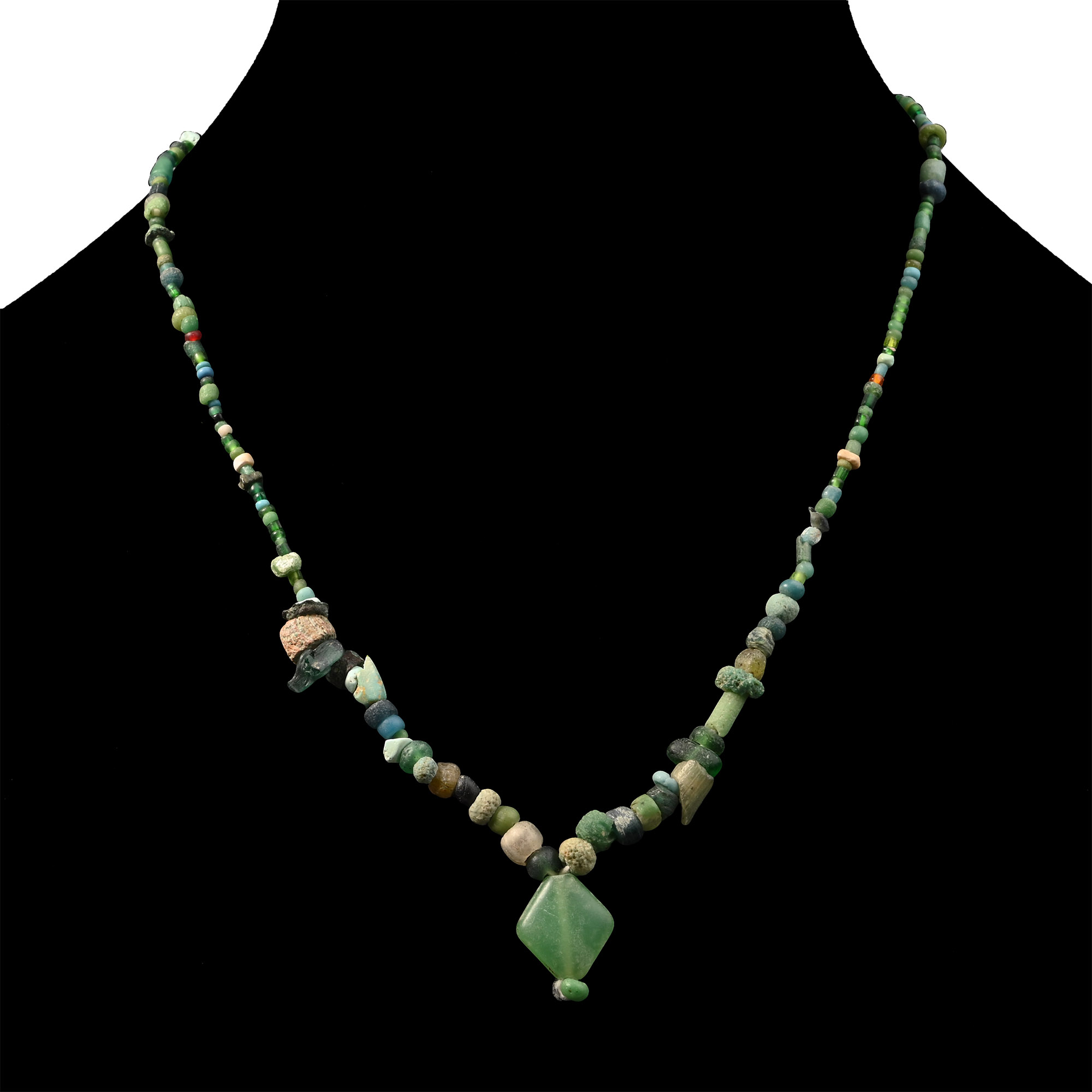
Roman Green Glass Bead Necklace String
1ST-4TH CENTURY A.D. AND LATER
16 1/4 in. (10.6 grams, 41.3 cm).
Restrung designer necklace string of tubular, oblate and other types with lozengiform pendant centrepiece. [No Reserve]
ProvenanceLondon, UK, collection, 2000s.
CONDITIONTimeLine Auctions follows a vetting process to ensure the authenticity and legality of all items, reinforcing our commitment to integrity and responsible trading. Each antiquity, antique, and coin lot undergoes thorough examination by a vetting committee of at least ten external specialists, professional trade association members, scientists, and archaeologists: Our Vetting Process
AUCTIONS:
TimeLine is a leading auction house specialising in antiquities, ancient art, collectables, natural history, coins, medals, and books. Our auctions offer museums, collectors, historians, and enthusiasts the opportunity to acquire unique and historically significant pieces.
-
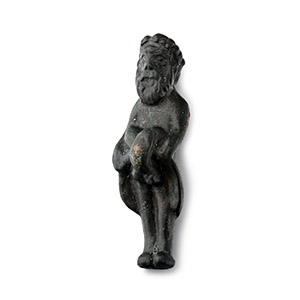
Romano-British Bronze Priapus Statuette
2nd-3rd century A.D.Sold for (Inc. bp): £117
Modelled in the round, standing, wearing a paenula, his hands holding up the hem to support a pile of fruits on his erect penis. 14.1 grams, 40 mm
Found Lincolnshire, UK.
This is one of the most characteristic representations of Priapus: standing, with long, smooth hair. With his hands, he raises his tunic, revealing his phallus, a symbol of fertility and good luck, and carries the first fruits of the earth on the hem of his tunic. -
.jpg)
Roman Bronze Ring with Standing Goddess
2nd-4th century A.D.Sold for (Inc. bp): £59
Comprising a D-section hoop (split), and an oval bezel with standing goddess, possibly Venus. 3.39 grams, 21.26 mm overall, 18.03 mm internal diameter (approximate size British M 1/2, USA 6 1/4, Europe 13.09, Japan 12)
Ex German art market, 2000s. Acquired from an EU collector living in London. From the collection of a Surrey, UK, gentleman. -
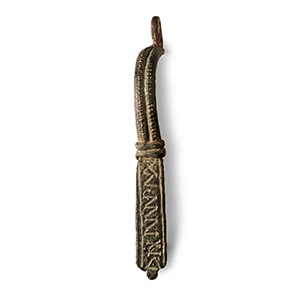
Roman Inscribed Bronze Bow Brooch
3rd-4th century A.D.Sold for (Inc. bp): £91
Colchester-type brooch shank with seriffed enigmatic legend 'DIXMNM'. 8.19 grams, 78 mm
Ex important German collection of brooches, 1980s. This lot is accompanied by an illustrated lot declaration signed by the Head of the Antiquities Department, Dr Raffaele D'Amato.
The inscription 'DIXMNM' is not easy to interpretate. MNM was possibly used as abbreviation for Dis Manibus Monumentum, i.e. ‘Monument to the spirit of the dead’. DIX was a shorter form for he/she/it said (dixit), but also refers sometimes to the numeral 12 (duodecimus).
