
Loading, please wait...
LOT 0780
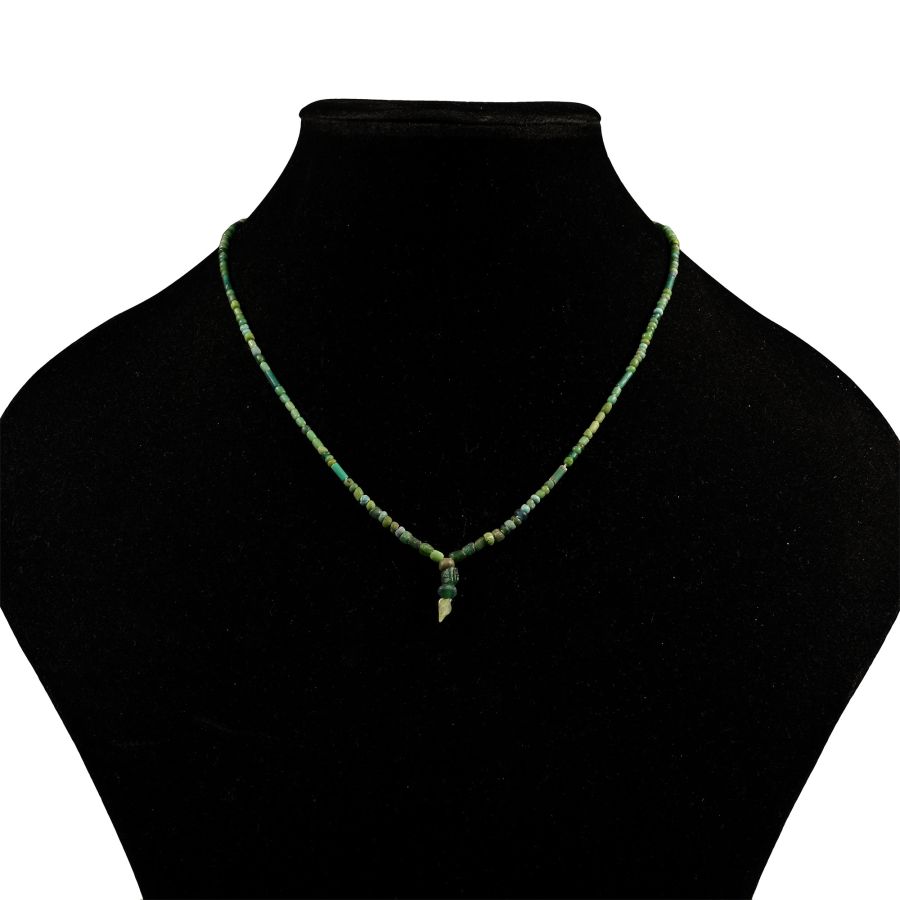
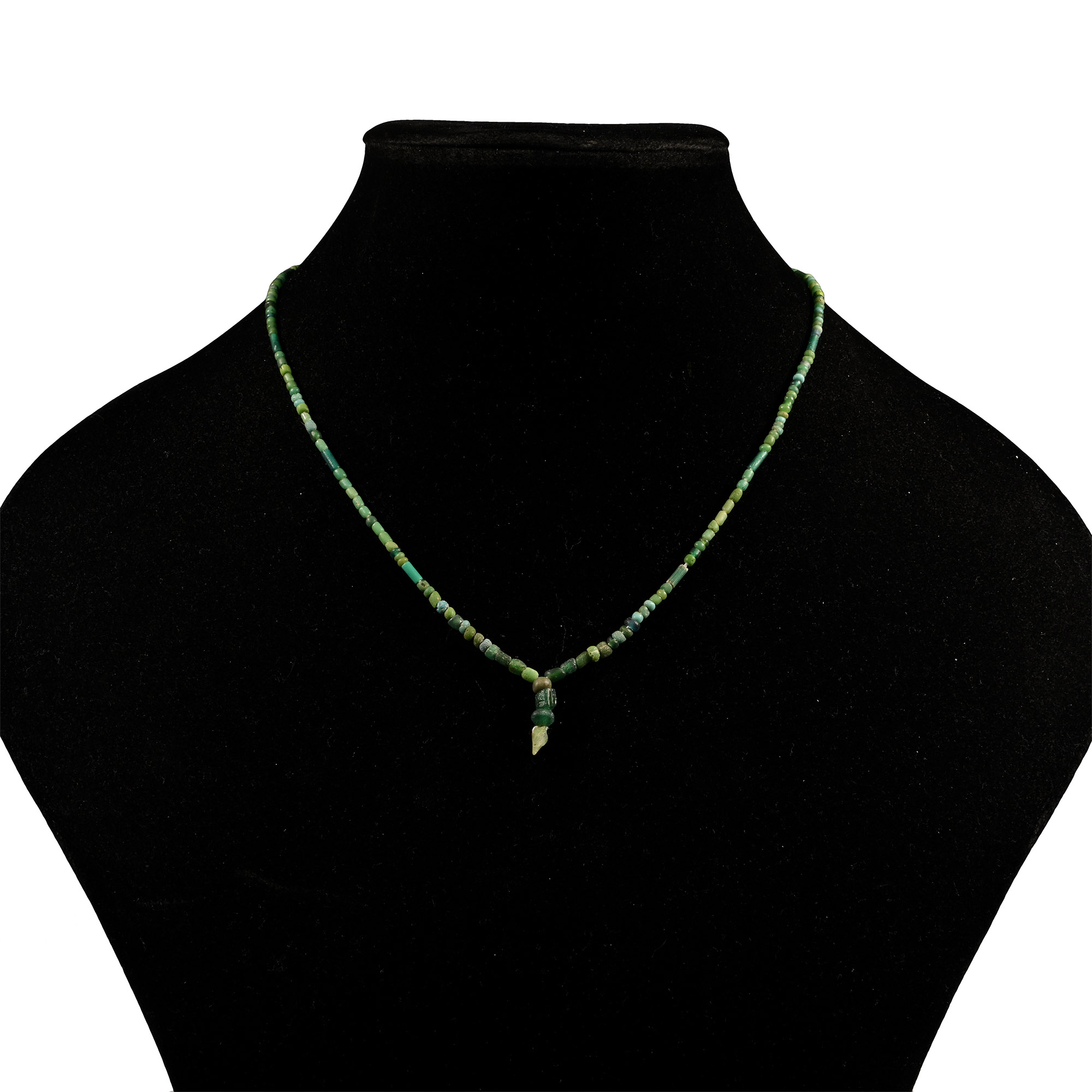
Roman Green Glass Bead Necklace String
1ST-4TH CENTURY A.D. AND LATER
16 3/8 in. (5.18 grams, 41.5 cm).
Restrung group of annular, cylindrical, biconical and other beads. [No Reserve]
ProvenanceEx London, UK, collection, 1990s.
This lot is accompanied by an illustrated lot declaration signed by the Head of the Antiquities Department, Dr Raffaele D'Amato.
TimeLine Auctions follows a vetting process to ensure the authenticity and legality of all items, reinforcing our commitment to integrity and responsible trading. Each antiquity, antique, and coin lot undergoes thorough examination by a vetting committee of at least ten external specialists, professional trade association members, scientists, and archaeologists: Our Vetting Process
AUCTIONS:
TimeLine is a leading auction house specialising in antiquities, ancient art, collectables, natural history, coins, medals, and books. Our auctions offer museums, collectors, historians, and enthusiasts the opportunity to acquire unique and historically significant pieces.
-
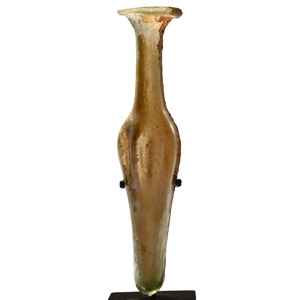
Roman Glass Bottle
1st-4th century A.D.Estimate: £250 - 350 (+bp*)
Opening Bid: £135
Comprising a tapering round-section body with narrow shoulder and flared neck, median bulb with pinched flanges; supplied with a custom-made stand. 20.5 grams, 13.4 cm (82.2 grams total, 15.2 cm including stand)
From an important London collection of glass, 1990s. This lot is accompanied by an illustrated lot declaration signed by the Head of the Antiquities Department, Dr Raffaele D'Amato. -
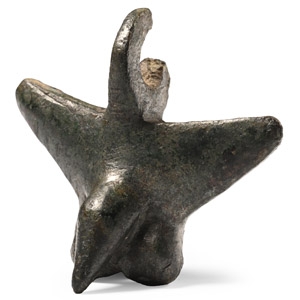
Roman Bronze Phallic Pendant
1st-4th century A.D.Sold for (Inc. bp): £26
Comprising a triangular lower abdomen with male genital at the lower corner, remains of suspension loop above. 22.7 grams, 38 mm
Ex German art market, 2000s. Acquired from an EU collector living in London. From the collection of a Surrey, UK, gentleman. This lot is accompanied by an illustrated lot declaration signed by the Head of the Antiquities Department, Dr Raffaele D'Amato. -
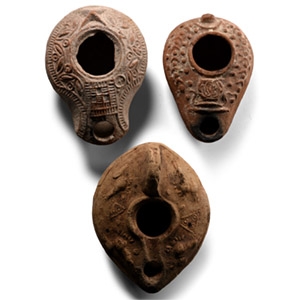
Roman and Byzantine Ceramic Oil Lamp Collection
4th-8th century A.D.Estimate: £300 - 400 (‡+bp*)
Opening Bid: £150
Comprising: a piriform lamp with birds and geometric motifs, low basal ring; a piriform lamp with raised pellets and other motifs; a rounded lamp with short nozzle, low-relief leaves and ring-and-dot motifs within geometric border, a hatched rectangle behind the nozzle, a palm branch underneath the nozzle flanked by crescentic lines and ring-and-dot motifs, raised nipple to base. 190 grams total, 78-90 mm
with Galerie Rhéa, Zurich, Switzerland. This lot is accompanied by an illustrated lot declaration signed by the Head of the Antiquities Department, Dr Raffaele D'Amato.
