
Loading, please wait...
LOT 0648
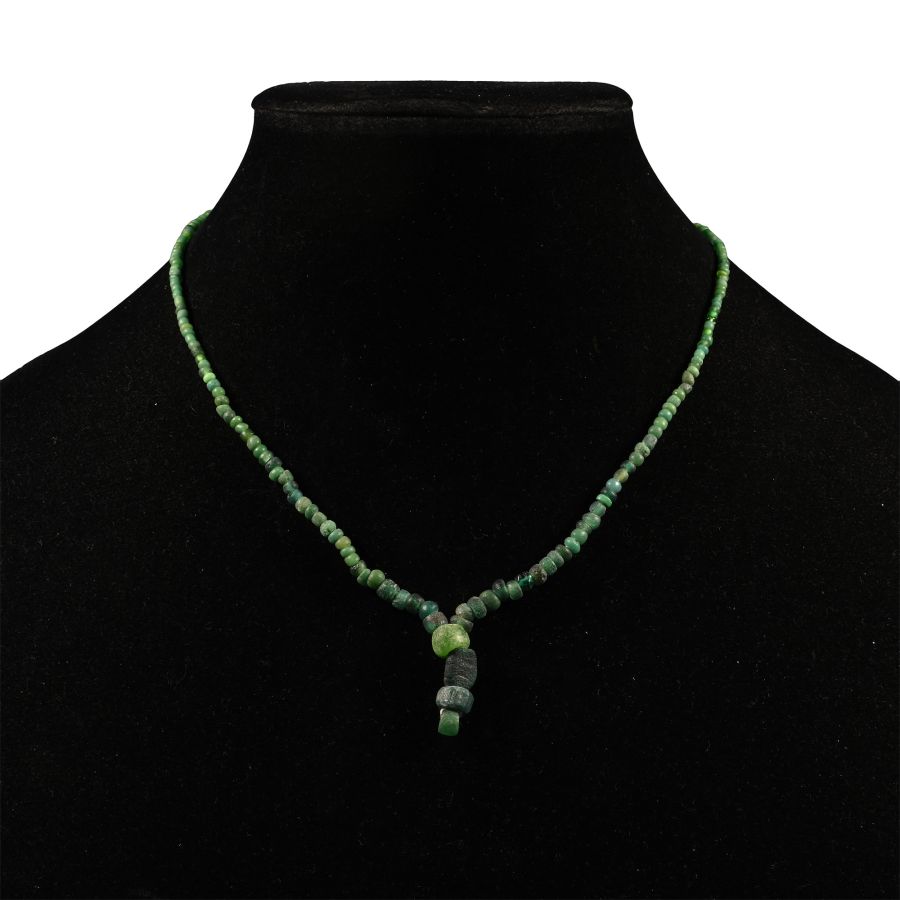
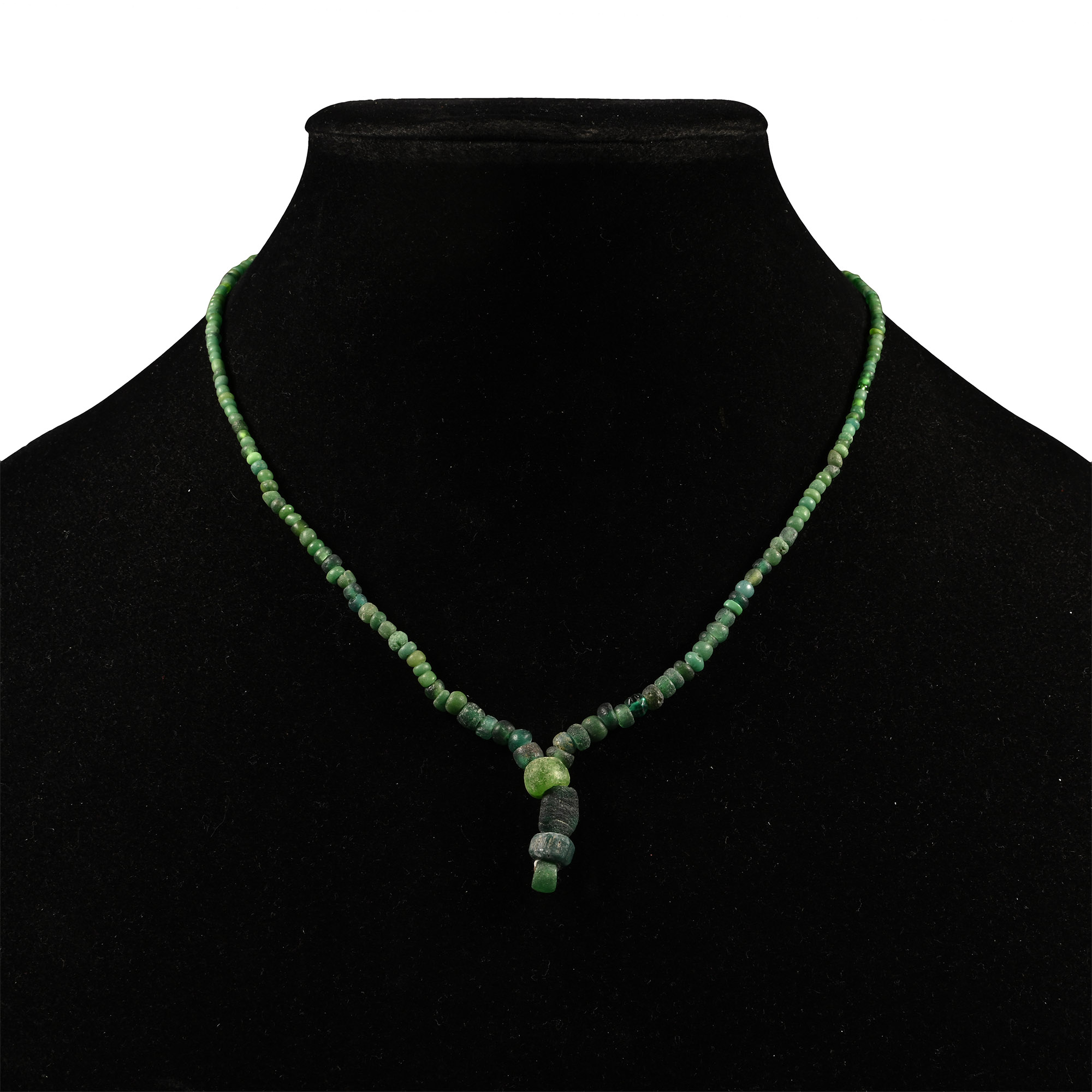
Roman Green Glass Bead Necklace String
1ST-4TH CENTURY A.D. AND LATER
14 3/8 in. (8.08 grams, 36.5 cm).
Restrung group of tabular, facetted, oblate and other beads. [No Reserve]
ProvenanceEx London, UK, collection, 1990s.
This lot is accompanied by an illustrated lot declaration signed by the Head of the Antiquities Department, Dr Raffaele D'Amato.
TimeLine Auctions follows a vetting process to ensure the authenticity and legality of all items, reinforcing our commitment to integrity and responsible trading. Each antiquity, antique, and coin lot undergoes thorough examination by a vetting committee of at least ten external specialists, professional trade association members, scientists, and archaeologists: Our Vetting Process
AUCTIONS:
TimeLine is a leading auction house specialising in antiquities, ancient art, collectables, natural history, coins, medals, and books. Our auctions offer museums, collectors, historians, and enthusiasts the opportunity to acquire unique and historically significant pieces.
-
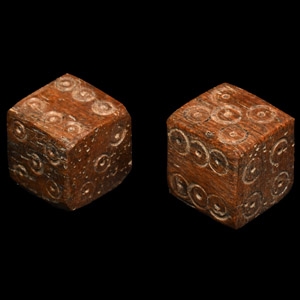
Roman Bone Dice Pair
1st-4th century A.D.Sold for (Inc. bp): £286
Each cuboid with ring-and-dot markings arranged 1:6, 2:5; 3:4. 7.07 grams, 12 mm each
Ex German art market, 2000s. Acquired from an EU collector living in London. From the collection of a Surrey, UK, gentleman. This lot is accompanied by an illustrated lot declaration signed by the Head of the Antiquities Department, Dr Raffaele D'Amato. -
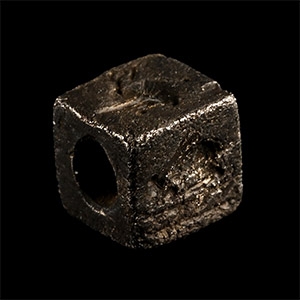
Roman Silver Gaming Cube with Animals
1st-4th century A.D.Sold for (Inc. bp): £117
Cuboid 'die' drilled through the centre, each of the four faces with a different animal: a hare, an eagle facing back, a dove, and a dolphin(?), probably used in a game of dice. 1.6 grams, 6 mm
Property of a Cambridgeshire, UK, collector. From his private collection since the 1970s; thence by descent circa 2000. Ex private collection of a Bedfordshire gentleman. This lot is accompanied by an illustrated lot declaration signed by the Head of the Antiquities Department, Dr Raffaele D'Amato. -
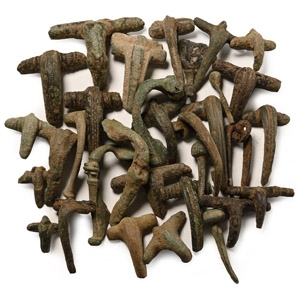
Roman Brooch and Other Artefact Group
1st-4th century A.D.Sold for (Inc. bp): £117
Including various brooch and pin fragments. 194 grams total, 16-43 mm
Found Suffolk, UK. This lot is accompanied by an illustrated lot declaration signed by the Head of the Antiquities Department, Dr Raffaele D'Amato.
