
Loading, please wait...
LOT 0609
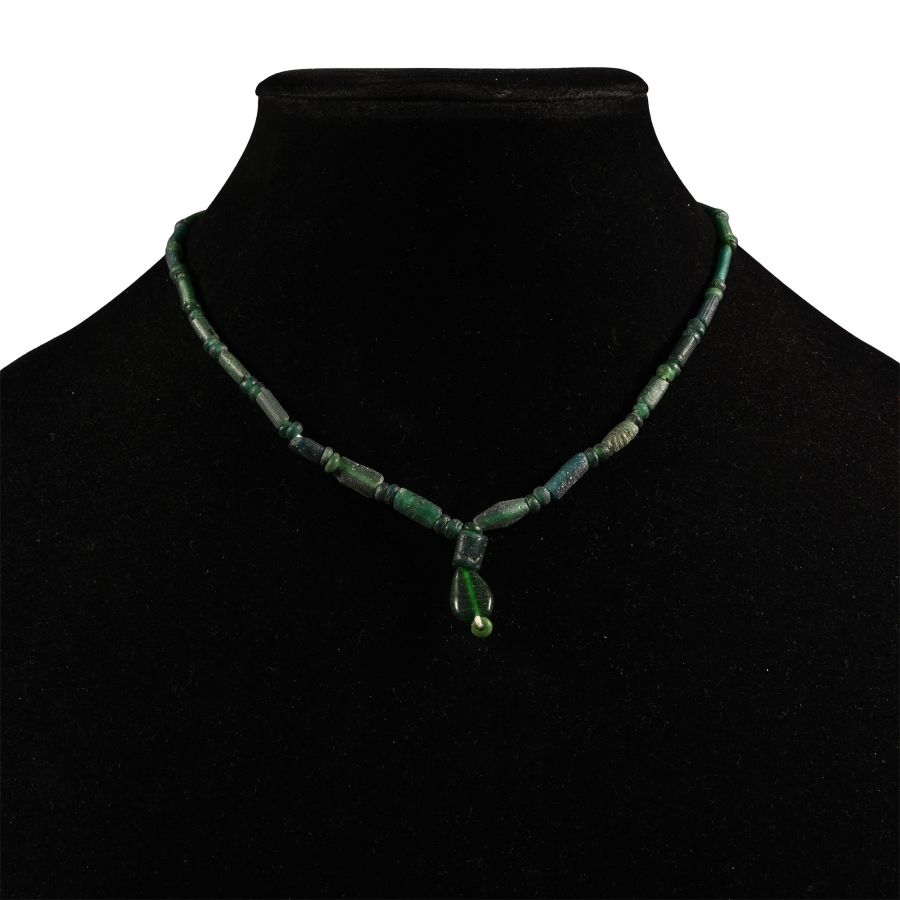
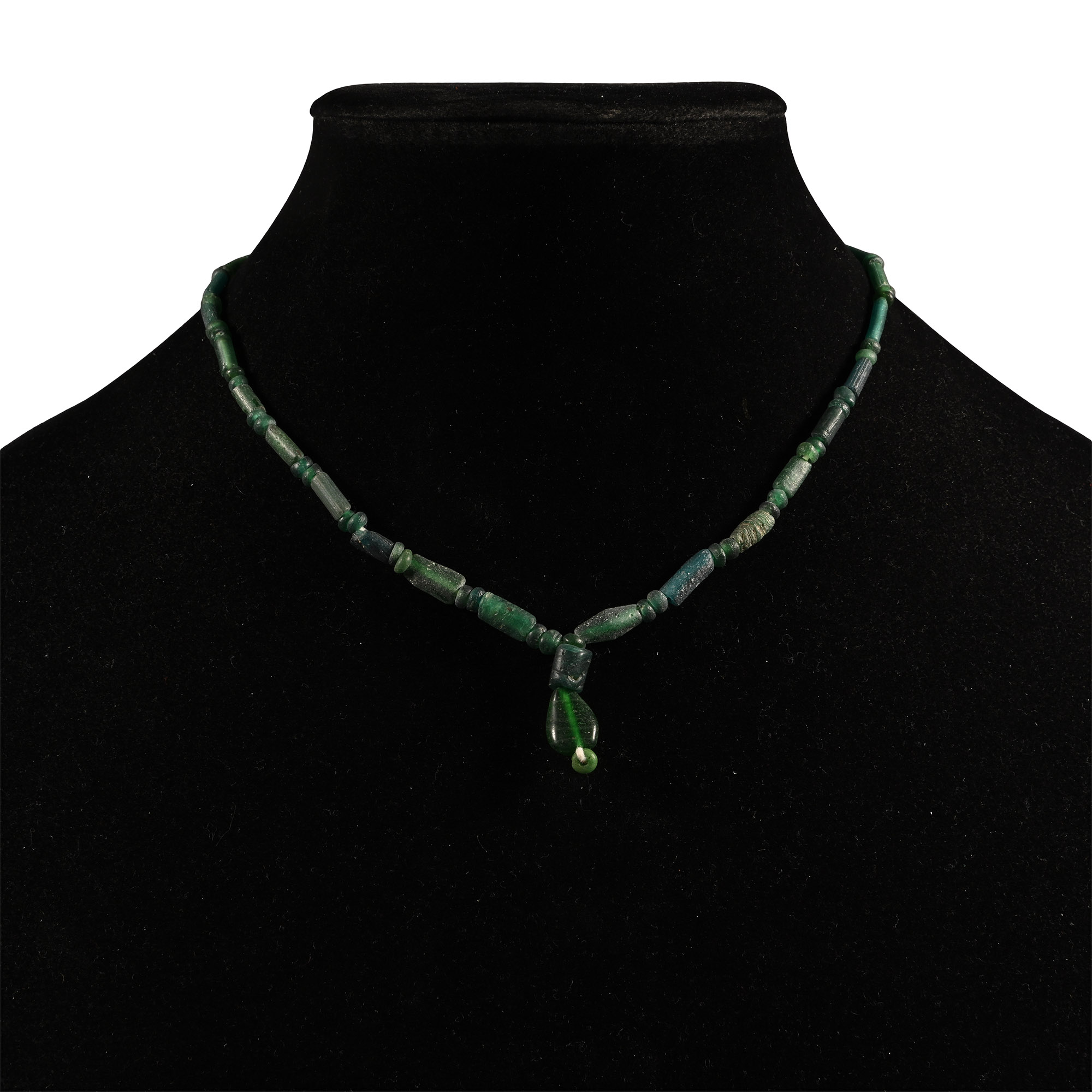
Roman Green Glass Bead Necklace String
1ST-4TH CENTURY A.D. AND LATER
14 1/4 in. (11.1 grams, 36.2 cm).
Restrung group of tubular, cylindrical, tabular and other beads. [No Reserve]
ProvenanceEx London, UK, collection, 1990s.
This lot is accompanied by an illustrated lot declaration signed by the Head of the Antiquities Department, Dr Raffaele D'Amato.
TimeLine Auctions follows a vetting process to ensure the authenticity and legality of all items, reinforcing our commitment to integrity and responsible trading. Each antiquity, antique, and coin lot undergoes thorough examination by a vetting committee of at least ten external specialists, professional trade association members, scientists, and archaeologists: Our Vetting Process
AUCTIONS:
TimeLine is a leading auction house specialising in antiquities, ancient art, collectables, natural history, coins, medals, and books. Our auctions offer museums, collectors, historians, and enthusiasts the opportunity to acquire unique and historically significant pieces.
-
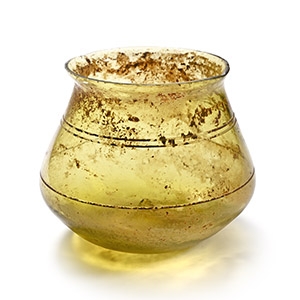
Roman Glass Cup with Wheel-Cut Lines
1st century A.D.Estimate: £800 - 1,000 (+bp*)
Opening Bid: £400
With biconvex body, dimple base, convex rim, wheel-cut circumferential bands. 131 grams, 95 mm
From an important London collection of glass, 1990s. This lot is accompanied by an illustrated lot declaration signed by the Head of the Antiquities Department, Dr Raffaele D'Amato. -
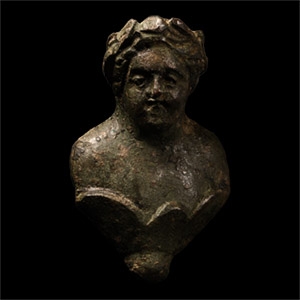
Roman Bronze Laureate Bust of Bacchus
1st-2nd century A.D.Sold for (Inc. bp): £390
Comprising a bust with head turned slightly to the right, wearing a laurel wreath on the brow; hollow to reverse of chest and head cavity filled with lead; acanthus-leaf finial. 203 grams, 87 mm
From the private Swiss collection of Hans Wiedemann, Biel/Bienne, since the 1990s. Ex S.L. Antiquarian Biel/Bienne, Switzerland. Acquired from T.B.on the Swiss art market in Basel. Swiss collection Basel-Landschaft. This lot is accompanied by an illustrated lot declaration signed by the Head of the Antiquities Department, Dr Raffaele D'Amato.
The laurel wreath in ancient Rome held significant meaning and was a prominent symbol. Traditionally it was awarded to someone who was honoured or who had achieved something notable. It adorned the heads of formidable military leaders and notable poets as a representation of status, victory, and honour. Fashioned from the laurel plant, Romans believed it showcased divine protection, with roots linked to the prophecy of the Delphic Oracle. -
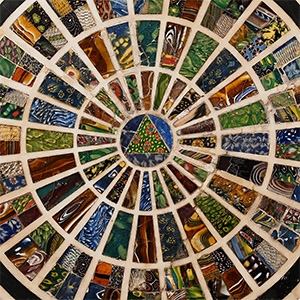
Roman Polychrome Mosaic Glass Set into a Marble Table Top
3rd century B.C.-2nd century A.D. and laterSold for (Inc. bp): £11,050
Discoid plaque with radiating panels of ancient inlaid mosaic and other glass; black outer border, centrepiece a disc with inlaid mosaic glass triangle, set into a marble table top; made in Rome circa 1825, attributed to Francesco Sibilio. 4.31 kg, 29.6 cm
Lady Walston, Newton Hall, Newton, Cambridgeshire. The collection of Mr Edric Van Vredenburgh. with Sotheby’s, London, The Eclectic World of Edric Van Vredenburgh, 6 June 2006, no.97. British private collection. This lot has been checked against the Interpol Database of stolen works of art and is accompanied by a search certificate number no.12743-235193. This lot has been cleared against the Art Loss Register database, and is accompanied by an illustrated lot declaration signed by the Head of the Antiquities Department, Dr Raffaele D'Amato.
