
Loading, please wait...
LOT 0809
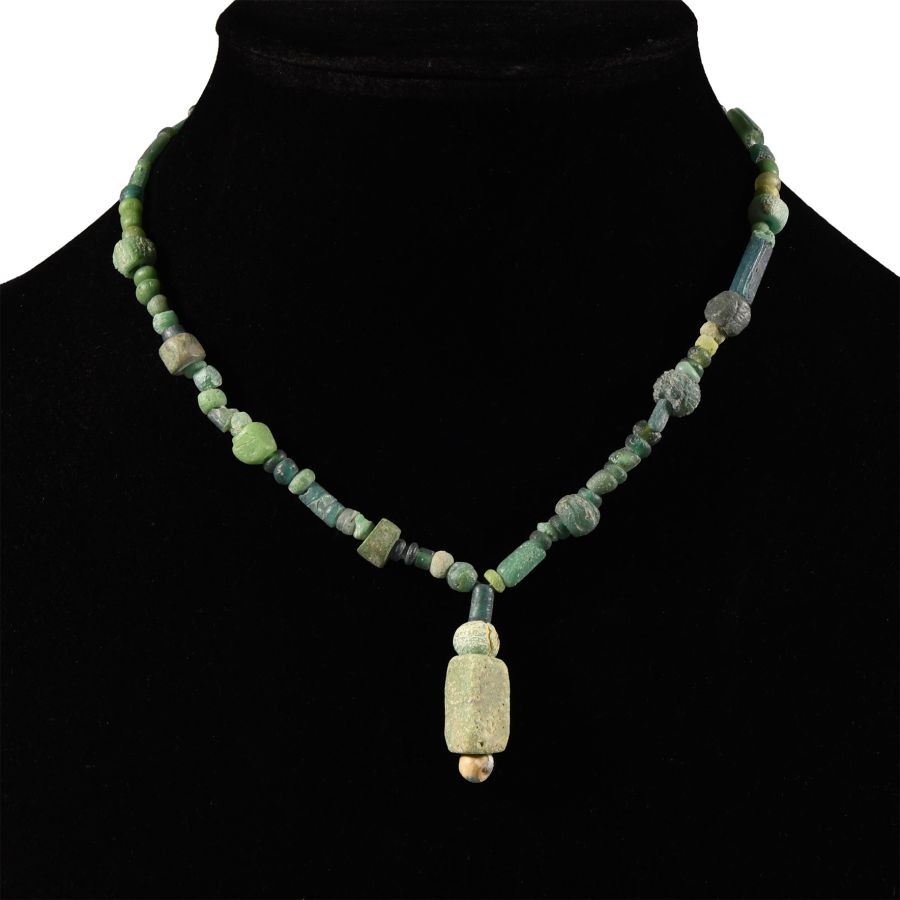
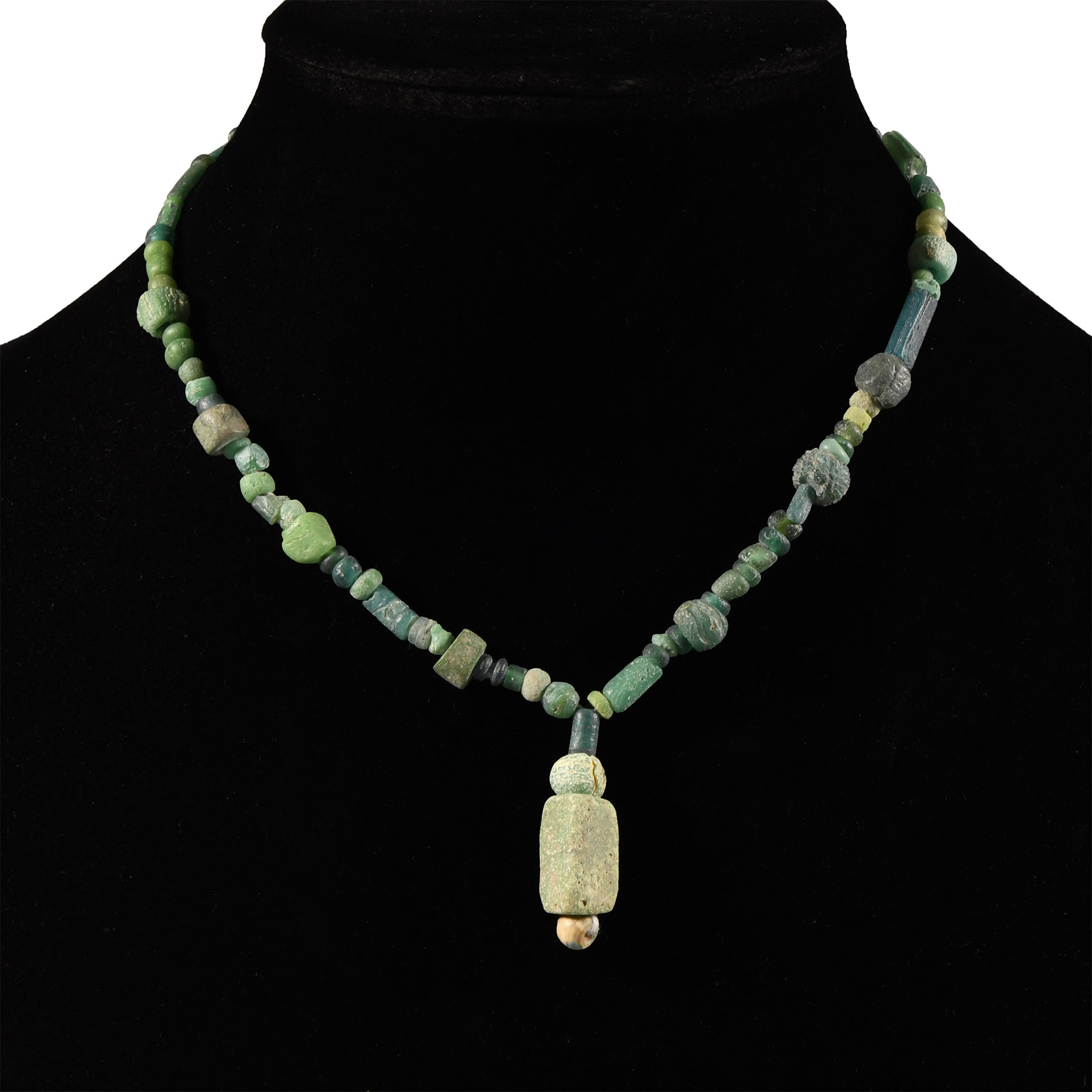
Roman Green Glass Bead Necklace String
1ST-4TH CENTURY A.D. AND LATER
13 3/4 in. (17.9 grams, 35 cm).
Restrung group of mainly annular beads with square-section bead dangle. [No Reserve]
ProvenanceAcquired 1980-2015.
Ex Abelita family collection.
TimeLine Auctions follows a vetting process to ensure the authenticity and legality of all items, reinforcing our commitment to integrity and responsible trading. Each antiquity, antique, and coin lot undergoes thorough examination by a vetting committee of at least ten external specialists, professional trade association members, scientists, and archaeologists: Our Vetting Process
AUCTIONS:
TimeLine is a leading auction house specialising in antiquities, ancient art, collectables, natural history, coins, medals, and books. Our auctions offer museums, collectors, historians, and enthusiasts the opportunity to acquire unique and historically significant pieces.
-
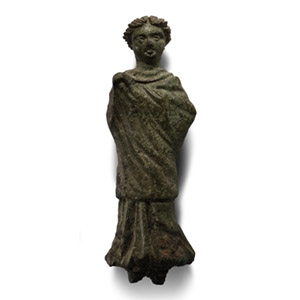
Etruscan Bronze Robed Figure
3rd-2nd century B.C.Estimate: £1,000 - 1,400 (‡+bp*)
Opening Bid: £500
Female with hair drawn up in a chignon, palla wrapped tightly around the upper body hiding the right arm bent with the hand at the shoulder, lower hem of robe flared; fixing lug to underside. 86 grams, 71 mm
Acquired in the mid 1980s-1990s. Private collection, Switzerland, thence by descent. Private collection, since the late 1990s.
This is a figurine of a deity of difficult interpretation representing an ex-voto. This typology is widespread in the votive offerings of Etrusco-Roman sanctuaries, and by analogy with various statuettes could represent Ceres or Pomona. -
.jpg)
Roman Mixed Artefact Group
1st-3rd century A.D.Sold for (Inc. bp): £104
Comprising a lunar pendant with incised linear ornament and suspension loop; votive foot; coin of Claudius; coin of Maximian, London mint; tweezers with simple linear ornament; remains of an equal-arm brooch; lid from a seal box; discoid stud; remains of an implement; bezel and shoulders from a finger ring; stamped lead bar, possibly reading 'IOVIA' 'MARIN'(?). 60 grams total, 18-50 mm
Acquired on the UK market, 1990s. Property of a retired academic. -
.jpg)
Roman Decorated Black Glass Bead Necklace String
1st century A.D. or laterSold for (Inc. bp): £39
Restrung; composed of opaque black glass beads formed of bangle fragments, graduated in size. 26.4 grams, 64 cm long
UK gallery, early 2000s.
