
Loading, please wait...
LOT 0856
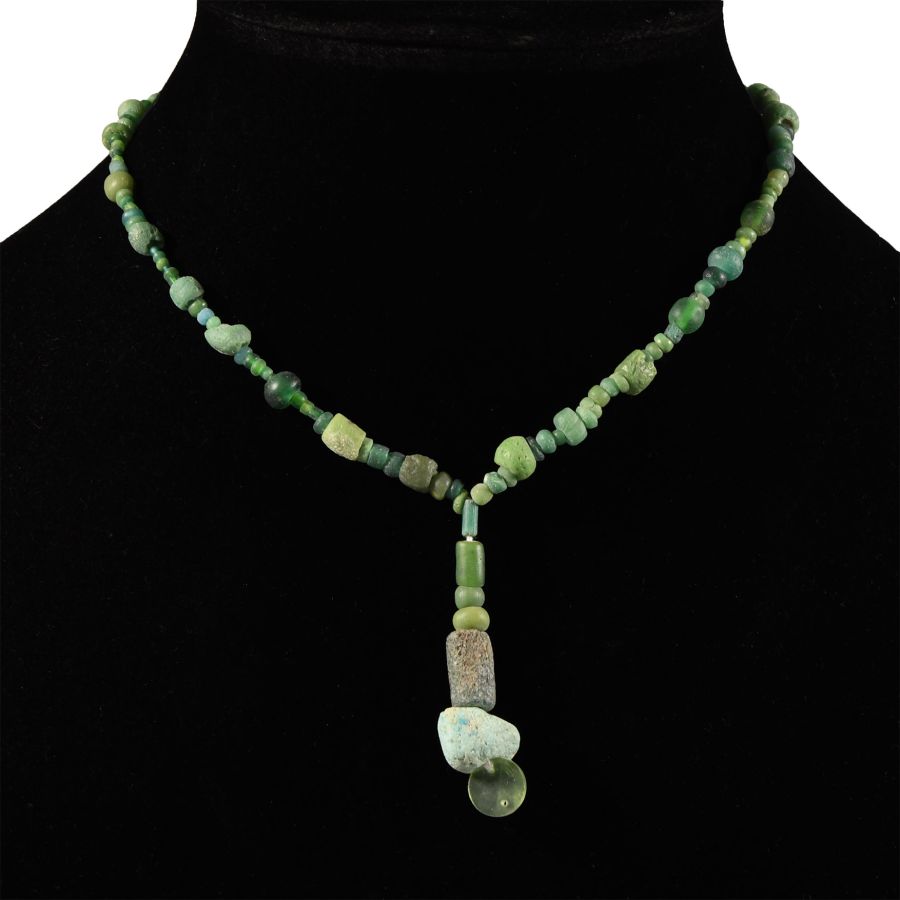
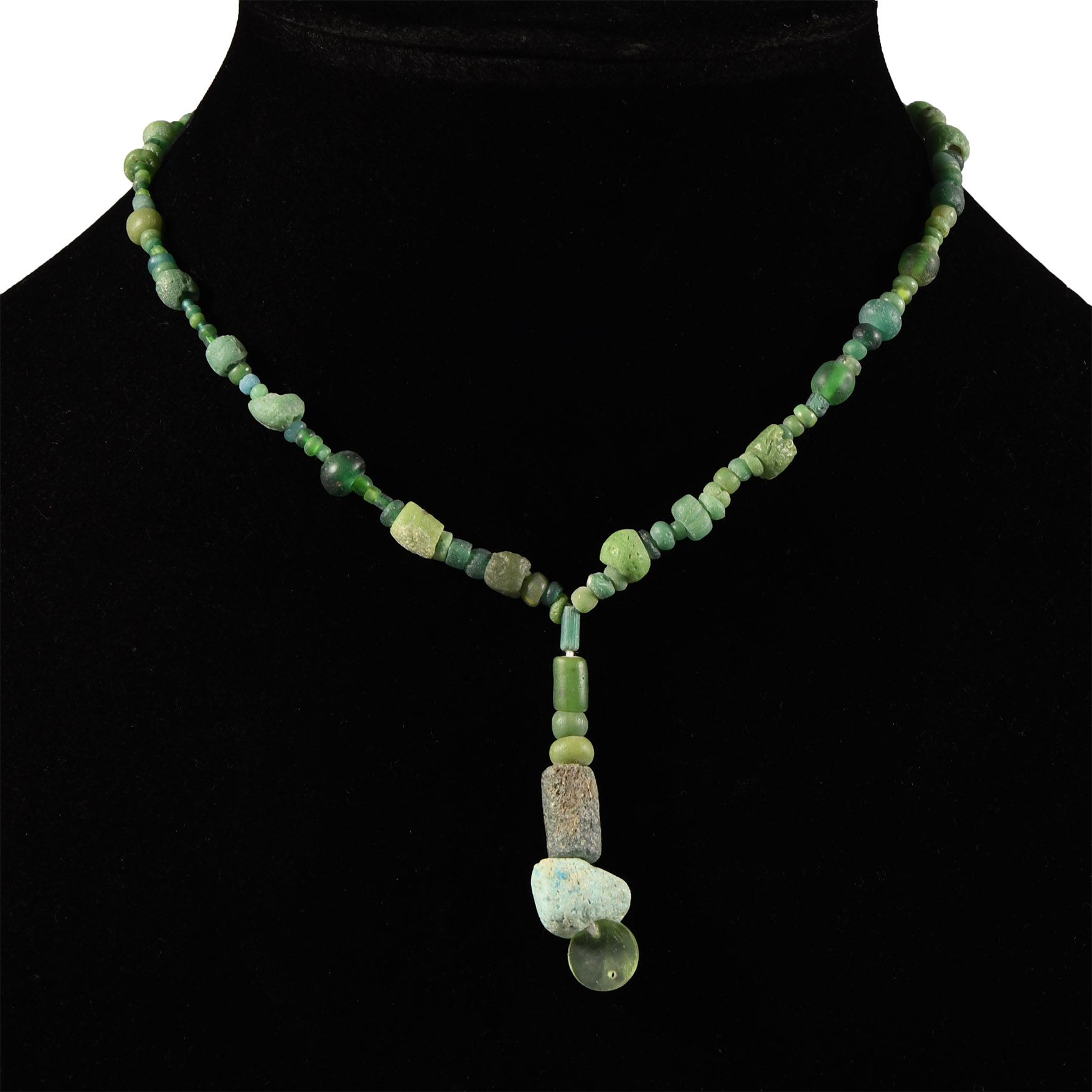
Roman Green Glass Bead Necklace String
1ST-4TH CENTURY A.D. AND LATER
12 3/4 in. (13.75 grams, 32.5 cm).
Restrung group of mainly annular and seed beads with tabular dangle centrepiece. [No Reserve]
ProvenanceAcquired 1980-2015.
Ex Abelita family collection.
TimeLine Auctions follows a vetting process to ensure the authenticity and legality of all items, reinforcing our commitment to integrity and responsible trading. Each antiquity, antique, and coin lot undergoes thorough examination by a vetting committee of at least ten external specialists, professional trade association members, scientists, and archaeologists: Our Vetting Process
AUCTIONS:
TimeLine is a leading auction house specialising in antiquities, ancient art, collectables, natural history, coins, medals, and books. Our auctions offer museums, collectors, historians, and enthusiasts the opportunity to acquire unique and historically significant pieces.
-
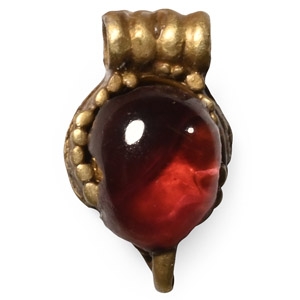
Roman Gold Pendant with Garnet
1st-4th century A.D.Sold for (Inc. bp): £195
Sheet gold disc pendant with garnet cabochon, knop and ribbed suspension loop. 0.22 grams, 8 mm
Ex property of a late Japanese collector, 1970-2000s. -
.jpg)
Roman Bronze Phallic Pendant
1st-4th century A.D.Sold for (Inc. bp): £52
A phallic amulet with loop to the rear. 6.53 grams, 25 mm
Found near Bainton, East Riding of Yorkshire, UK. Accompanied by a copy of the British Museum's Portable Antiquities Scheme (PAS) report no.YORYM-051F22. -
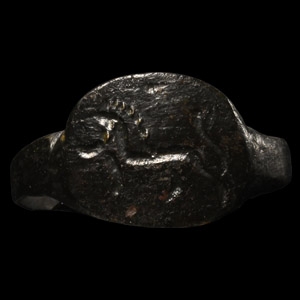
Roman Bronze Ring with Lion
2nd-3rd century A.D.Sold for (Inc. bp): £91
With a slender flat-section hoop expanding to a rounded bezel with a stylised advancing lion, pellet above. 1.29 grams, 17.97 mm overall, 16.70 mm internal diameter (approximate size British H, USA 3 3/4, Europe 6.18, Japan 6)
Private collection formed since the 1940s. UK art market. Property of an Essex, UK, gentleman.
