
Loading, please wait...
LOT 0669
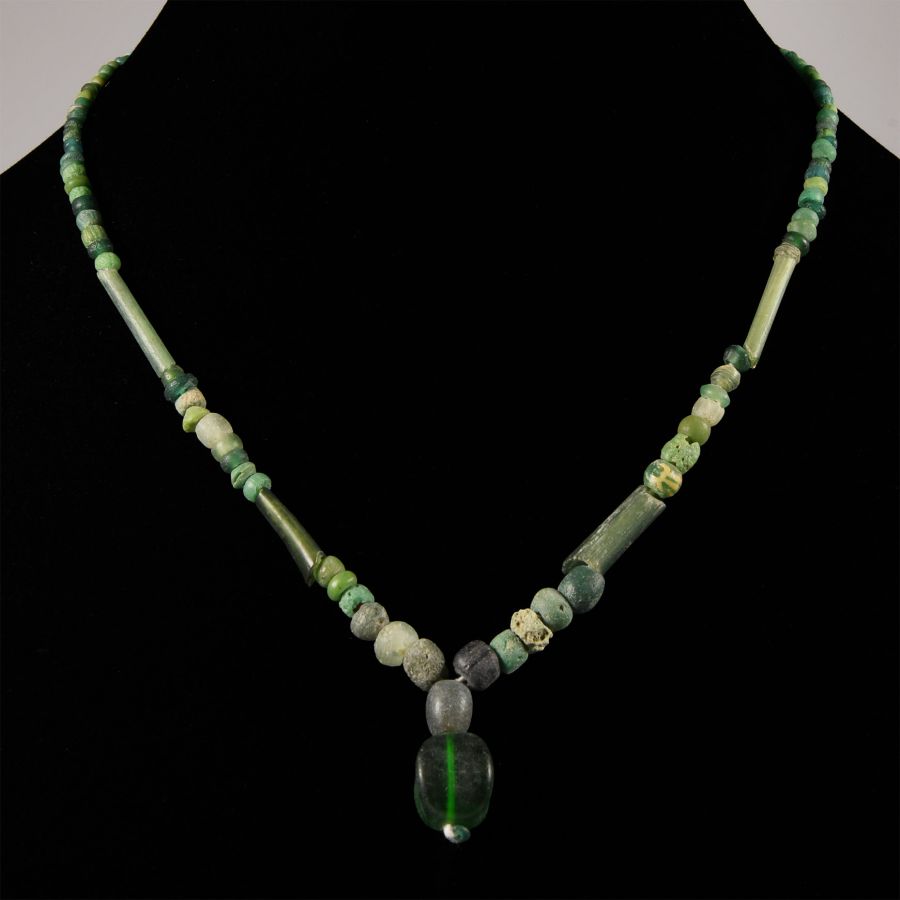
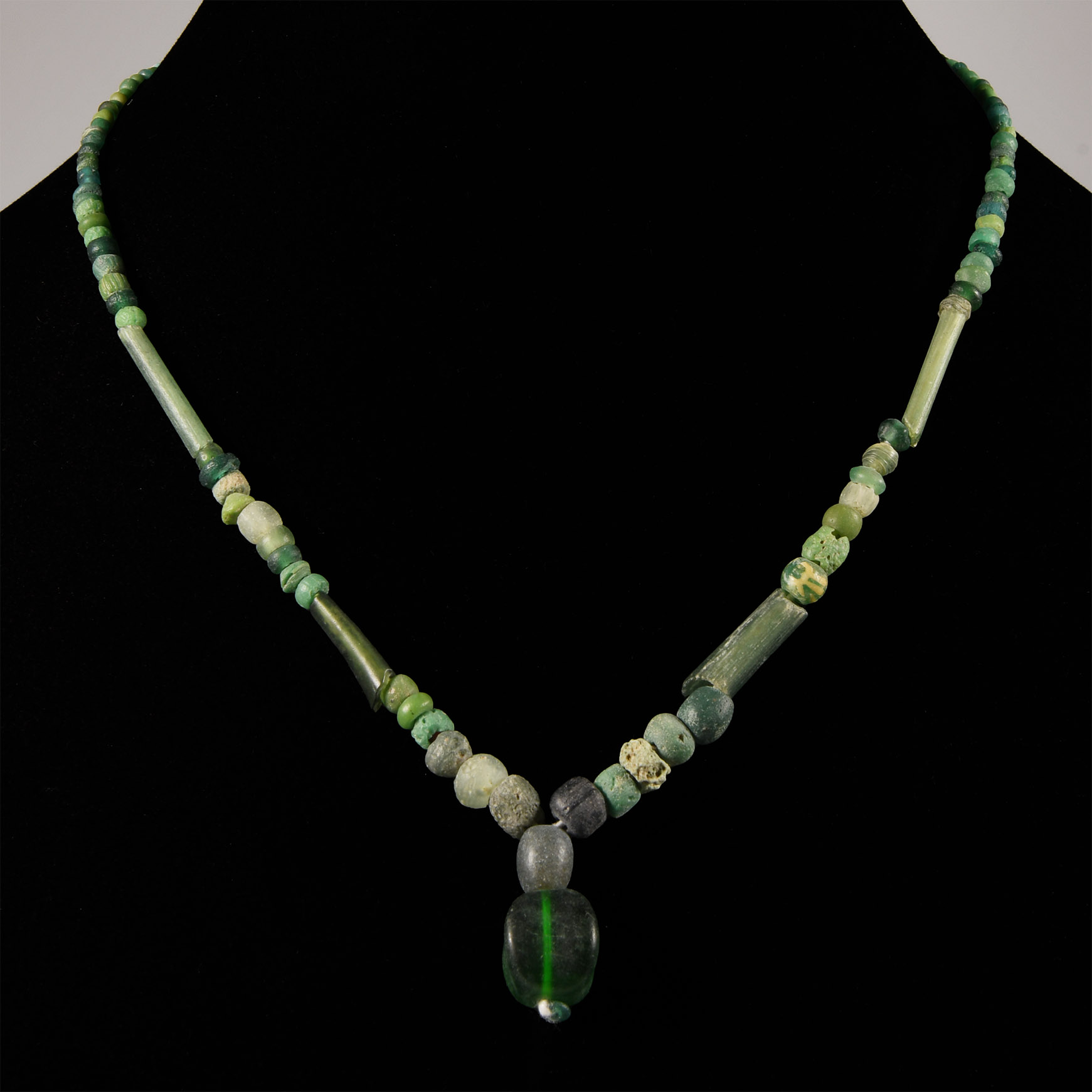
Roman Green Glass Bead Necklace String
1ST CENTURY A.D. AND LATER
15 in. (16.8 grams, 38 cm long).
Graduated group of tubular, annular and other beads with later lampwork bead centrepiece. [No Reserve]
ProvenanceAcquired 1980-2015.
Ex Abelita family collection.
TimeLine Auctions follows a vetting process to ensure the authenticity and legality of all items, reinforcing our commitment to integrity and responsible trading. Each antiquity, antique, and coin lot undergoes thorough examination by a vetting committee of at least ten external specialists, professional trade association members, scientists, and archaeologists: Our Vetting Process
AUCTIONS:
TimeLine is a leading auction house specialising in antiquities, ancient art, collectables, natural history, coins, medals, and books. Our auctions offer museums, collectors, historians, and enthusiasts the opportunity to acquire unique and historically significant pieces.
-
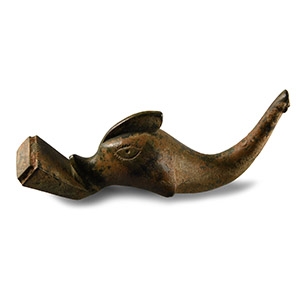
Roman Bronze Dolphin Figure
1st-3rd century A.D.Sold for (Inc. bp): £338
Hollow to the underside with rectangular-section tapering panel, S-curved dolphin with prominent dorsal fin, low-relief eyes; probably a furniture fitting. 129 grams, 96 mm
Private collection of Mr S.A., Switzerland, 1990s, thence by descent. -

Roman Decorated Votive Lead Mirror
2nd-3rd century A.D.Sold for (Inc. bp): £117
With ribbed handle, discoid plate with raised rib to one face, running scrolls to the other, lateral struts. 43 grams, 11 cm
Ex German art market, 2000s. Acquired from an EU collector living in London. From the collection of Surrey, UK, gentleman.
Many examples of this category from the Danube region were found in female graves, where they possibly served as grave goods considered appropriate for their connection with general issues of fertility, good fortune, and beauty, or even as protective amulets. Since lead mirror frames have been found in this Roman province only in graves of women, it is probable that these miniature mirrors, fitted with a central glass, were expected to serve as ritual or magical tools to assist souls of dead women in the afterlife. -
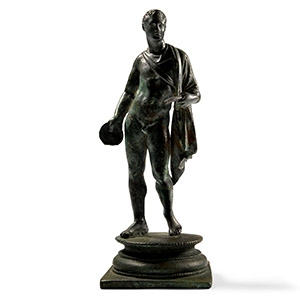
Roman Bronze Statuette of Mercury
1st-2nd century A.D.Estimate: £5,000 - 7,000 (+bp*)
Opening Bid: £2,750
Standing erect on a tiered socle base in contrapposto pose; pointillé-textured mantle draped to the left shoulder, left arm bent, hand holding a wand; right arm loose at the side, hand holding a patera; finely modelled face with short wavy hair; shallow dimple or socket to the crown; standing on a possibly later tiered disc base with square foot. 957 grams, 16 cm high
Acquired on the German art market, 1990s. Ex Cambridgeshire collection, UK. Accompanied by an academic report by Dr Raffaele D’Amato. This lot has been checked against the Interpol Database of stolen works of art and is accompanied by search certificate number no.12013-213587.
Mercury was the god of trade and industry, whose principle shrine in the city of Rome was at the Circus Maximus. The draped mantle is typical of statuary of Mercury from the 1st-2nd century A.D. (Boucher, pl.40, 43) and the 'baton' may in fact be the stem of a caduceus (Boucher, pl.46 (211)).
