
Loading, please wait...

LOT 0819
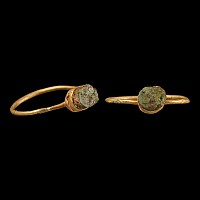
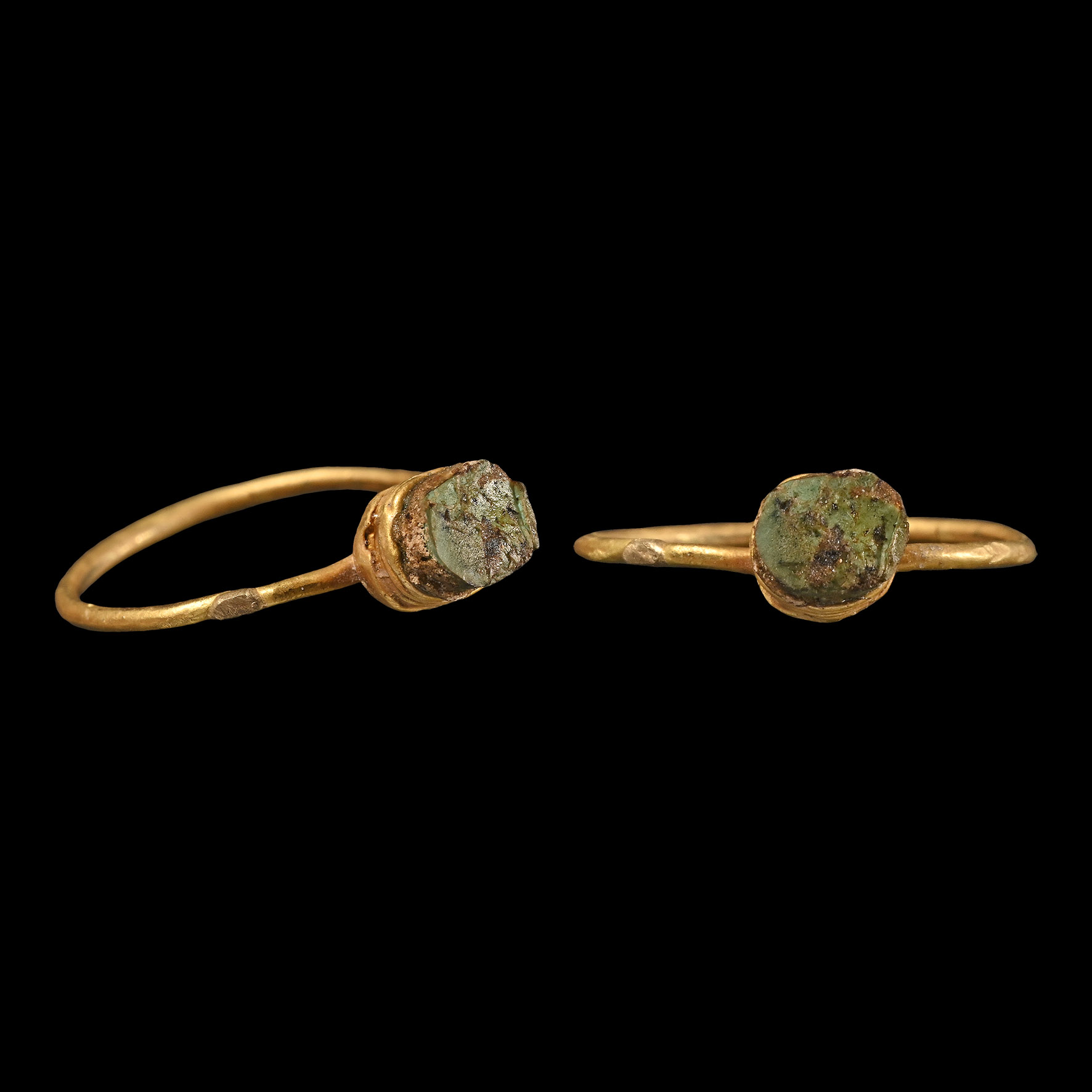
Roman Gold Ring with Turquoise
1ST-4TH CENTURY A.D.
3/4 in. (0.68 grams, 18.61 mm overall, 13.15 mm internal diameter).
Slender shank, gold cell with corrugated rim, inset turquoise stud.
ProvenanceEx property of a late Japanese collector, 1970-2000s.
CONDITIONTimeLine Auctions follows a vetting process to ensure the authenticity and legality of all items, reinforcing our commitment to integrity and responsible trading. Each antiquity, antique, and coin lot undergoes thorough examination by a vetting committee of at least ten external specialists, professional trade association members, scientists, and archaeologists: Our Vetting Process
AUCTIONS:
TimeLine is a leading auction house specialising in antiquities, ancient art, collectables, natural history, coins, medals, and books. Our auctions offer museums, collectors, historians, and enthusiasts the opportunity to acquire unique and historically significant pieces.
-
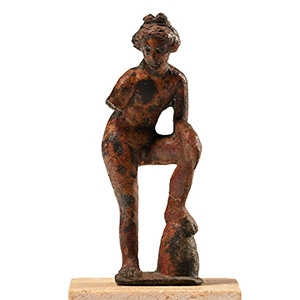
Roman Bronze Apollo Statuette
1st-2nd century A.D.Sold for (Inc. bp): £546
Modelled in the round standing nude with left foot resting on a pillar, the hair dressed in flowing tresses with top-knot; mounted on a custom-made stand. 115 grams total, 82 mm including stand
From a collection acquired on the UK art market from various auction houses and collections mostly before 2000. From an important Cambridgeshire estate; thence by descent.
Depictions of Apollo in association with the Omphalos usually show him seated upon it, as seen in the coinage of Antigonus I, circa 280-261 B.C. -
.jpg)
Roman Gold Pendant with Crescent Moon
1st-2nd century A.D.Sold for (Inc. bp): £91
Comprising a crescent with applied granules to the finials, ribbed loop below with granule supporting a cluster of hollow-formed spheres. 0.76 grams, 17 mm
Acquired London, UK, 1980-2015. From the Abelita family collection. -
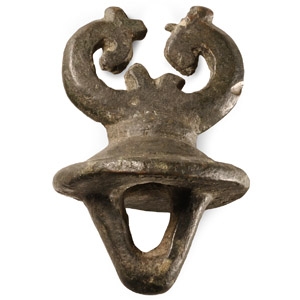
Roman Bronze Zoomorphic Furniture Finial
1st-2nd century A.D.Sold for (Inc. bp): £46
Formed a a stepped disc with opposed scrolls and spurs, substantial V-shaped loop below. 197 grams, 72 mm
From the private collection of M.Cummings, Lincolnshire, UK, 1990s.
