
Loading, please wait...
LOT 0649
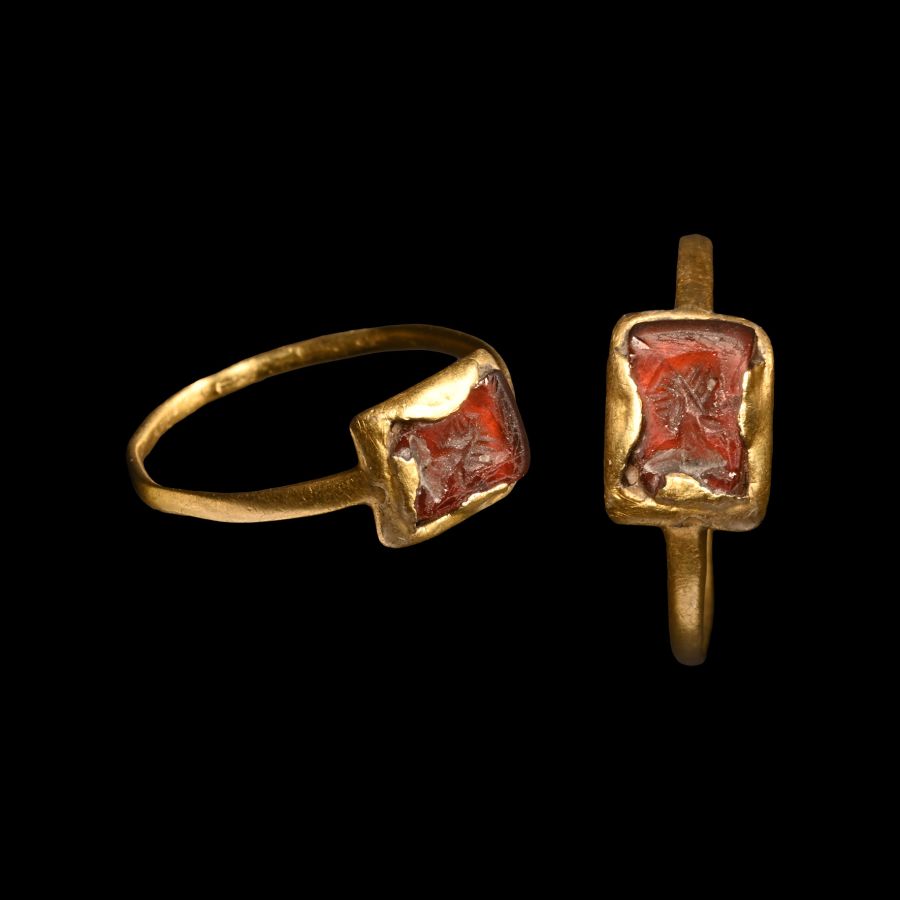
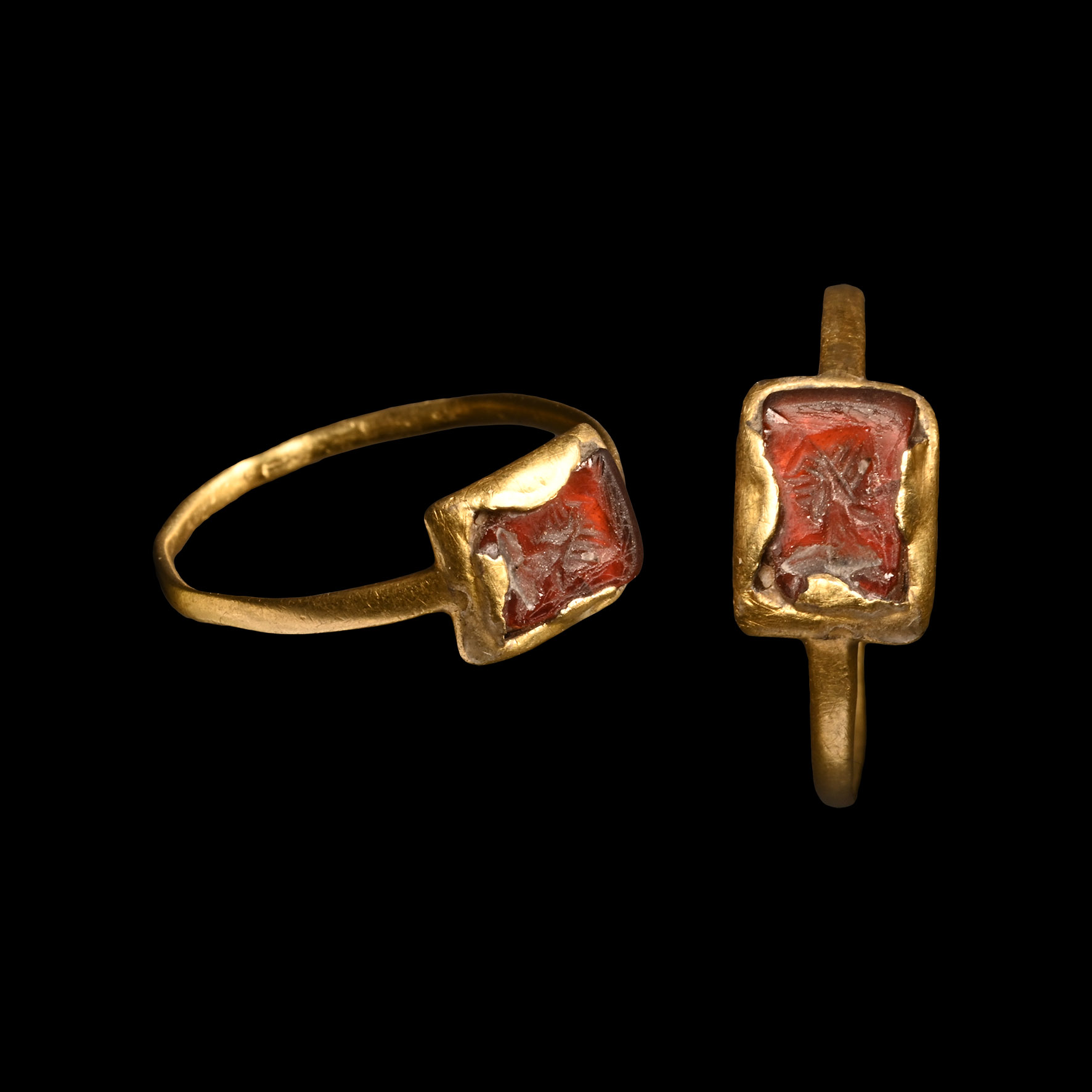
Roman Gold Ring with Portrait Gemstone
3RD-4TH CENTURY A.D.
3/4 in. (0.95 grams, 18.52 mm overall, 15.67 mm internal diameter (approximate size British H 1/2, USA 4, Europe 6.81, Japan 6)).
Comprising a slender hoop and rectangular bezel, inset intaglio engraved with a male profile bust.
ProvenanceAcquired 1980-2015.
Ex Abelita family collection.
TimeLine Auctions follows a vetting process to ensure the authenticity and legality of all items, reinforcing our commitment to integrity and responsible trading. Each antiquity, antique, and coin lot undergoes thorough examination by a vetting committee of at least ten external specialists, professional trade association members, scientists, and archaeologists: Our Vetting Process
AUCTIONS:
TimeLine is a leading auction house specialising in antiquities, ancient art, collectables, natural history, coins, medals, and books. Our auctions offer museums, collectors, historians, and enthusiasts the opportunity to acquire unique and historically significant pieces.
-
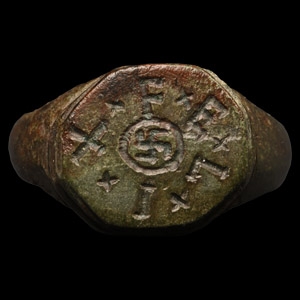
Roman Bronze Ring with FELIX and Gammadion
4th-5th century A.D.Sold for (Inc. bp): £260
Tiered disc bezel with central gammadion within a ring, surrounded by '+F+E+L+I+X' legend (in Latin, 'happy' or 'fortunate'). 8.11 grams, 24.40 mm overall, 18.18 mm internal diameter (approximate size British P 1/2, USA 7 3/4, Europe 16.86, Japan 16)
Ex German art market, 2000s. Acquired from an EU collector living in London. From the collection of Surrey, UK, gentleman.
The ring was probably a gift to wish happiness and good luck, the inscription being a short form of 'utere felix'. -
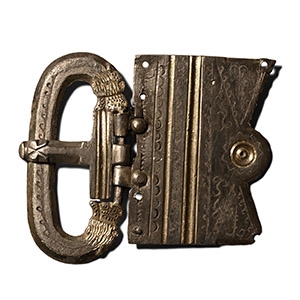
Late Roman Gilt Silver Buckle with Dragon Heads
5th century A.D.Sold for (Inc. bp): £442
Comprising a trapezoid-section loop with running wave design and panther-mask terminals, tongue with ribbed oblong plaque and cut design; a rectangular plaque with extension to rear edge of two triangles and a semi-circle, decorated with bands of triangles, crescents, swirls and indented lines, extension with central gilt circle from which expands two triangular panels, filled with swirl design; rivet holes to the edge for attachment. 37.1 grams, 66 mm
UK collection formed in the 1980s. Ex property of a North London gentleman. -
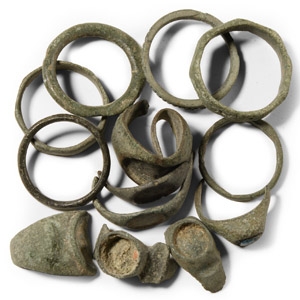
Roman Bronze Ring and Bezel Group
1st-4th century A.D.Sold for (Inc. bp): £20
Including a facetted finger ring with punched detailing, a bezel with inset glass stud and other items. 23.5 grams total, 15-22 mm
Found Wiltshire, UK, before 1974.
