
Loading, please wait...
LOT 0675
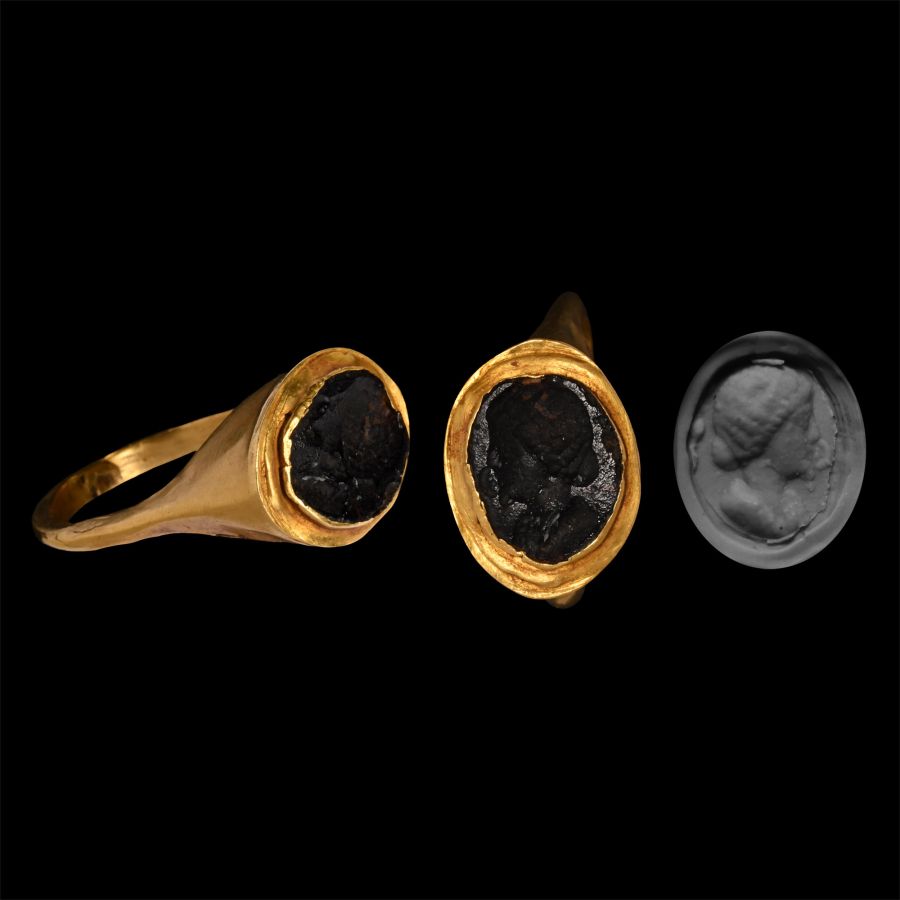
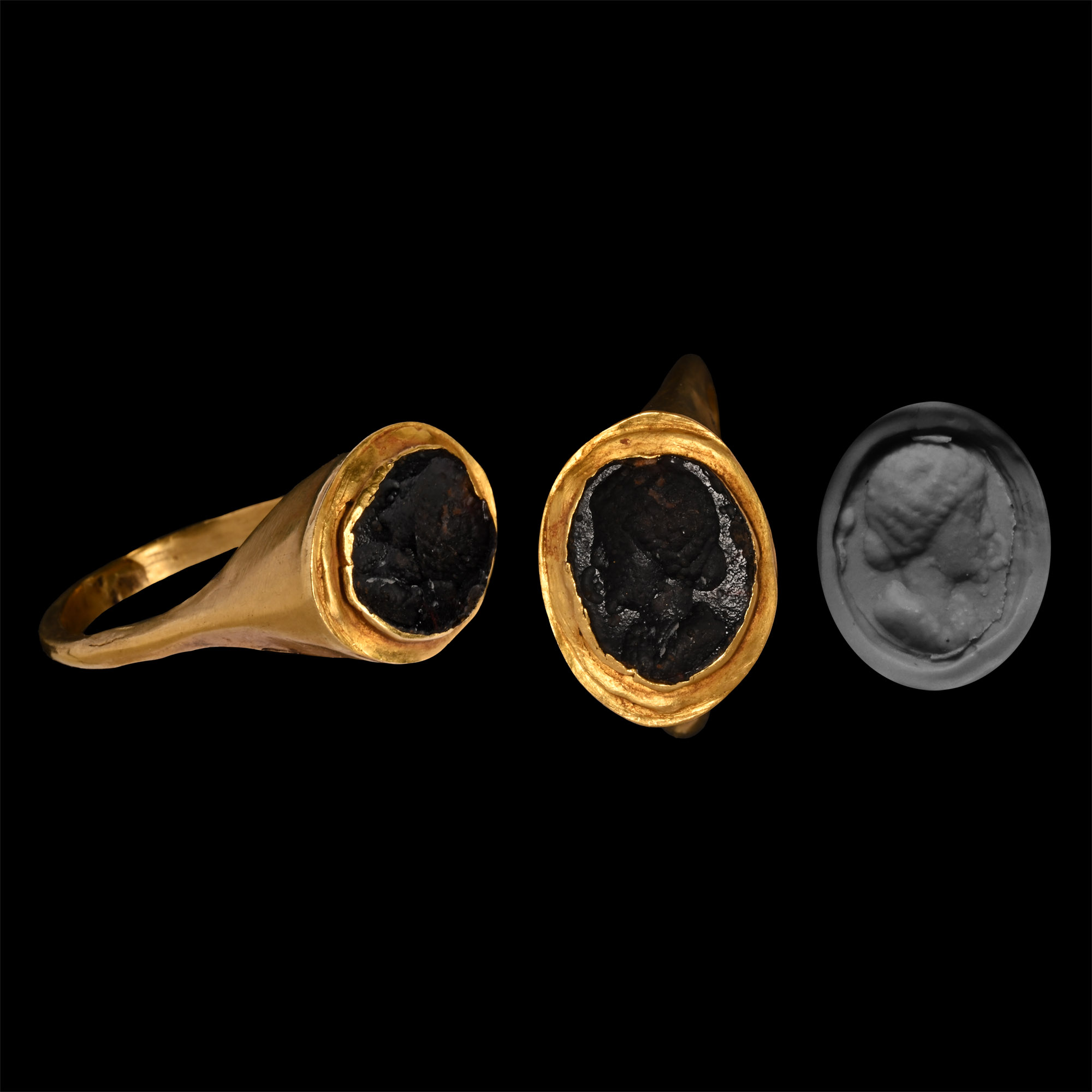
Roman Gold Ring with Intaglio of a Noble Lady
2ND-1ST CENTURY B.C.
1 in. (3.07 grams, 25.34 mm overall, 16.74 mm internal diameter (approximate size British M, USA 6, Europe 12.46, Japan 12)).
With a hollow-formed D-section hoop and tall oval bezel set with a glass intaglio bearing a profile bust of a lady, her hair pulled back to a chignon at the nape of the neck.
ProvenanceAcquired in the mid 1980s-1990s.
Private collection, Switzerland, thence by descent.
Private collection, since the late 1990s.
Cf. Chadour, A.B., Rings. The Alice and Louis Koch Collection, volume I, Leeds, 1994, item 134, for type.
CONDITIONTimeLine Auctions follows a vetting process to ensure the authenticity and legality of all items, reinforcing our commitment to integrity and responsible trading. Each antiquity, antique, and coin lot undergoes thorough examination by a vetting committee of at least ten external specialists, professional trade association members, scientists, and archaeologists: Our Vetting Process
AUCTIONS:
TimeLine is a leading auction house specialising in antiquities, ancient art, collectables, natural history, coins, medals, and books. Our auctions offer museums, collectors, historians, and enthusiasts the opportunity to acquire unique and historically significant pieces.
-
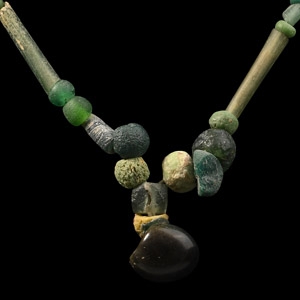
Roman Green Glass Bead Necklace String
1st-4th century A.D. and laterSold for (Inc. bp): £39
Restrung designer necklace string of tubular, fusiform, oblate and other types with pendant centrepiece. 18.9 grams, 37.5 cm
London, UK, collection, 2000s. -
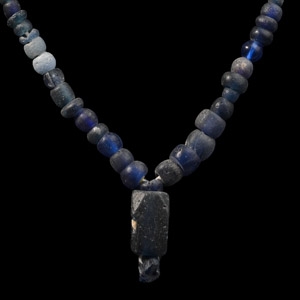
Roman Deep Blue Glass Bead Necklace String
1st-4th century A.D. and laterSold for (Inc. bp): £52
Restrung designer necklace string of annular, oblate and other types with polyhedral bead centrepiece. 15.4 grams, 42.7 cm
London, UK, collection, 2000s. -
.jpg)
Roman Silver Hercules Club
1st-4th century A.D.Sold for (Inc. bp): £130
Tubular body with piriform bosses, double collar beneath six tongue-shaped petals, domed finial with knop above. 26.5 grams, 56 mm
Ex German art market, 2000s. Acquired from an EU collector living in London. From the collection of a Surrey, UK, gentleman.
