
Loading, please wait...
LOT 0870
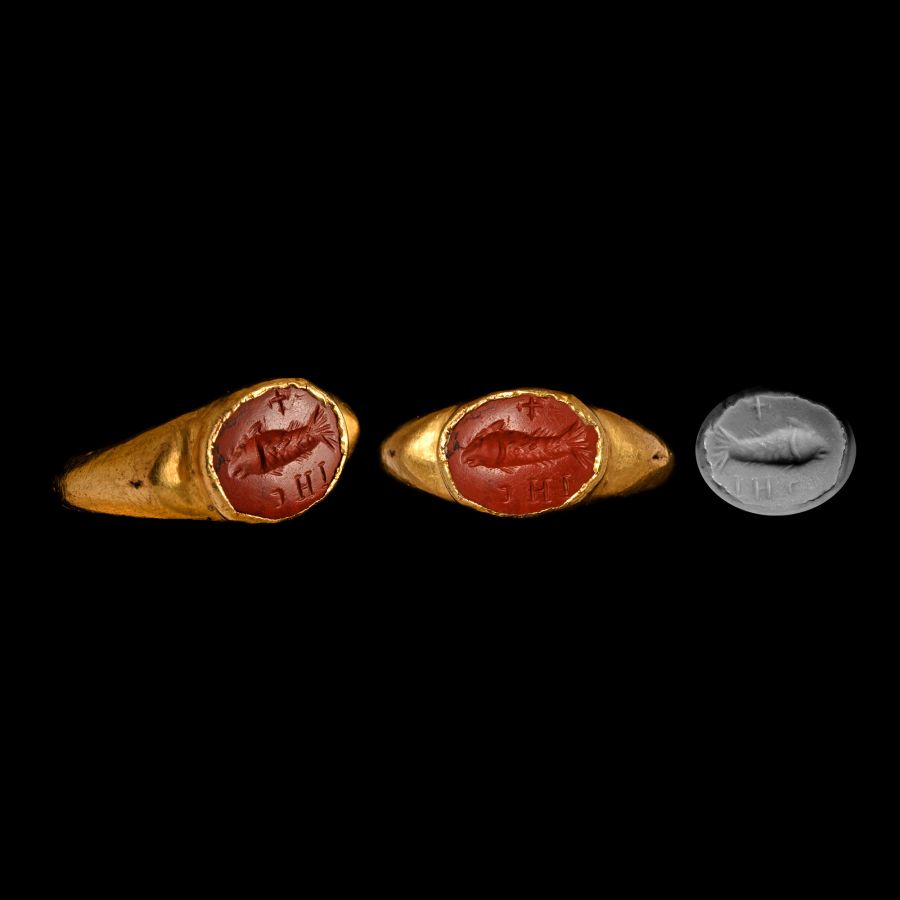
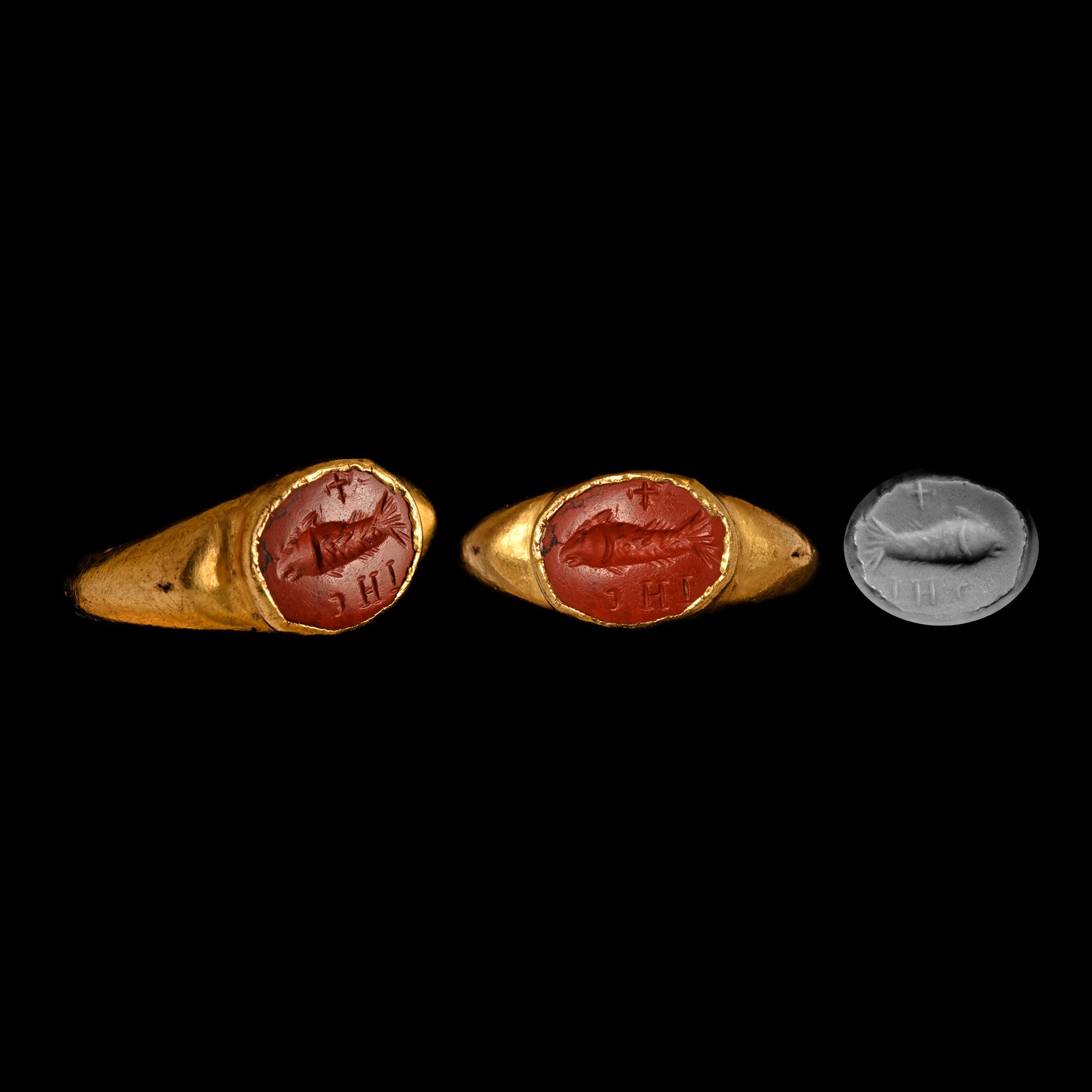
Roman Gold Ring with IHS and Fish Gemstone
3RD-4TH CENTURY A.D.
3/4 in. (2.49 grams, 20.11 mm overall, 11.35 x 14.74 mm internal diameter.).
Hollow-formed hoop with broad shoulders, shallow cell with inset jasper intaglio of a fish with cross potent above and 'IHC' retrograde below; possibly a marriage.
ProvenanceFrom the E.M. collection, acquired in Washington DC, USA, in the 1960s.
Shown to Sotheby’s, Bond Street, London, UK, in 1980, authenticated and described as Roman Christian, gifted to the present owner in 2004.
This lot is accompanied by an illustrated lot declaration signed by the Head of the Antiquities Department, Dr Raffaele D'Amato.
TimeLine Auctions follows a vetting process to ensure the authenticity and legality of all items, reinforcing our commitment to integrity and responsible trading. Each antiquity, antique, and coin lot undergoes thorough examination by a vetting committee of at least ten external specialists, professional trade association members, scientists, and archaeologists: Our Vetting Process
AUCTIONS:
TimeLine is a leading auction house specialising in antiquities, ancient art, collectables, natural history, coins, medals, and books. Our auctions offer museums, collectors, historians, and enthusiasts the opportunity to acquire unique and historically significant pieces.
-
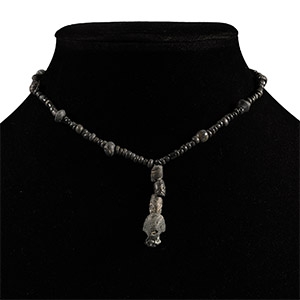
Roman Black Glass Bead Necklace String
1st-4th century A.D. and laterSold for (Inc. bp): £26
Restrung group of biconical, cylindrical and other beads. 8.8 grams, 31.5 cm
Ex London, UK, collection, 1990s. This lot is accompanied by an illustrated lot declaration signed by the Head of the Antiquities Department, Dr Raffaele D'Amato. -
.jpg)
Roman Gemstone and Glass Pendant Collection
2nd-3rd century A.D.Sold for (Inc. bp): £208
Comprising: a fragment of a glass pendant with impressed image of an advancing lion, crescent moon above; a conical agate intaglio with a profile of theatre mask; an oval carnelian intaglio with a dove holding an olive branch; a jasper intaglio with standing Asclepius holding a snake-staff. 4.35 grams total, 10-17 mm
Norfolk family collection, 1940s-1960s; thence by descent. This lot is accompanied by an illustrated lot declaration signed by the Head of the Antiquities Department, Dr Raffaele D'Amato. -
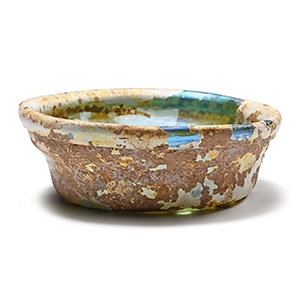
Roman Glass Bowl with Fine Iridescence
1st-4th century A.D.Estimate: £700 - 900 (+bp*)
Opening Bid: £375
Squat in profile with domed base and rolled rim; 183 grams, 11.6 cm wide
From an important London collection of glass, 1990s. This lot is accompanied by an illustrated lot declaration signed by the Head of the Antiquities Department, Dr Raffaele D'Amato.
