
Loading, please wait...
LOT 0089
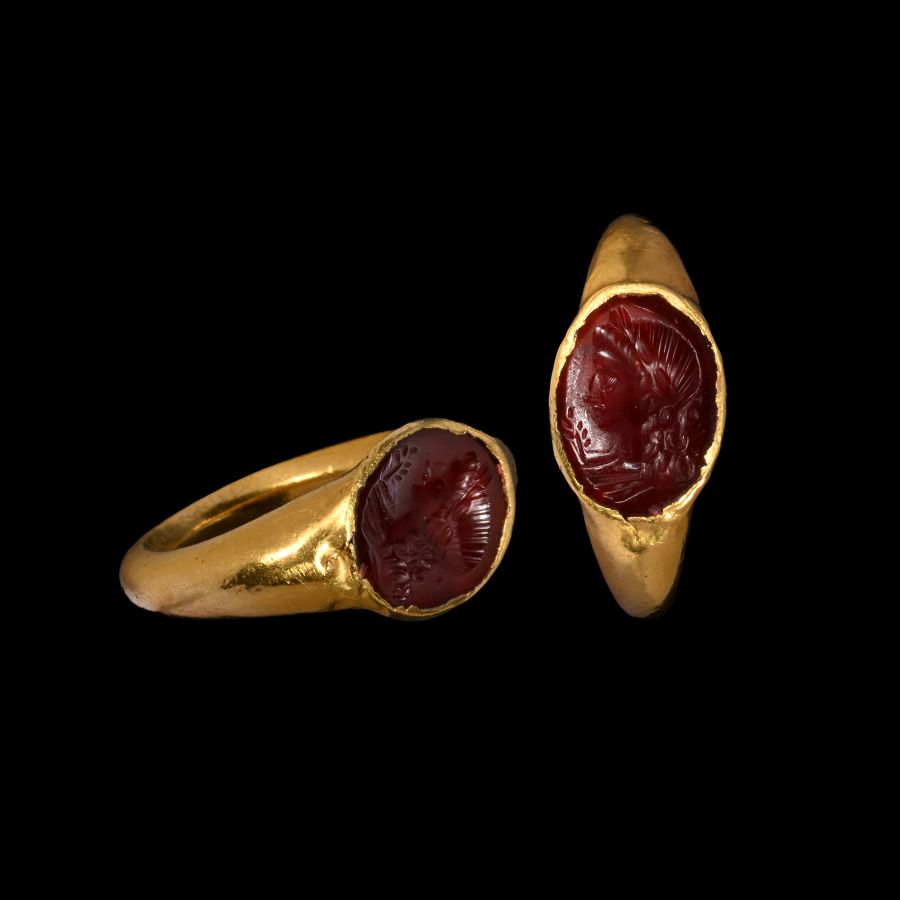
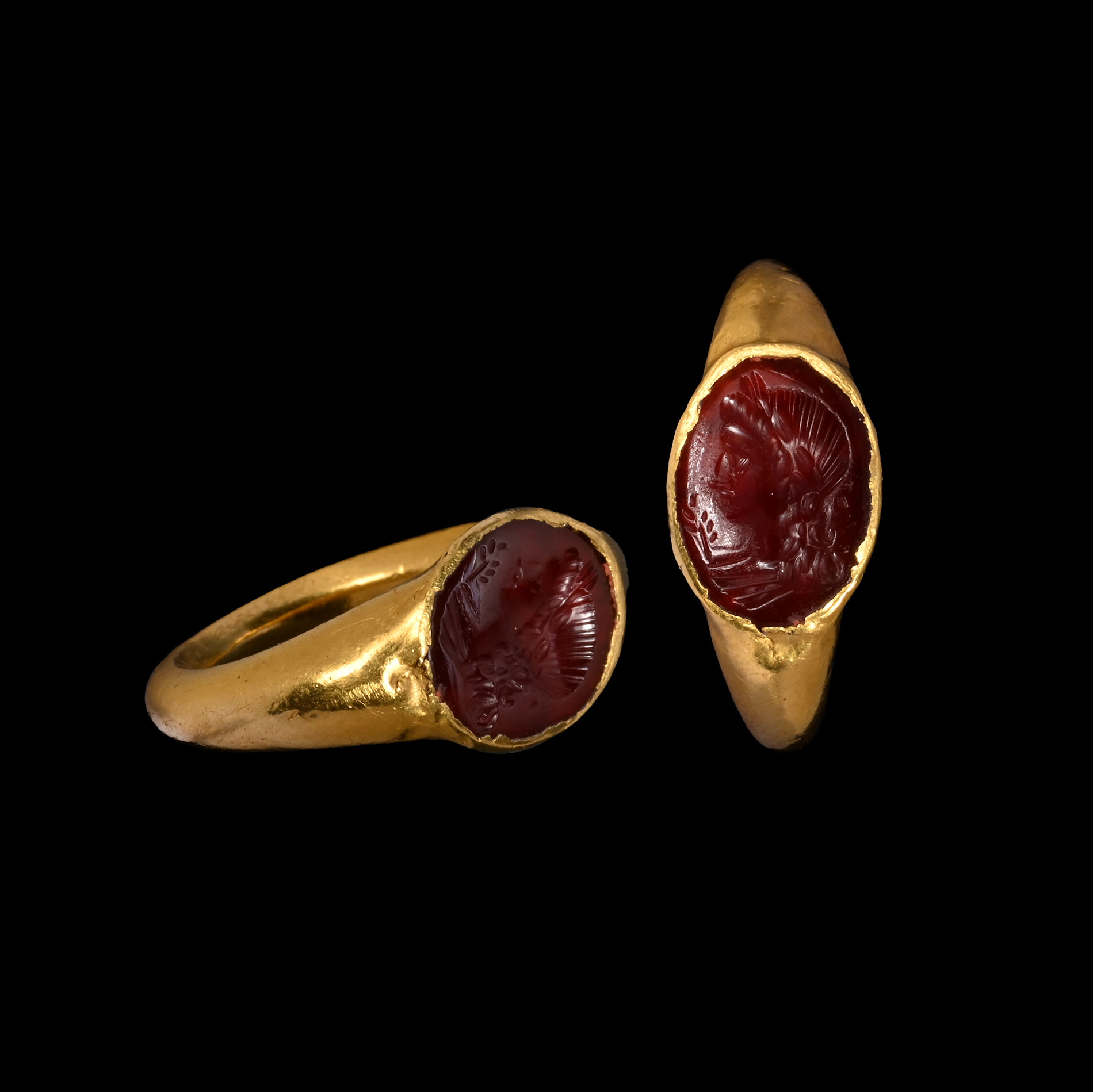
Roman Gold Ring with Head of Apollo
1ST CENTURY A.D.
7/8 in. (3.05 grams, 23.01 mm overall, 12.14x15.09 mm internal diameter (approximate size British E, USA 2 1/4, Europe 2.41, Japan 3)).
Hollow-formed shank with inset ellipsoid garnet cloison intaglio bust of Apollo with frond and laurel-leaf wreath to the hair.
ProvenanceEuropean art market.
This lot has been checked against the Interpol Database of stolen works of art and is accompanied by search certificate number no.12222-222339.
Cf. Ruseva-Slokoska, L., Roman Jewellery, Sofia, 1991, item 202, for type.
CONDITIONTimeLine Auctions follows a vetting process to ensure the authenticity and legality of all items, reinforcing our commitment to integrity and responsible trading. Each antiquity, antique, and coin lot undergoes thorough examination by a vetting committee of at least ten external specialists, professional trade association members, scientists, and archaeologists: Our Vetting Process
AUCTIONS:
TimeLine is a leading auction house specialising in antiquities, ancient art, collectables, natural history, coins, medals, and books. Our auctions offer museums, collectors, historians, and enthusiasts the opportunity to acquire unique and historically significant pieces.
-

Roman Bronze Bell
1st-2nd century A.D.Sold for (Inc. bp): £143
Trapezoidal in section with loop to the apex, pierced to accept a clapper; many of these objects are published in the Detector Finds book series. 137 grams, 68 mm
From the collection of the famous author, writer and speaker, Gordon Bailey, Essex, UK; formed since 1968.
The bell was probably used inside a temple where its melodic sound was thought to add to the aura of reverence and mystery. In Mithraic temples, bells were rung as part of the ceremonial, while in the cult of Attis the bell and tympanum were also used to serve food and drink as the critical part of the rituals of consumption. One Roman order of priests applied the term -
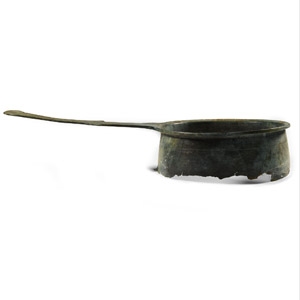
Large Roman Bronze Skillet
2nd-3rd century A.D.Sold for (Inc. bp): £247
With a deep bowl, everted rim with a rounded lip, flat-section handle with lateral spurs and oval finial. 352 grams, 35.8 cm
From a collection acquired on the UK art market from various auction houses and collections mostly before 2000. From an important Cambridgeshire estate; thence by descent. -
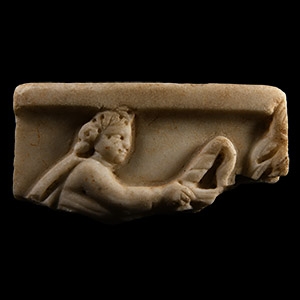
Roman Marble Relief Fragment with Phaethon
2nd-3rd century A.D.Sold for (Inc. bp): £468
Portion of a carved frieze with reserved border to the upper edge; panel with high-relief carving of youthful Phaethon in profile with mantle and himation, mop of curly hair, right arm extended holding reins extending to the mane of the horse at the right edge; drilled to accept mounting pegs. 1.05 kg, 17.2 cm
Private UK collection. Acquired in the 1980s. Property of a Cambridgeshire gentleman.
In the story, which appears in several versions, Phaethon was the son of Helios the sun-god who asked to validate his parentage by driving his father's chariot. Helios tried to dissuade him, but the youngster would not listen and eventually managed to take control, but was unable to master the horses and the celestial vehicle veered out of control - too close to the ground where it started fires and then too distant so that the ground froze. Eventually, Zeus took remedial action and hurled a thunderbolt, which killed the boy. His dead body fell into the river Eridanus, and his sisters, the Heliades, were turned to black poplar trees while they mourned him.
