
Loading, please wait...
LOT 0182
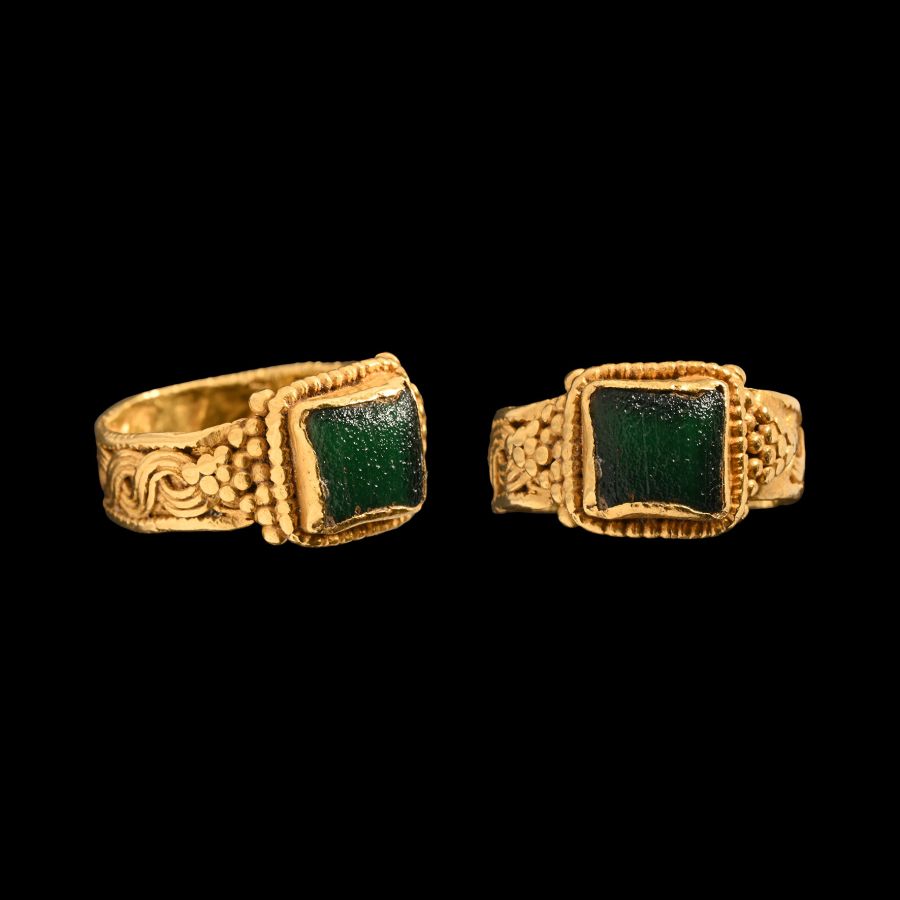
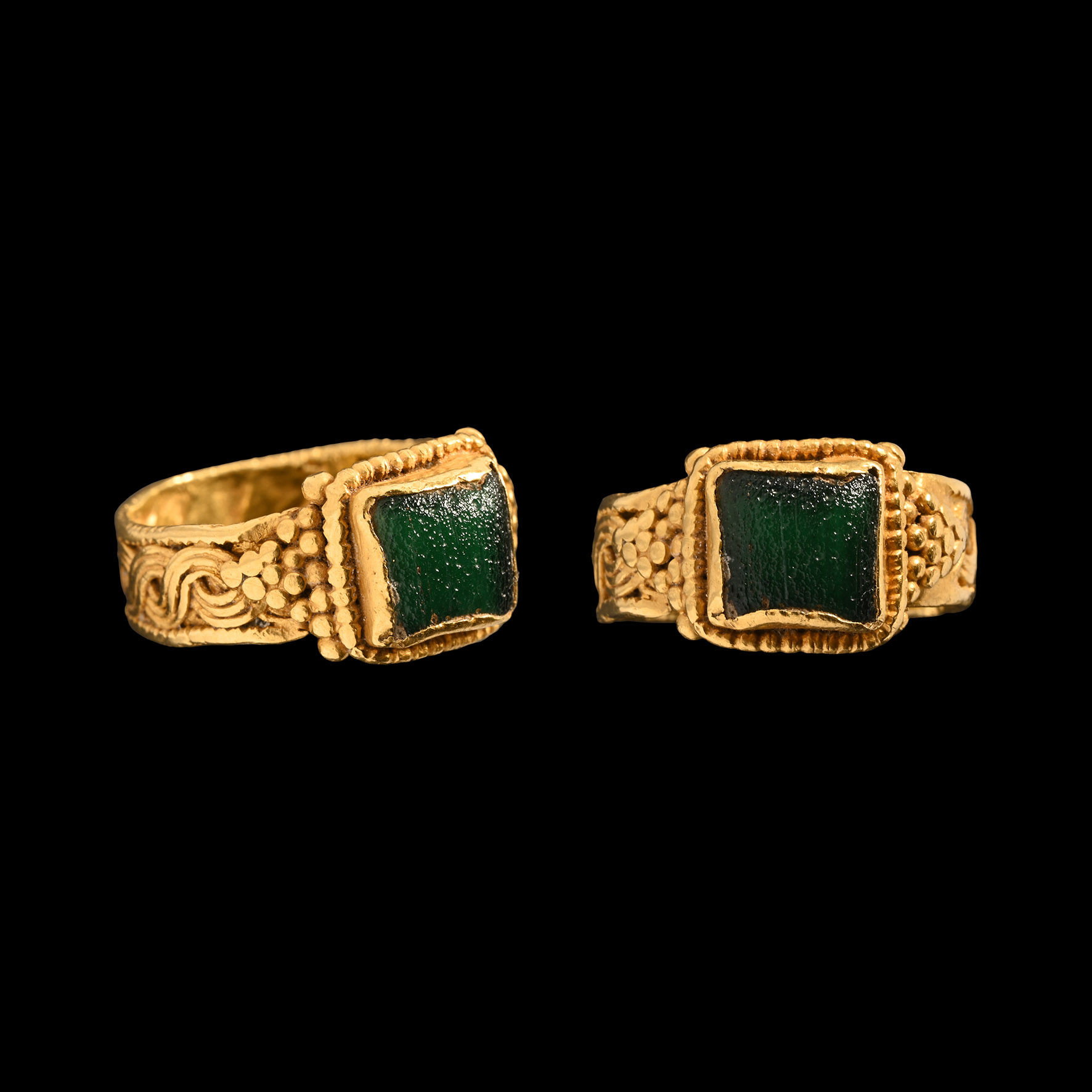
Roman Gold Ring with Green Cabochon
3RD-6TH CENTURY A.D.
7/8 in. (4.69 grams, 22.63 mm overall, 16.86 mm internal diameter (approximate size British M 1/2, USA 6 1/4, Europe 13.09, Japan 12)).
The hoop recessed and decorated with a simple plait formed with three separate rods; granulated pyramids beneath the square bezel framed with a pelletted band, raised setting with a green glass cabochon. [No Reserve]
ProvenancePrivate collection USA.
From the Alexander Gallery, New York, USA, in the early 2000s.
This lot has been checked against the Interpol Database of stolen works of art and is accompanied by search certificate no.12106-214327.
Cf. Chadour, A.B., Rings. The Alice and Louis Koch Collection, volume I, Leeds, 1994, item 276, for type.
FootnotesPreviously these rings were generally dated later, however, according to Chadour, the shape is more typical of the 2nd-3rd century A.D. The gem however can also be of later date, because the use of the emerald was more typical of the late empire. The decoration of the shoulders with the plait reminisces Celto-Roman patterns.
CONDITIONTimeLine Auctions follows a vetting process to ensure the authenticity and legality of all items, reinforcing our commitment to integrity and responsible trading. Each antiquity, antique, and coin lot undergoes thorough examination by a vetting committee of at least ten external specialists, professional trade association members, scientists, and archaeologists: Our Vetting Process
AUCTIONS:
TimeLine is a leading auction house specialising in antiquities, ancient art, collectables, natural history, coins, medals, and books. Our auctions offer museums, collectors, historians, and enthusiasts the opportunity to acquire unique and historically significant pieces.
-
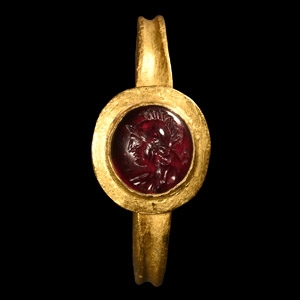
Roman Gold Ring with Head of Roma Garnet Gemstone
Circa 1st century B.C.-1st century A.D.Sold for (Inc. bp): £2,600
With a grooved hoop, round bezel with flared rim, set with a cabochon engraved with profile bust of Roma wearing a crested helmet. 4.50 grams, 24.32 mm overall, 20.69 mm internal diameter (approximate size British N 1/2, USA 6 3/4, Europe 14.35, Japan 13)
Acquired from London galleries during the 1990s. From the jewellery collection of a London, UK, gentleman. This lot has been checked against the Interpol Database of stolen works of art and is accompanied by search certificate no.12110-214298.
Both the ring and the gem show characteristic compatible with 1st century B.C.-1st century A.D. dating. Some scholars identify the female head with a theatre mask, but here the strong profile and the helmet points to the goddess Rome, a divine personification of the eternal city. -
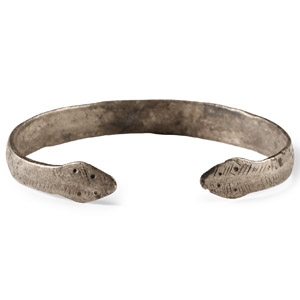
Roman Silver Armilla Snake Bracelet
2nd-3rd century A.D.Sold for (Inc. bp): £117
With broad D-section shank and lobe terminals with snake-head detailing, incised lines and pointillé crosses to the neck, pointillé eyes. 17.7 grams, 60 mm
Private collection, Arundel, West Sussex, UK, 1975-late 1990s. -
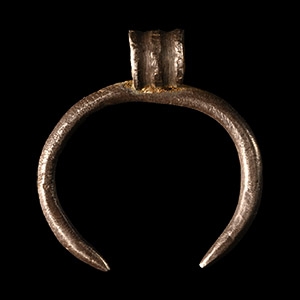
Roman Silver Lunar Pendant
3rd-4th century A.D.Sold for (Inc. bp): £150
With tapering round-section arms and ribbed suspension loop. 1.88 grams, 22 mm
Ex German art market, 2000s. Acquired from an EU collector living in London. From the collection of Surrey, UK, gentleman.
