
Loading, please wait...
LOT 0154
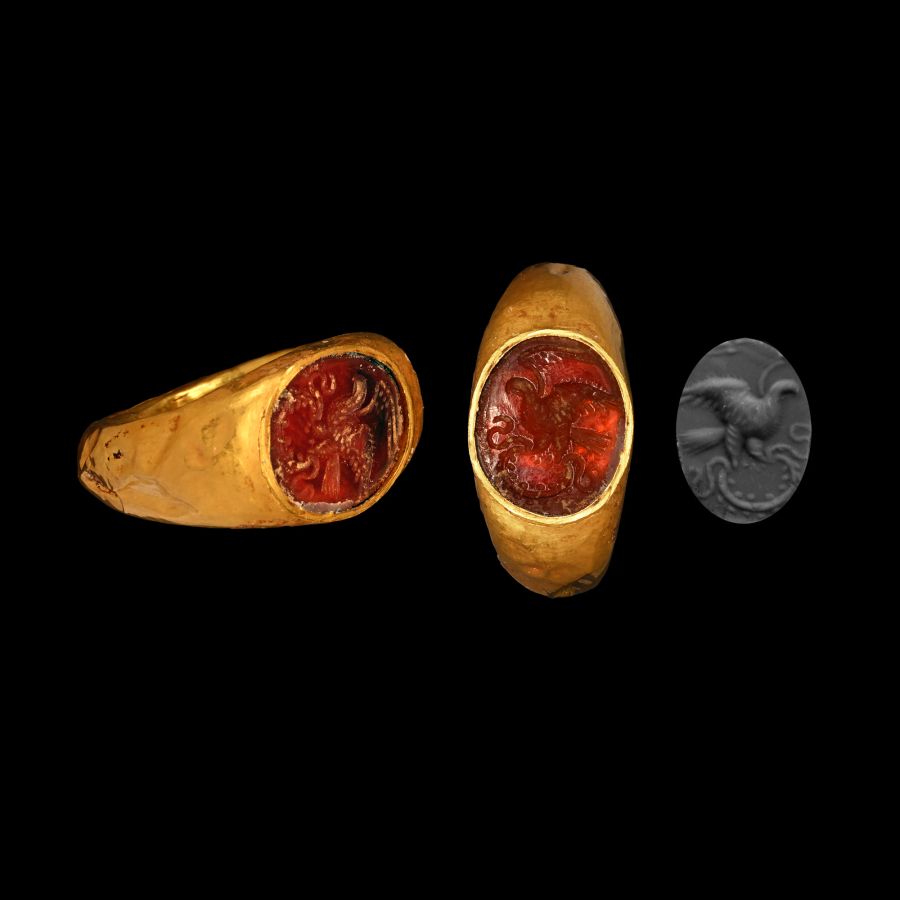
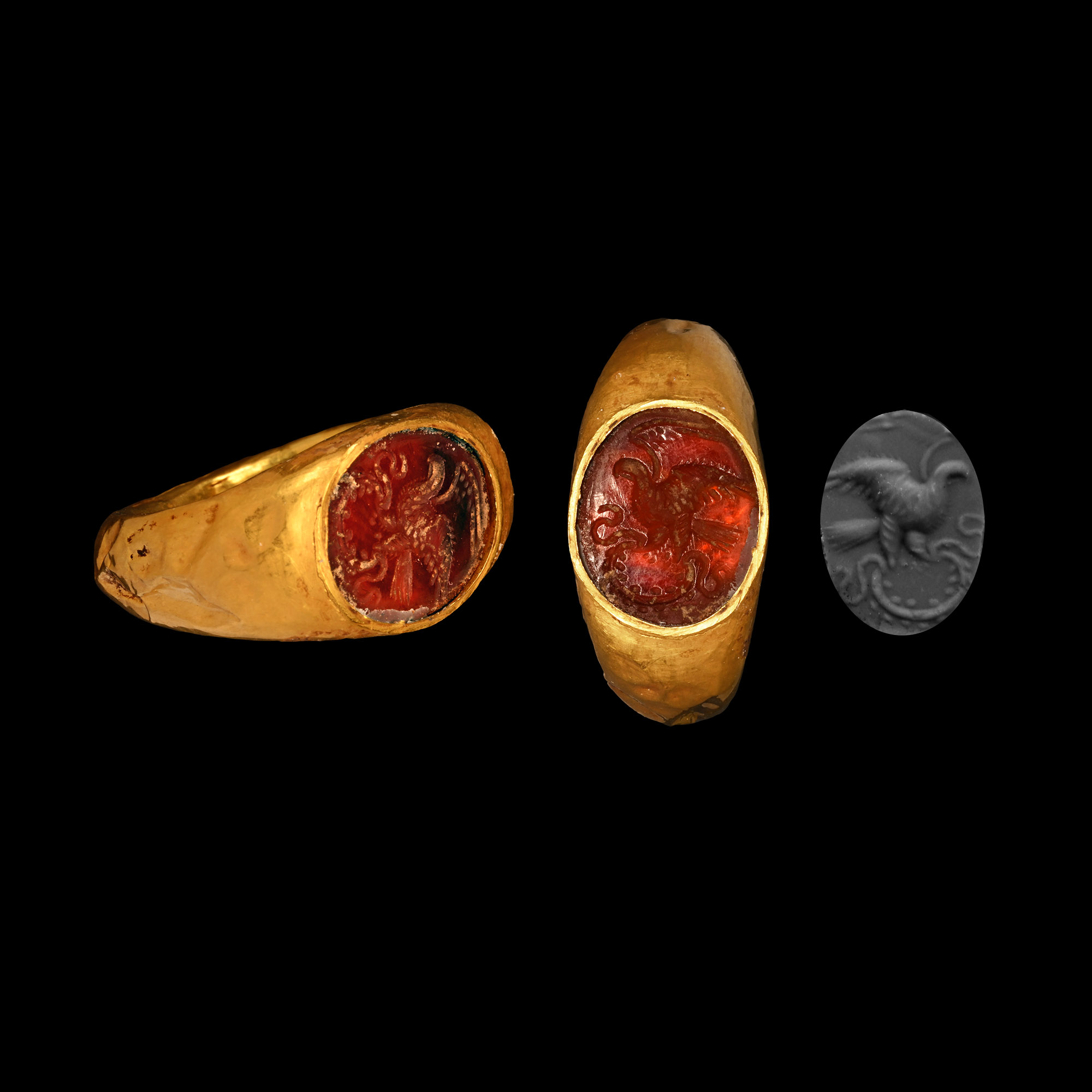
Roman Gold Ring with Gemstone
1ST-2ND CENTURY A.D. AND LATER
1 in. (2.28 grams, 24.52 mm overall, 16.95 mm internal diameter (approximate size British I, USA 4 1/4, Europe 7.44, Japan 7)).
Hollow-formed finger ring with broad plaque; with a later gemstone of an eagle and snake within a wreath; supplied with a museum-quality impression.
ProvenanceAcquired in the mid 1980s-1990s.
From the family collection of Mr S.A., Switzerland, thence by descent.
Private collection since the late 1990s.
This lot has been checked against the Interpol Database of stolen works of art and is accompanied by a search certificate number no.12107-218183.
Cf. Chadour, A.B., Rings. The Alice and Louis Koch Collection, volume I, Leeds, 1994, item 174.
CONDITIONTimeLine Auctions follows a vetting process to ensure the authenticity and legality of all items, reinforcing our commitment to integrity and responsible trading. Each antiquity, antique, and coin lot undergoes thorough examination by a vetting committee of at least ten external specialists, professional trade association members, scientists, and archaeologists: Our Vetting Process
AUCTIONS:
TimeLine is a leading auction house specialising in antiquities, ancient art, collectables, natural history, coins, medals, and books. Our auctions offer museums, collectors, historians, and enthusiasts the opportunity to acquire unique and historically significant pieces.
-
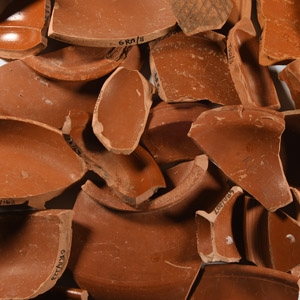
Romano-British Samian Ware Sherd Group
1st century A.D.Sold for (Inc. bp): £52
Including burnished rim and base fragments, all but two with inked or pencilled reference notations including 'Col' for Colchester, 'GRA' and BLACKFRIARS LEZ/52'. 1.12 kg total, 5.5-13.5 cm
Found UK. From the collection of a late East Anglian teacher and antiquarian who retired to the Isle of Wight in Hampshire, UK. He amassed a large collection of objects between the 1960s-1980s. -
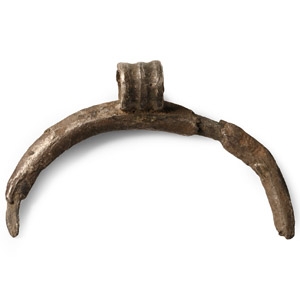
Roman Silver Lunar Pendant
2nd-3rd century A.D.Sold for (Inc. bp): £39
With wide lozenge-section arms and a ribbed suspension loop. 2.31 grams, 36 mm
Ex German art market, 2000s. Acquired from an EU collector living in London. From the collection of Surrey, UK, gentleman. -
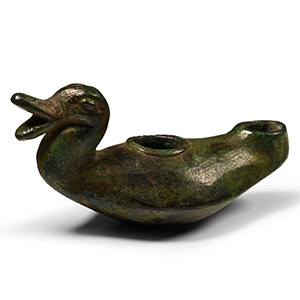
Late Roman Bronze Oil Lamp with Duck Head Handle
5th-7th century A.D.Sold for (Inc. bp): £468
Hollow-formed slipper-shaped oil lamp with central filler hole and short nozzle, basal ring; the handle formed as a duck's head with open beak. 143 grams, 87 mm
Acquired on the German art market, 1989-1995. with The Museum Gallery, 19 Bury Place, London, WC1A 2JB, 1998-2003. Property of a London based academic, 2003-present.
The lamp belongs to the category of lamps with flattened spherical bodies, that have a certain number of variations in their nozzle, handle, lid and base designs. The most common form, like here, is that in which the body is heightened towards the front to form the nozzle. Many examples have oyster shell shaped lids which are connected to the body with hinges.
