
Loading, please wait...
LOT 0160
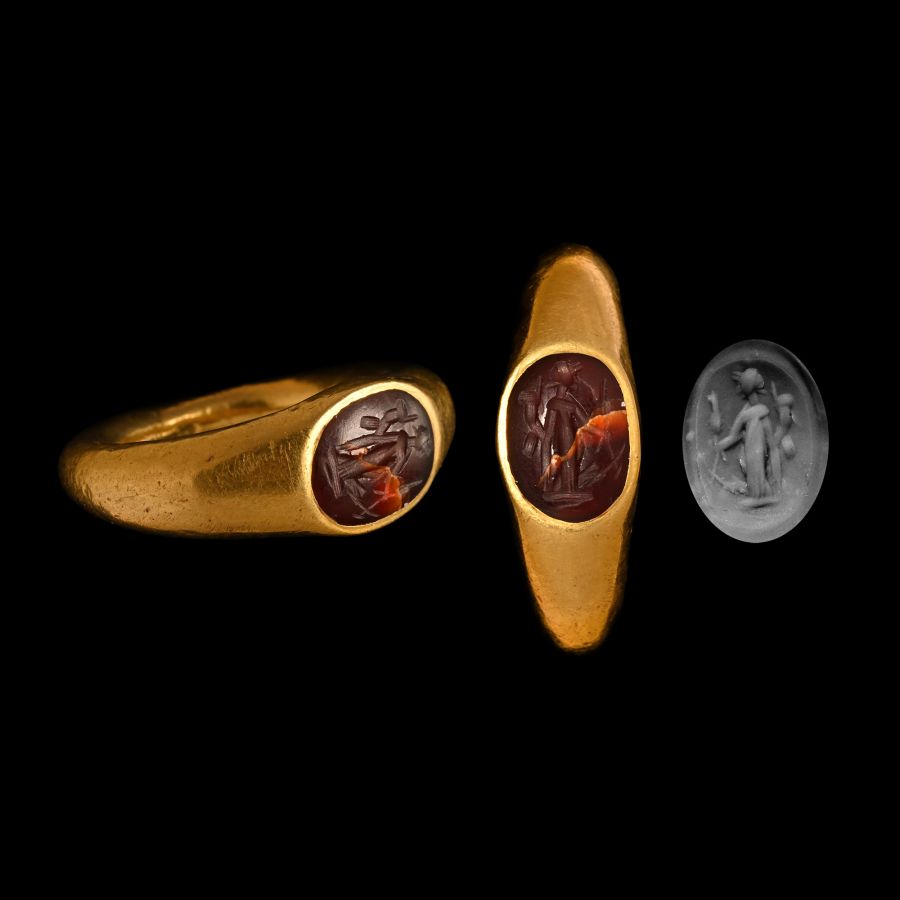
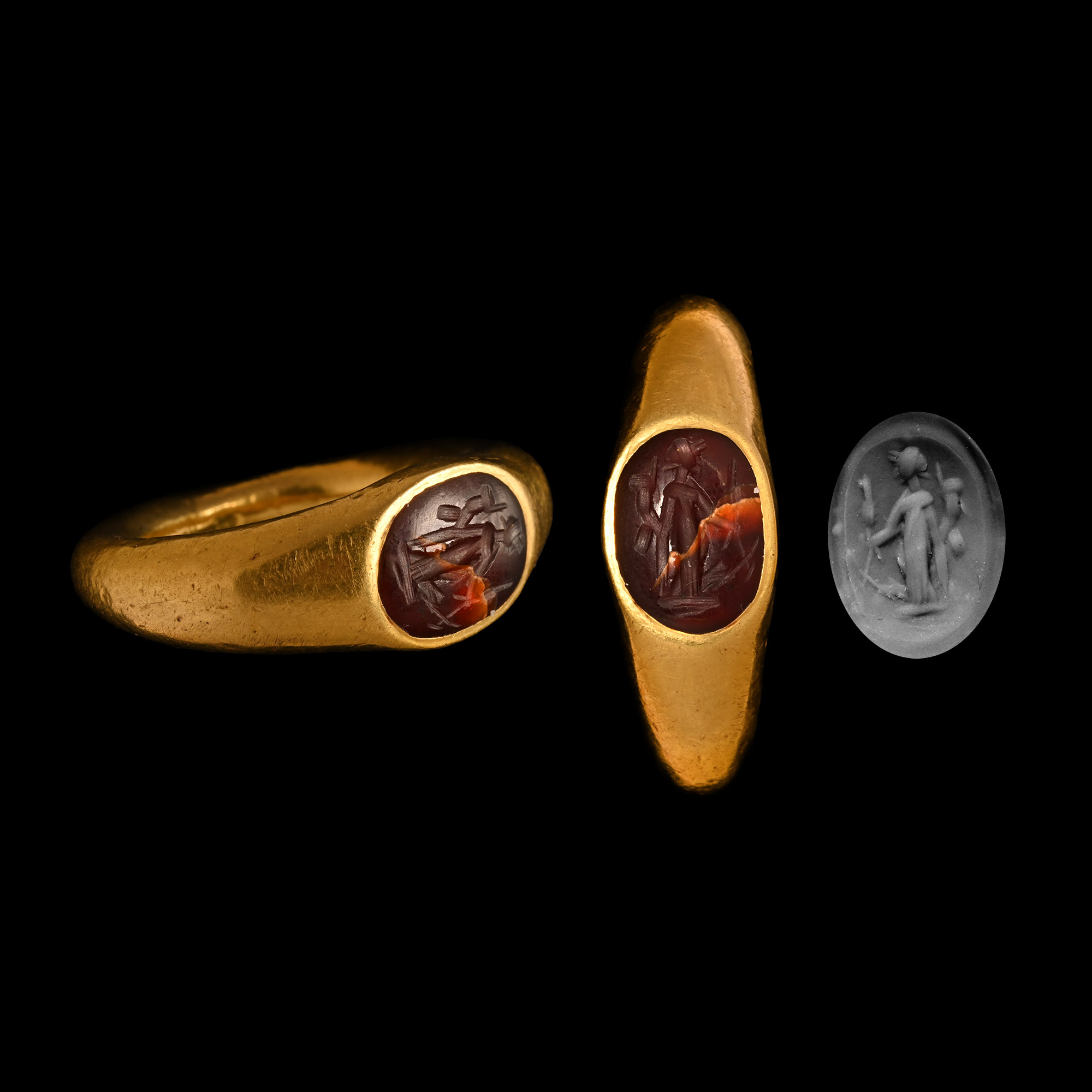
Roman Gold Ring with Garnet Intaglio
1ST-2ND CENTURY A.D.
1 in. (3.47 grams, 24.99 mm overall, 12.25 x 15.59 mm internal diameter (approximate size British E 1/2, USA 2 1/2, Europe 3, Japan 3)).
Hollow-formed with inset ellipsoid intaglio figure of Abundantia standing with a cornucopia.
ProvenanceAcquired by the current owner's family in the 1980s.
with Christie’s, New York, Ancient Jewellery, 11 December 2003, no.397.
This lot is accompanied by an illustrated lot declaration signed by the Head of the Antiquities Department, Dr Raffaele D'Amato.
Cf. Chadour, A.B., Rings. The Alice and Louis Koch Collection, volume I, Leeds, 1994, item 450, for type.
CONDITIONTimeLine Auctions follows a vetting process to ensure the authenticity and legality of all items, reinforcing our commitment to integrity and responsible trading. Each antiquity, antique, and coin lot undergoes thorough examination by a vetting committee of at least ten external specialists, professional trade association members, scientists, and archaeologists: Our Vetting Process
AUCTIONS:
TimeLine is a leading auction house specialising in antiquities, ancient art, collectables, natural history, coins, medals, and books. Our auctions offer museums, collectors, historians, and enthusiasts the opportunity to acquire unique and historically significant pieces.
LOT 0160
Roman Gold Ring with Garnet Intaglio
Estimate £1,000 - 1,400€1,160 - 1,620 (for guidance only)$1,350 - 1,890 (for guidance only)
-
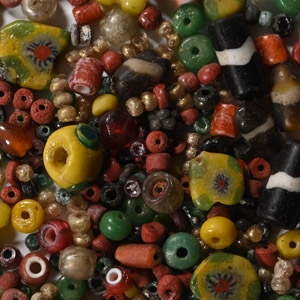
Roman Mixed Glass Bead Group
1st-4th century A.D. and laterSold for (Inc. bp): £111
Including oblate, fusiform, tabular, mosaic and other types. 15 grams total, 2-13 mm
UK gallery, early 2000s. This lot is accompanied by an illustrated lot declaration signed by the Head of the Antiquities Department, Dr Raffaele D'Amato.
The mass production of glass in Ancient Rome prompted the development of glass jewellery of unique qualities. The ancient Romans considered jewellery to be an essential accessory, being a public display of the wealth of high social classes. Roman jewellery at first followed trends set by the Etruscans, using gold and glass beads, but as the power and spread of the Roman Empire increased, jewellery designs became increasingly elaborate, incorporating elements from different cultural styles. -
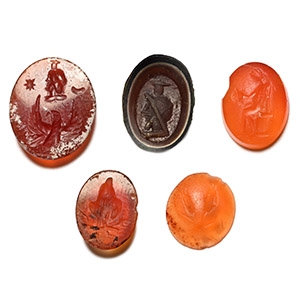
Roman Gemstone Collection
2nd-3rd century A.D.Sold for (Inc. bp): £624
Mixed group including profile bust, seated female, perching bird and others; each supplied with a museum-quality impression. 2.86 grams total, 10-14 mm
From the collection of a gentleman, acquired on the London art market in the 1990s. This lot is accompanied by an illustrated lot declaration signed by the Head of the Antiquities Department, Dr Raffaele D'Amato. -
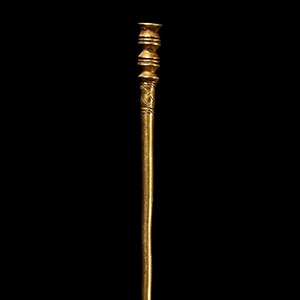
Roman Decorated Gold Dress Pin
1st-4th century A.D.Estimate: £800 - 1,000 (‡+bp*)
Opening Bid: £400
Slender body with balustered finial, a band of hatched herringbone decoration beneath the finial. 2.74 grams, 72 mm
Ex 'Neuburg' Collection, Germany, 1970. with Gorny & Mosch, Munich, Germany. with Galerie Rhéa, Zurich, Switzerland. This lot is accompanied by an illustrated lot declaration signed by the Head of the Antiquities Department, Dr Raffaele D'Amato.
