
Loading, please wait...
LOT 0165
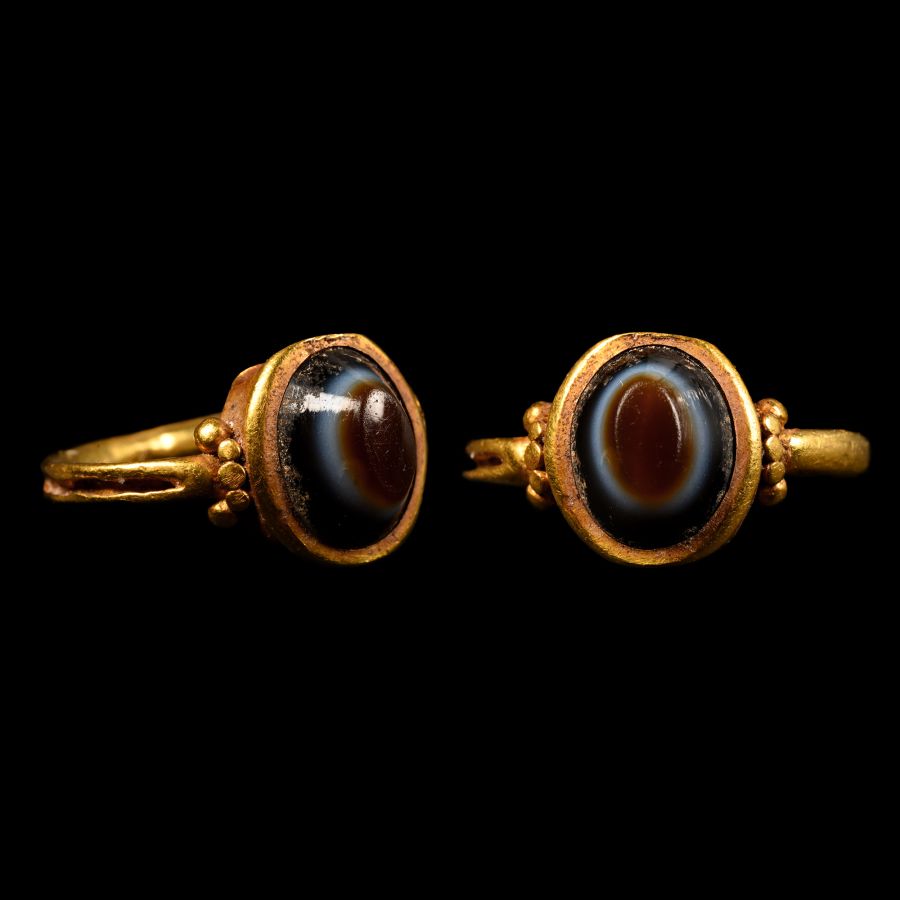
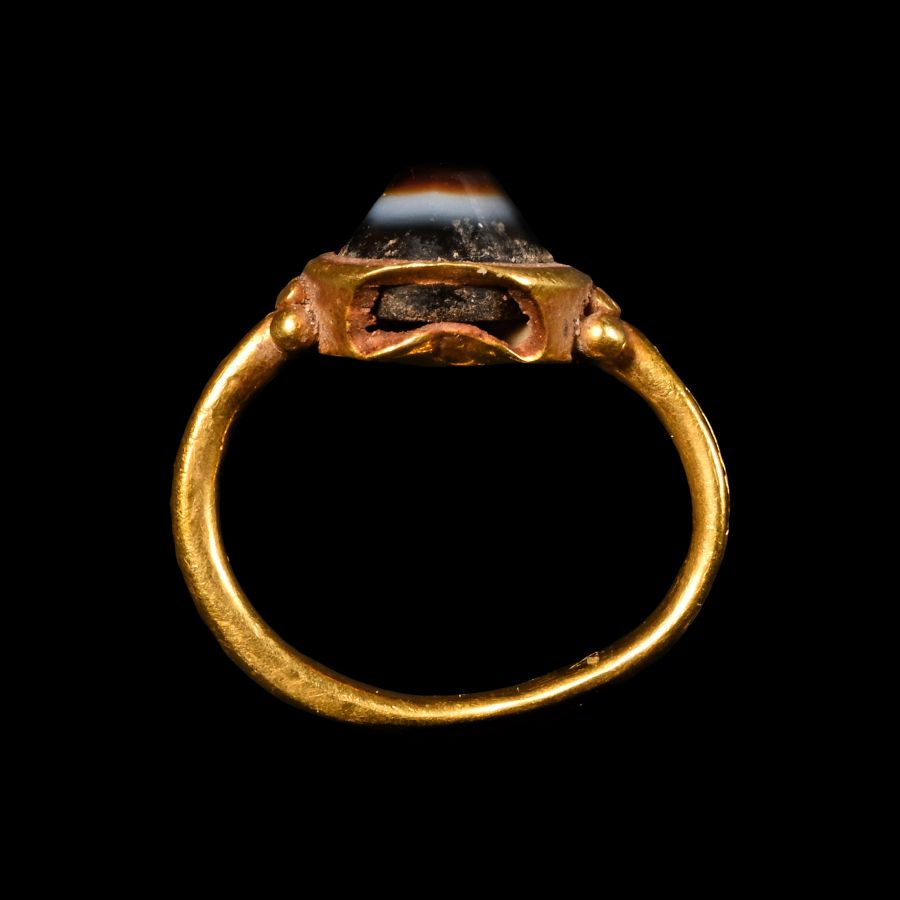
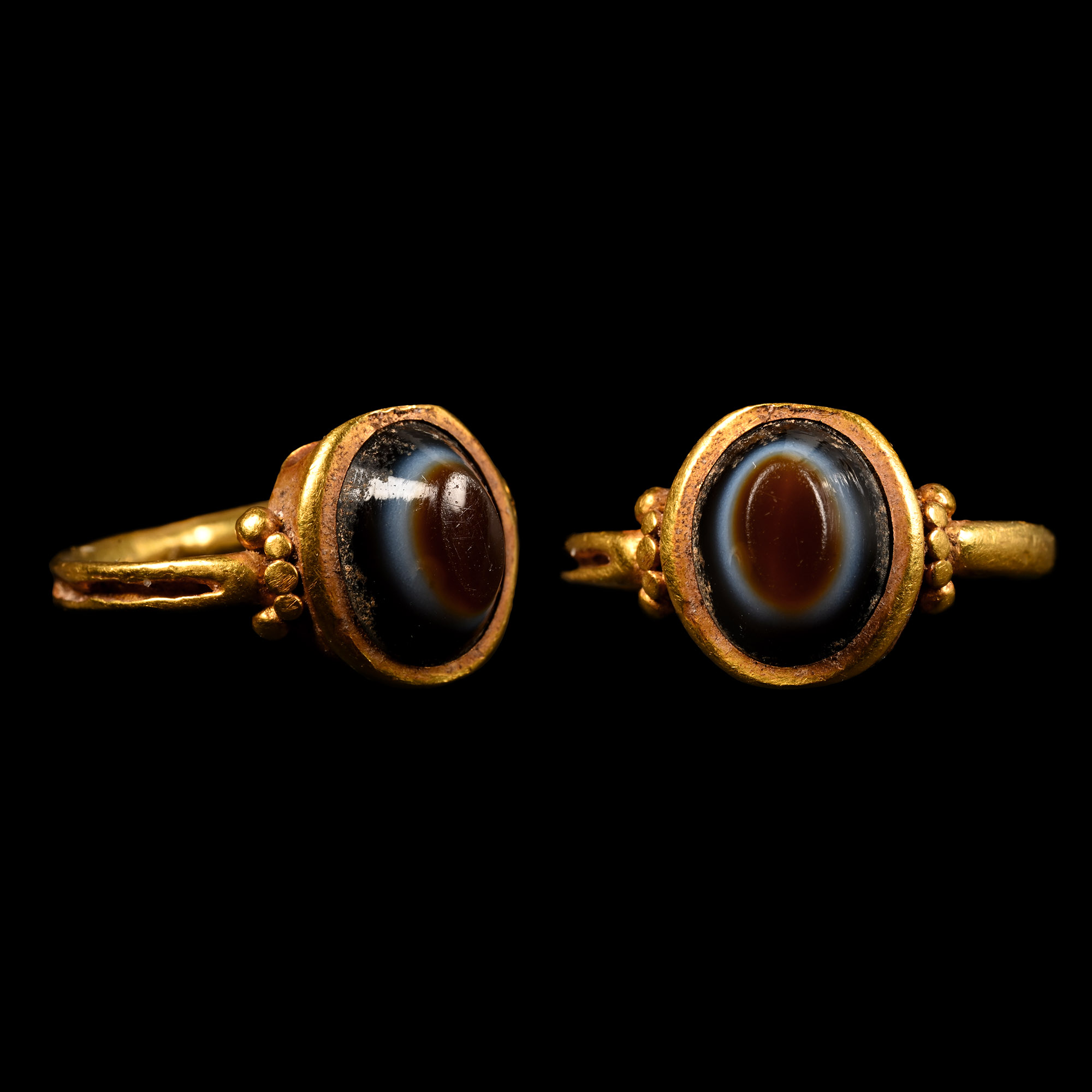
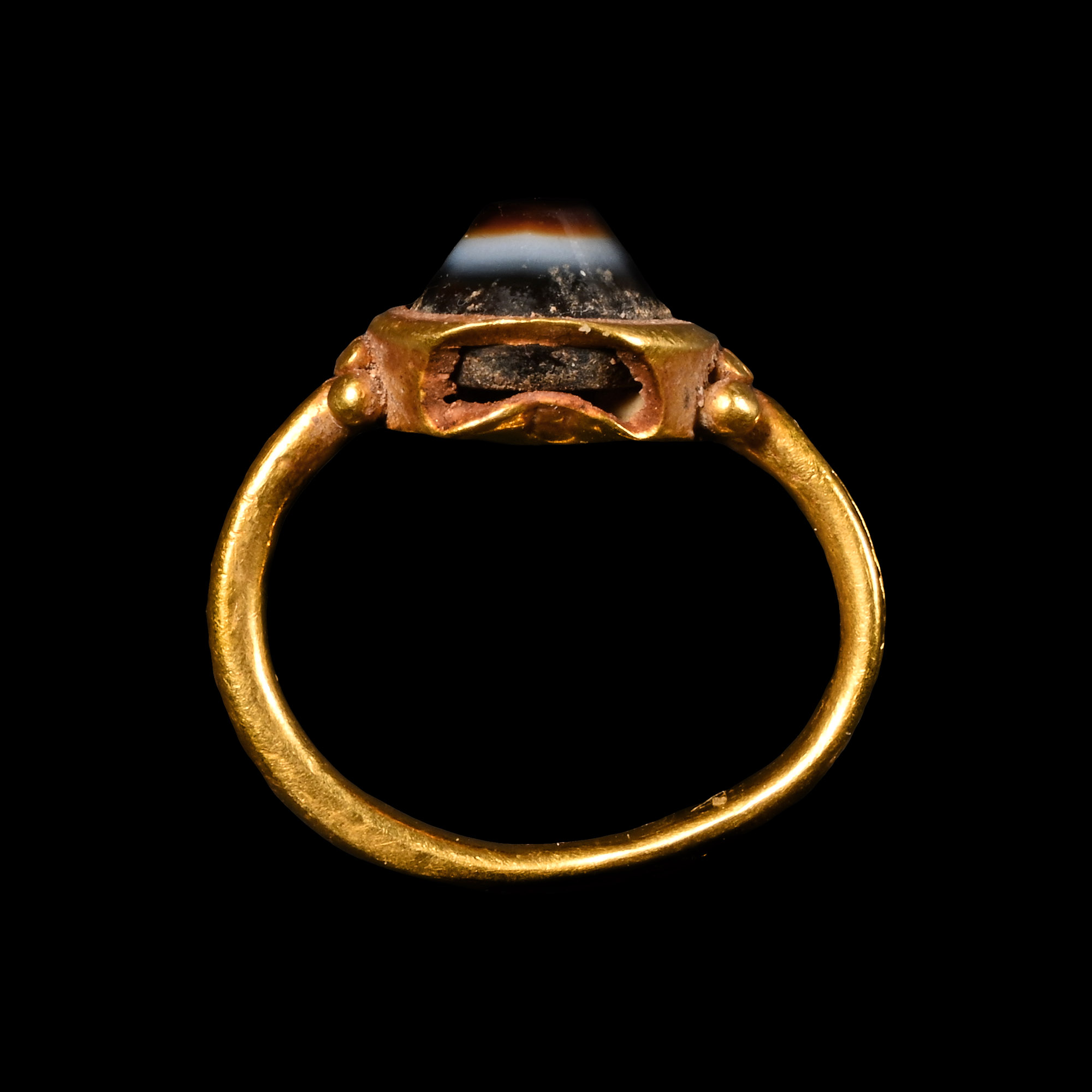
Roman Gold Ring with Eye Cabochon
3RD-4TH CENTURY A.D.
3/4 in. (2.45 grams, 20.32 mm overall, 11.79 x 16.35 mm internal diameter (approximate size British E 1/2, USA 2 1/2, Europe 3, Japan 3)).
Round-section hoop with granule cluster to each shoulder, ellipsoid cell with inset sardonyx cabochon; one end of bezel and outer edge of hoop damaged.
ProvenancePrivate family collection, acquired in the 1980s.
with Christie's, New York, Ancient Jewellery, 11 December 2003, no.506.
Property of a European collection.
Accompanied by a copy of an Art Loss Register certificate, no.S00029664
This lot is accompanied by an illustrated lot declaration signed by the Head of the Antiquities Department, Dr Raffaele D'Amato.
TimeLine Auctions follows a vetting process to ensure the authenticity and legality of all items, reinforcing our commitment to integrity and responsible trading. Each antiquity, antique, and coin lot undergoes thorough examination by a vetting committee of at least ten external specialists, professional trade association members, scientists, and archaeologists: Our Vetting Process
AUCTIONS:
TimeLine is a leading auction house specialising in antiquities, ancient art, collectables, natural history, coins, medals, and books. Our auctions offer museums, collectors, historians, and enthusiasts the opportunity to acquire unique and historically significant pieces.
-
Roman Mixed Glass Bead Necklace String
1st-4th century A.D. and laterSold for (Inc. bp): £26
Restrung group of spherical, oblate, biconical and other beads. 21.8 grams, 33.5 cm
Ex London, UK, collection, 1990s. This lot is accompanied by an illustrated lot declaration signed by the Head of the Antiquities Department, Dr Raffaele D'Amato. -
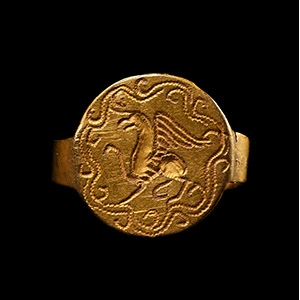
Late Roman Gold Ring with Engraved Bezel
Iberia, 4th-7th century A.D.Sold for (Inc. bp): £1,580
Flat-section hoop and disc bezel, scrolled tendril border and stylised gryphon. 1.78 grams, 17.72 mm overall, 15.63 mm internal diameter (approximate size British H, USA 3 3/4, Europe 6.18, Japan 6)
Acquired in the mid 1980s-1990s. Private collection, Switzerland, thence by descent. Private collection, since the late 1990s. This lot has been cleared against the Art Loss Register database, and is accompanied by an illustrated lot declaration signed by the Head of the Antiquities Department, Dr Raffaele D'Amato. -
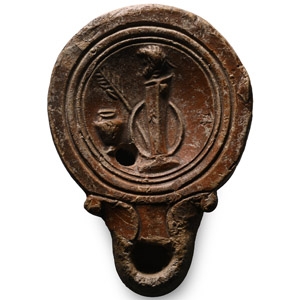
Roman Terracotta Oil Lamp with Herm
2nd century A.D.Sold for (Inc. bp): £234
Short nozzle with volute scrolls, low discus with concentric circles, central motif of a male bust atop a column, a palm branch behind and an amphora before the column. 54 grams, 92 mm
with Galerie Rhéa, Zurich, Switzerland. This lot is accompanied by an illustrated lot declaration signed by the Head of the Antiquities Department, Dr Raffaele D'Amato.
