
Loading, please wait...
LOT 0161
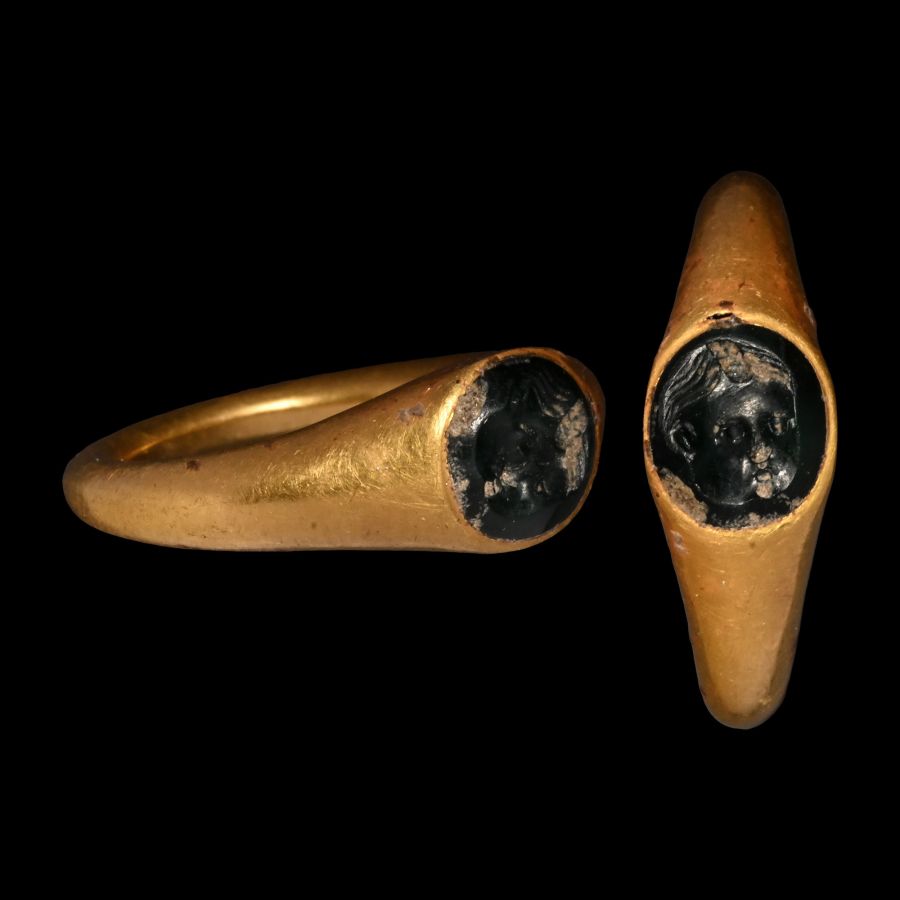
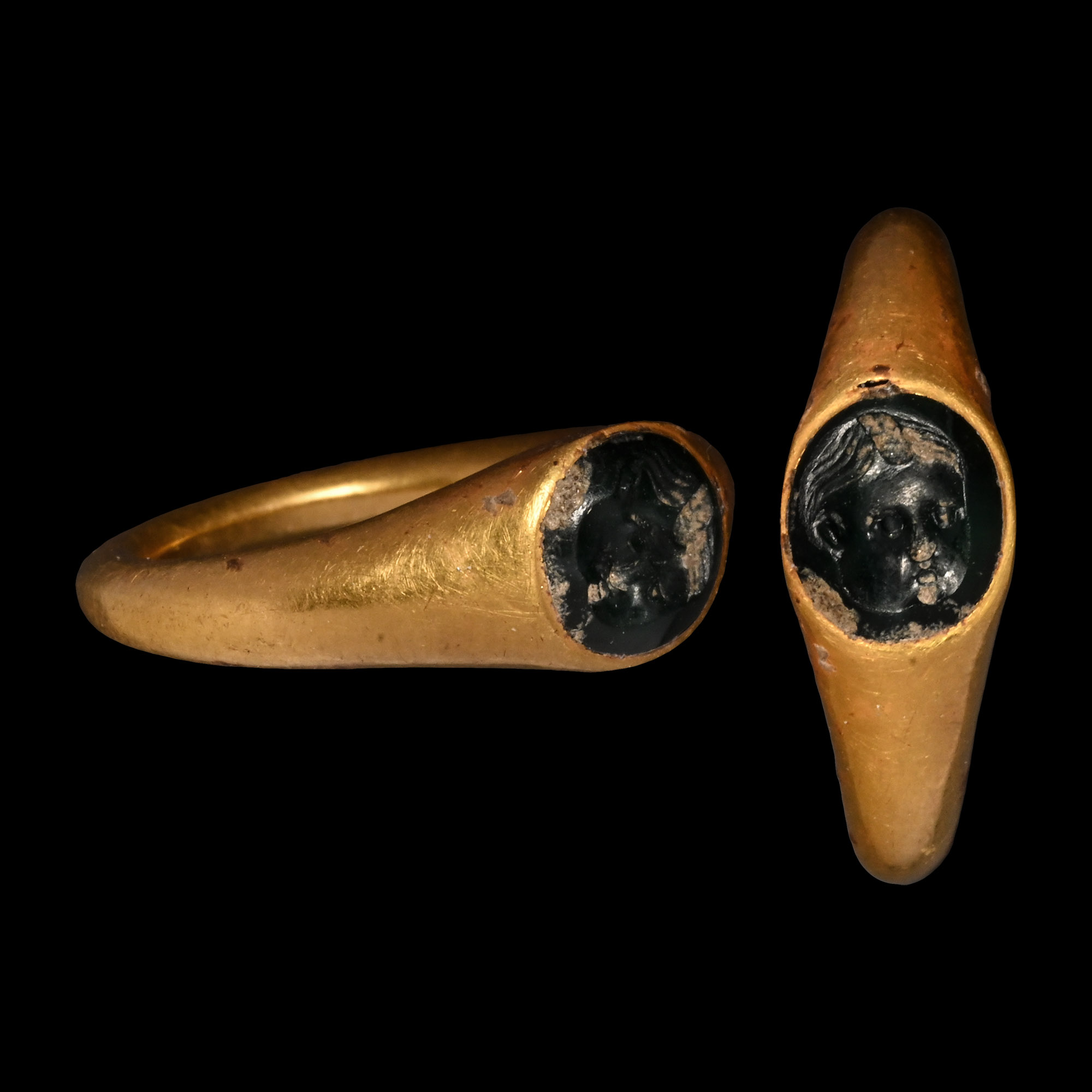
Roman Gold Ring with Eros Gemstone
1ST-2ND CENTURY A.D.
7/8 in. (2.35 grams, 21.19 mm overall, 15.00 mm internal diameter (approximate size British D 1/2, USA 2, Europe 1.78, Japan 1)).
Hollow-formed shank, integral plaque with inset glass disc, low-relief Eros face in three-quarter view.
ProvenanceAcquired in 1992.
Private collection, Switzerland, thence by descent.
Private collection, since the late 1990s.
This lot is accompanied by an illustrated lot declaration signed by the Head of the Antiquities Department, Dr Raffaele D'Amato.
TimeLine Auctions follows a vetting process to ensure the authenticity and legality of all items, reinforcing our commitment to integrity and responsible trading. Each antiquity, antique, and coin lot undergoes thorough examination by a vetting committee of at least ten external specialists, professional trade association members, scientists, and archaeologists: Our Vetting Process
AUCTIONS:
TimeLine is a leading auction house specialising in antiquities, ancient art, collectables, natural history, coins, medals, and books. Our auctions offer museums, collectors, historians, and enthusiasts the opportunity to acquire unique and historically significant pieces.
-
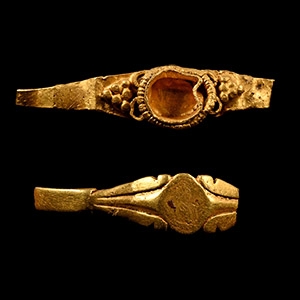
Roman Gold Ring Fragment Group
2nd-4th century A.D.Sold for (Inc. bp): £104
Comprising: one with applied granules to the shoulders and applied filigree collar around the bezel; one with volutes to the shoulders, discoid bezel. 3.62 grams total, 23-29 mm
Property of a Cambridgeshire, UK, collector. From his private collection since the 1970s; thence by descent circa 2000. Ex private collection of a Bedfordshire gentleman. This lot is accompanied by an illustrated lot declaration signed by the Head of the Antiquities Department, Dr Raffaele D'Amato. -
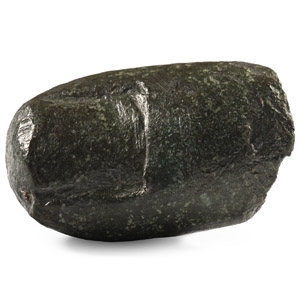
Roman Bronze Life-Size Statue Thumb
1st-4th century A.D.Sold for (Inc. bp): £260
Comprising the tip of the thumb with natural nail detailing. 64.4 grams, 33 mm
Ex German art market, 2000s. Acquired from an EU collector living in London. From the collection of a Surrey, UK, gentleman. This lot is accompanied by an illustrated lot declaration signed by the Head of the Antiquities Department, Dr Raffaele D'Amato. -
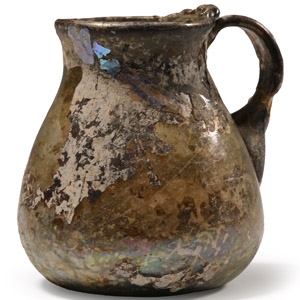
Roman Iridescent Glass Juglet
1st-2nd century A.D.Sold for (Inc. bp): £137
Bulbous body and short neck with everted rim, applied handle and pontil to base. 23.9 grams, 58 mm
Acquired from older English collections via the UK art market since the mid 1970s. From the private collection of Peran Dachinger, thence by descent. From the family collection of a Maida Vale lady, UK. This lot is accompanied by an illustrated lot declaration signed by the Head of the Antiquities Department, Dr Raffaele D'Amato.
