
Loading, please wait...
LOT 0102
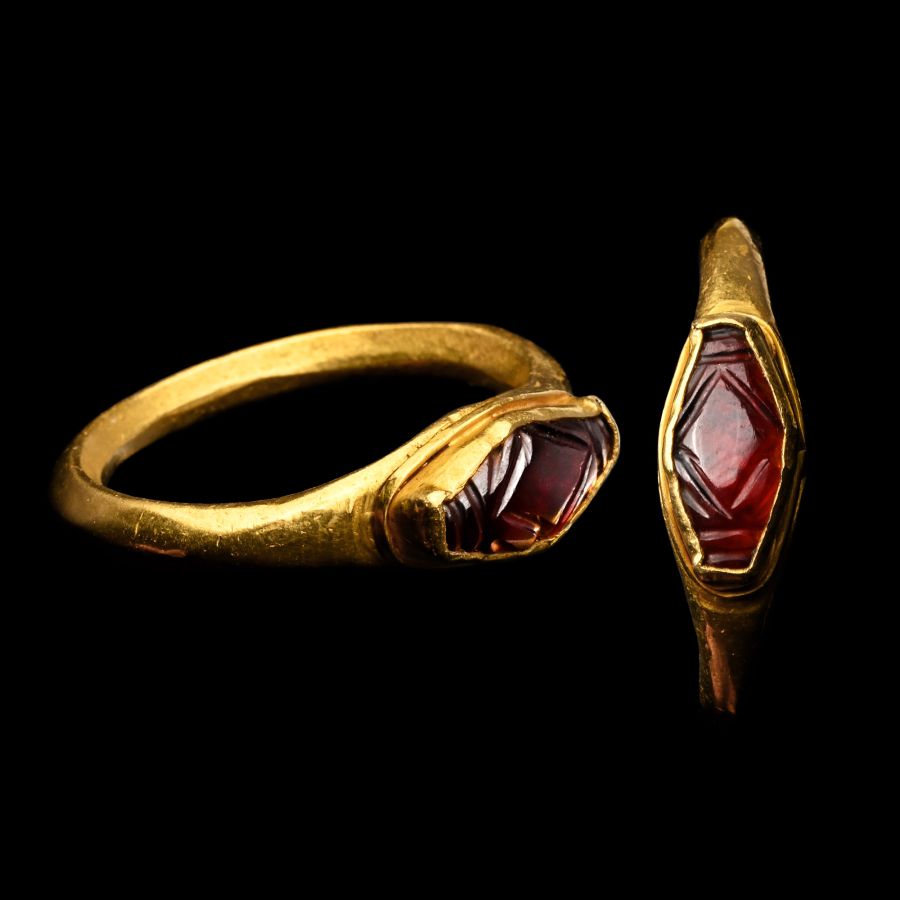
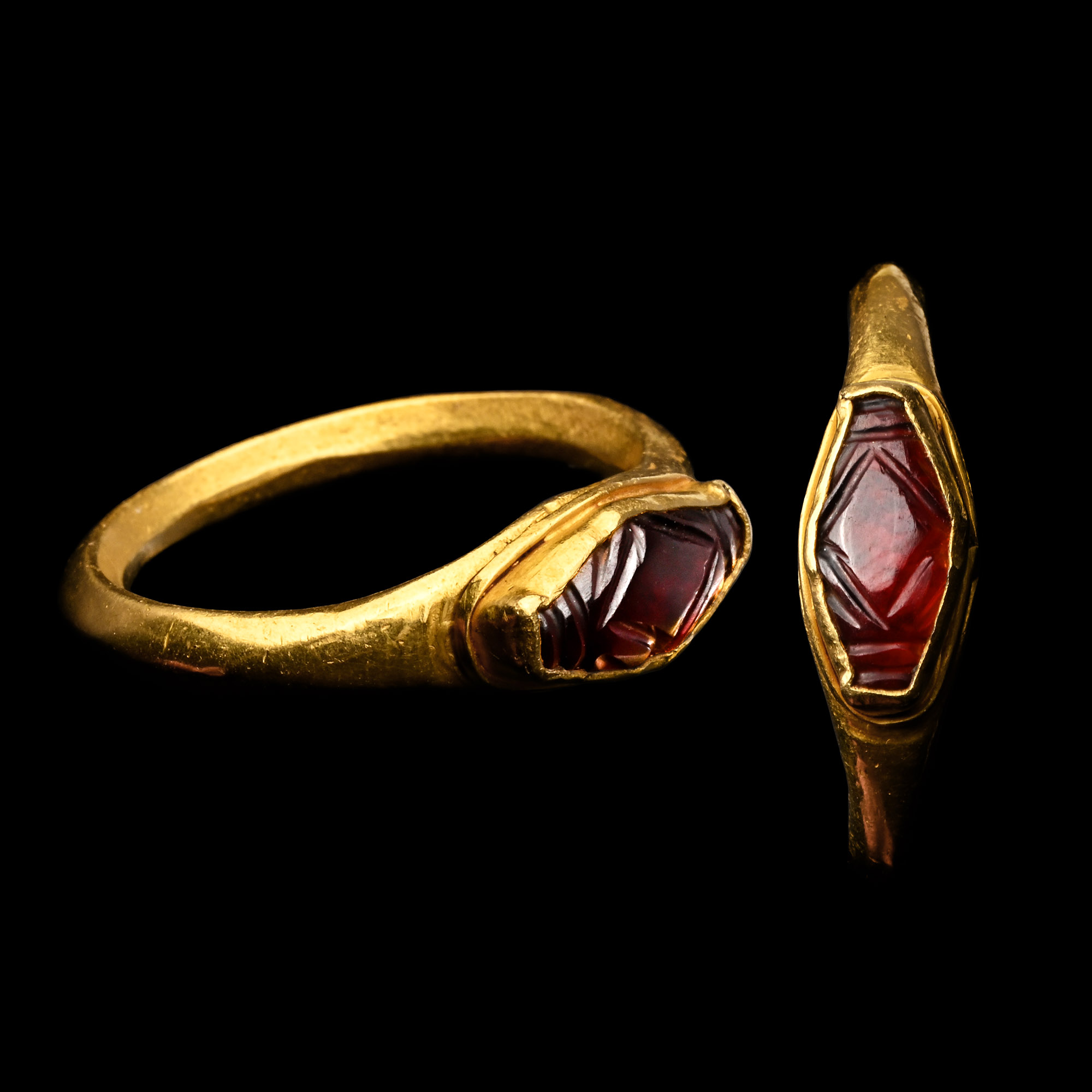
Roman Gold Ring with Elliptical Garnet
1ST-3RD CENTURY A.D.
1 in. (8.36 grams, 25.87 mm overall, 19.48 mm internal diameter (approximate size British P 1/2, USA 7 3/4, Europe 16.86, Japan 16)).
Comprising a substantial keeled hoop and raised bezel set with a garnet, the garnet with a central lozenge flanked by two transverse lines.
ProvenancePrivate English collection.
Private collection, UK.
This lot has been checked against the Interpol Database of stolen works of art and is accompanied by search certificate number no.12955-245984.
Cf. Chadour, A.B., Rings. The Alice and Louis Koch Collection, volume I, Leeds, 1994, item 163, for a similar type.
CONDITIONTimeLine Auctions follows a vetting process to ensure the authenticity and legality of all items, reinforcing our commitment to integrity and responsible trading. Each antiquity, antique, and coin lot undergoes thorough examination by a vetting committee of at least ten external specialists, professional trade association members, scientists, and archaeologists: Our Vetting Process
AUCTIONS:
TimeLine is a leading auction house specialising in antiquities, ancient art, collectables, natural history, coins, medals, and books. Our auctions offer museums, collectors, historians, and enthusiasts the opportunity to acquire unique and historically significant pieces.
LOT 0102
Roman Gold Ring with Elliptical Garnet
Estimate £3,000 - 4,000€3,480 - 4,640 (for guidance only)$4,050 - 5,400 (for guidance only)
-
.jpg)
Roman Terracotta Oil Lamp with Erotic Scene
1st-2nd century A.D.Sold for (Inc. bp): £390
Discoid in plan with short nozzle, broad shoulder with impressed rosettes, discus with scene of two lovers in a bed; underside with concentric rings. 51 grams, 87 mm
Acquired on the UK art market before 2000. Property of an Essex, UK, gentleman. -
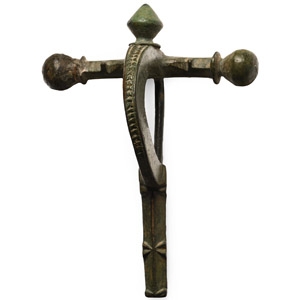
Roman Bronze Crossbow Brooch
4th century A.D.Sold for (Inc. bp): £156
With two onion-shaped knops on the crossbar and a biconical above the bow; billeted decoration to the outer face of the narrow bow, rectangular footplate with chamfered sides, catch to the reverse and hinged pin. 15.8 grams, 55 mm
From a private Tyneside collection, formed since the early 2000s. -
.jpg)
Roman Black Glass Bead Necklace String
1st-4th century A.D. and laterSold for (Inc. bp): £65
Restrung designer necklace string of oblate and other types with teardrop pendant centrepiece. 5.65 grams, 46 cm
London, UK, collection, 2000s.
