
Loading, please wait...
LOT 0180
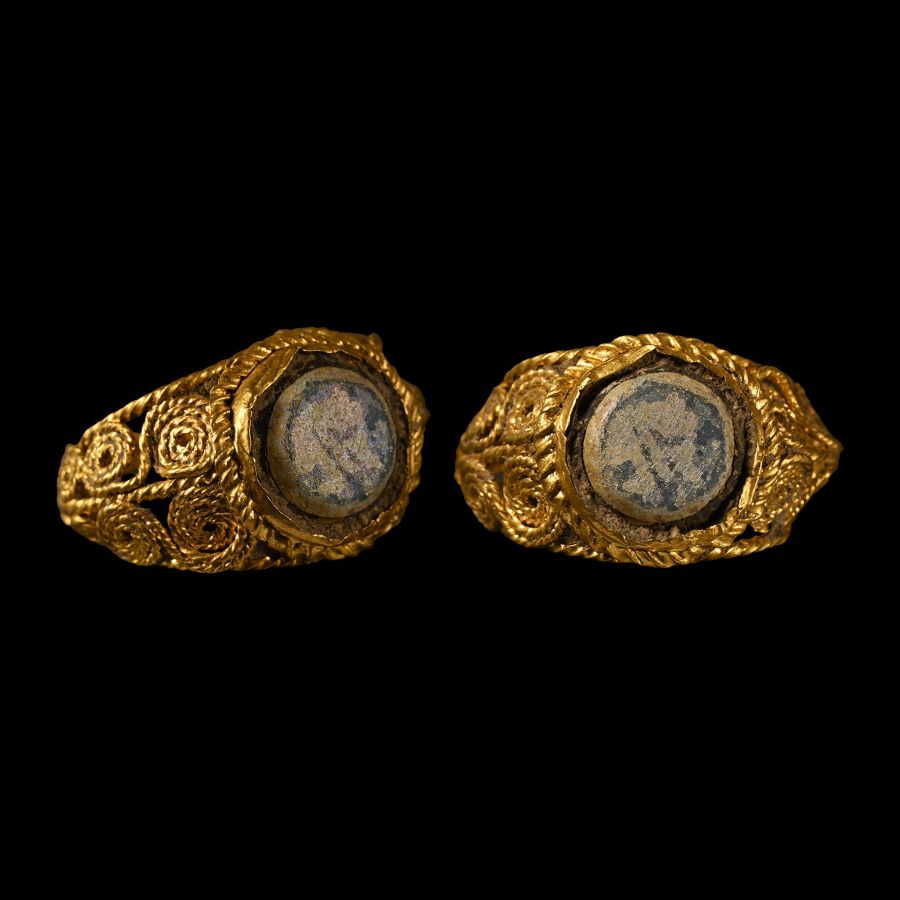
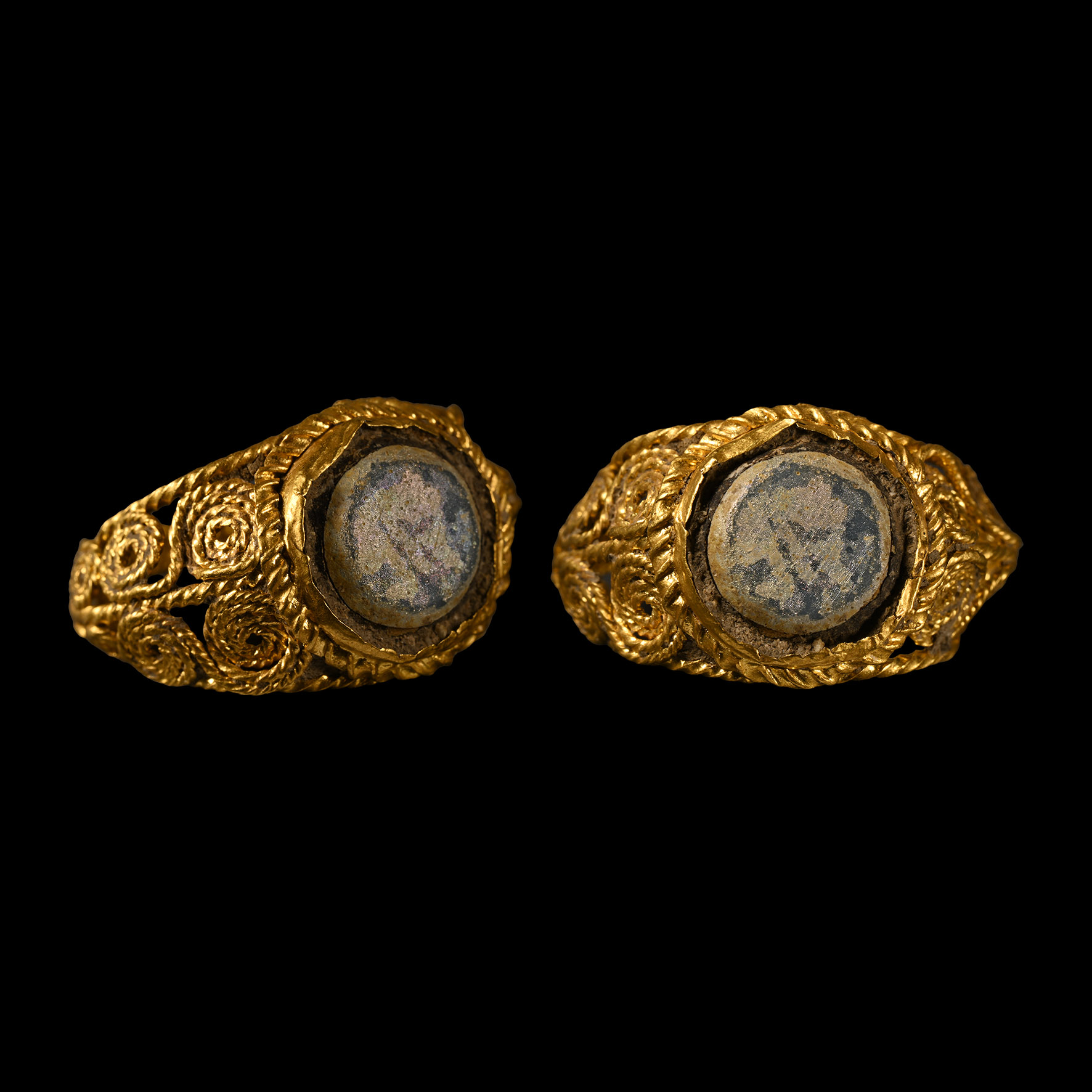
Roman Gold Ring with Cabochon
3RD-5TH CENTURY A.D.
7/8 in. (5.00 grams, 23.01 mm overall, 16.99 x 16.87 mm internal diameter (approximate size British K, USA 5 1/4, Europe 9.95, Japan 9)).
With a triple ropework band, broad shoulders with openwork spirals increasing in size towards the centre; raised circular bezel with twisted wire border, set with a glass cabochon.
ProvenanceFrom a private European collection, since 1975.
with Christie's, London, 14 April 2011, no.361 (part).
Ex New York, USA, collection.
Accompanied by a copy of the relevant Christie's catalogue pages.
Accompanied by an old cataloguing slip.
Cf. Ruseva-Slokoska, L., Roman Jewellery, Sofia, 1991, p.167, no.186, for similar type VIII of the Ruseva-Slokoska classification of gold rings.
CONDITIONTimeLine Auctions follows a vetting process to ensure the authenticity and legality of all items, reinforcing our commitment to integrity and responsible trading. Each antiquity, antique, and coin lot undergoes thorough examination by a vetting committee of at least ten external specialists, professional trade association members, scientists, and archaeologists: Our Vetting Process
AUCTIONS:
TimeLine is a leading auction house specialising in antiquities, ancient art, collectables, natural history, coins, medals, and books. Our auctions offer museums, collectors, historians, and enthusiasts the opportunity to acquire unique and historically significant pieces.
-
Roman Bronze Plate Brooch Colection
2nd century A.D.Sold for (Inc. bp): £85
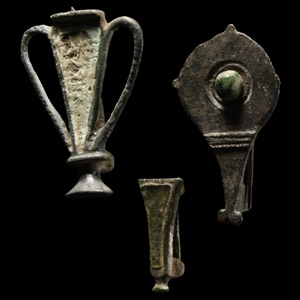
One tinned with central boss; one bell-shaped with glass inlay; another shaped as an amphora with remains of enamelling. 12 grams total, 22-38 mm
Ex property of an Austrian private collector since the 1970s. -
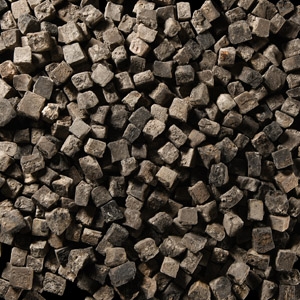
Roman Stone Tesserae Group
1st-4th century A.D.Sold for (Inc. bp): £130
A mixed group of four hundred and thirty single stone tesserae of various colours and sizes. 830 grams total, 10-17 mm
From a collection acquired on the UK art market from various auction houses and collections mostly before 2000. From an important Cambridgeshire estate; thence by descent. -
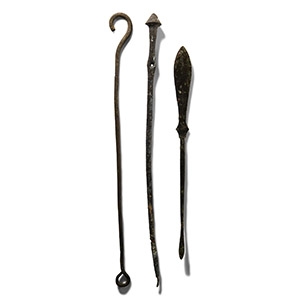
Roman Bronze Implement Group
1st-4th century A.D.Sold for (Inc. bp): £85
Group of three implements comprising: cloak pin with conical bulb finial and piercing; hooked rod; spear-shaped surgical blade with probe to the other end. 104 grams total, 19.7-25.5 cm
From a collection acquired on the UK art market from various auction houses and collections mostly before 2000. From an important Cambridgeshire estate; thence by descent.
