
Loading, please wait...
LOT 0939
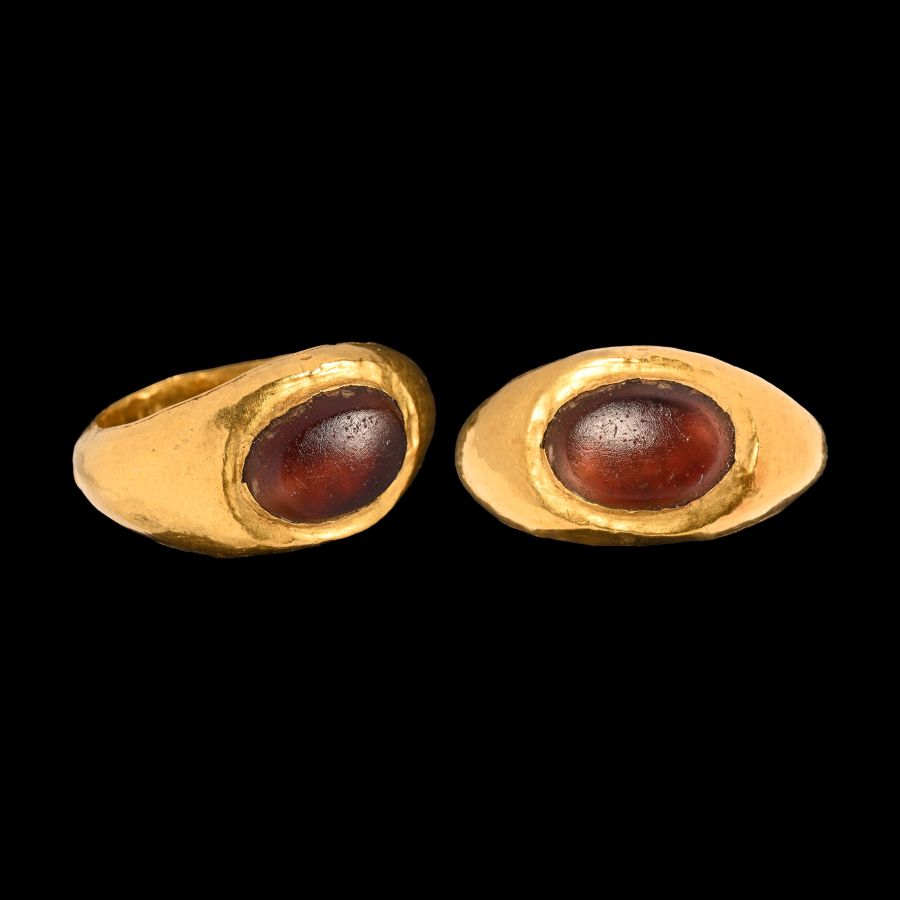
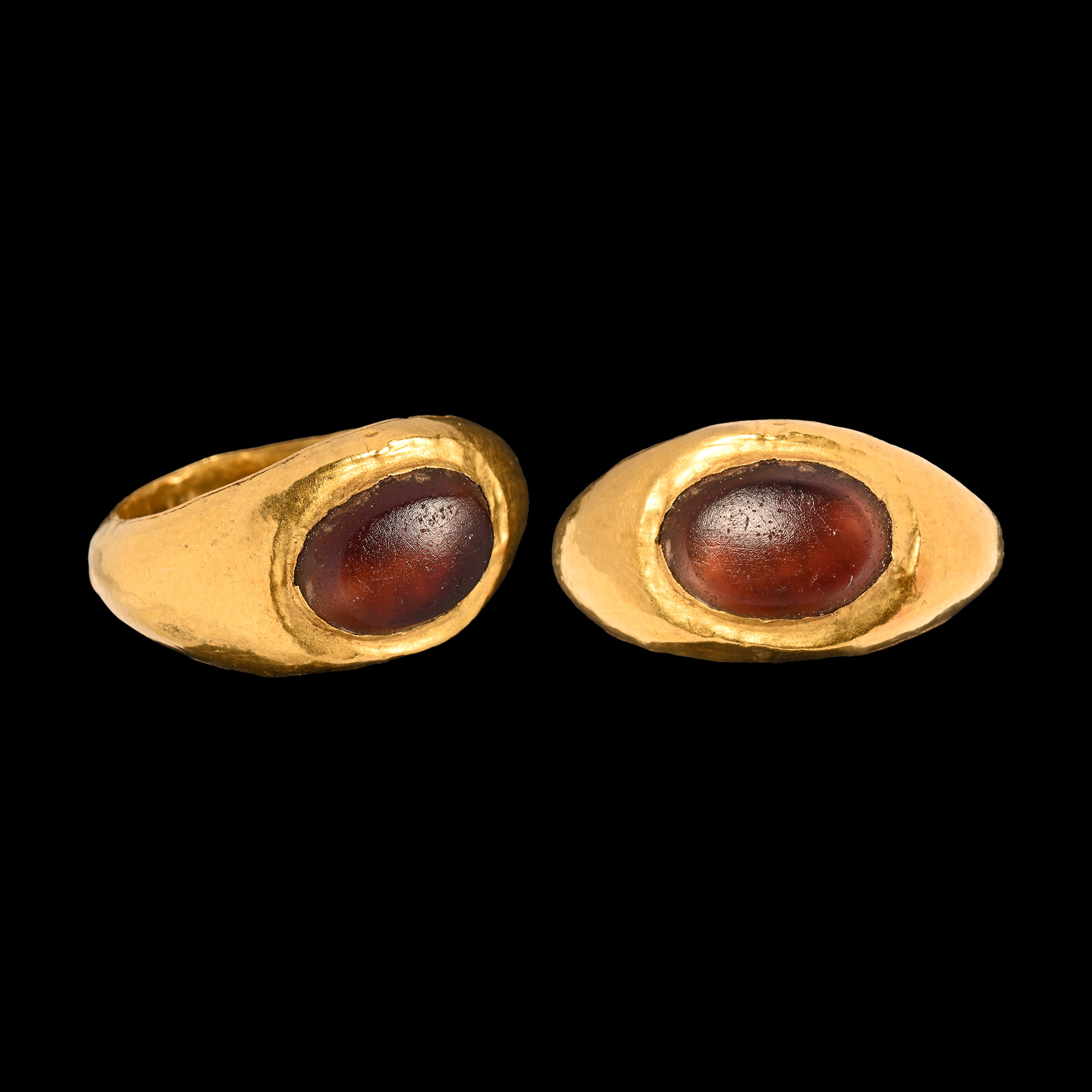
Roman Gold Ring with Cabochon
CIRCA 2ND-3RD CENTURY A.D.
3/4 in. (2.26 grams, 21.59 mm overall, 16.60 mm internal diameter (approximate size British I 1/2, USA 4 1/2, Europe 8.07, Japan 7)).
Hollow-formed with inset glass cabochon.
ProvenanceAcquired between the 1960s-early 1990s.
From an old UK private collector from Worthing, West Sussex, UK.
Property of K.P., a Cornish lady collector, UK.
Cf. Ruseva-Slokoska, L., Roman Jewellery, Sofia, 1991, item 190, for type.
CONDITIONTimeLine Auctions follows a vetting process to ensure the authenticity and legality of all items, reinforcing our commitment to integrity and responsible trading. Each antiquity, antique, and coin lot undergoes thorough examination by a vetting committee of at least ten external specialists, professional trade association members, scientists, and archaeologists: Our Vetting Process
AUCTIONS:
TimeLine is a leading auction house specialising in antiquities, ancient art, collectables, natural history, coins, medals, and books. Our auctions offer museums, collectors, historians, and enthusiasts the opportunity to acquire unique and historically significant pieces.
-
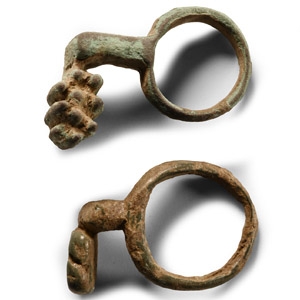
Roman Bronze Key Ring Group
1st-2nd century A.D.Sold for (Inc. bp): £72
Group of two rings each with angled ward and bits to the forward edge. 22.94 grams total, 31-34 mm
Acquired on the London art market in the late 1980s-1990s. From the family collection of an East London, UK, gentleman. -
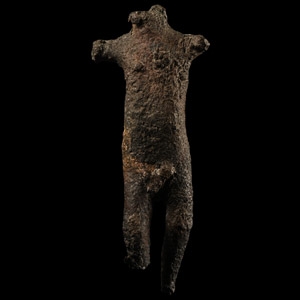
Roman Bronze Apollo Statuette
1st century B.C.-1st century A.D.Sold for (Inc. bp): £39
Standing nude with arms raised, legs in advancing pose. 37 grams, 60 mm
From a collection acquired on the UK art market from various auction houses and collections mostly before 2000. From an important Cambridgeshire estate; thence by descent. -
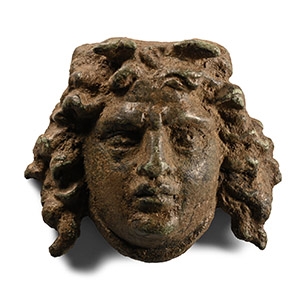
Roman Mask of Medusa
3rd century A.D.Estimate: £1,000 - 1,400 (‡+bp*)
Opening Bid: £500
Modelled in the half-round, facing mask with lateral hanks of curly hair, two small wings above the brow, farme beneath the chin; slot to the reverse for attachment. 179 grams, 59 mm
Acquired on the German art market, 2002. European private collection.
