
Loading, please wait...
LOT 0793
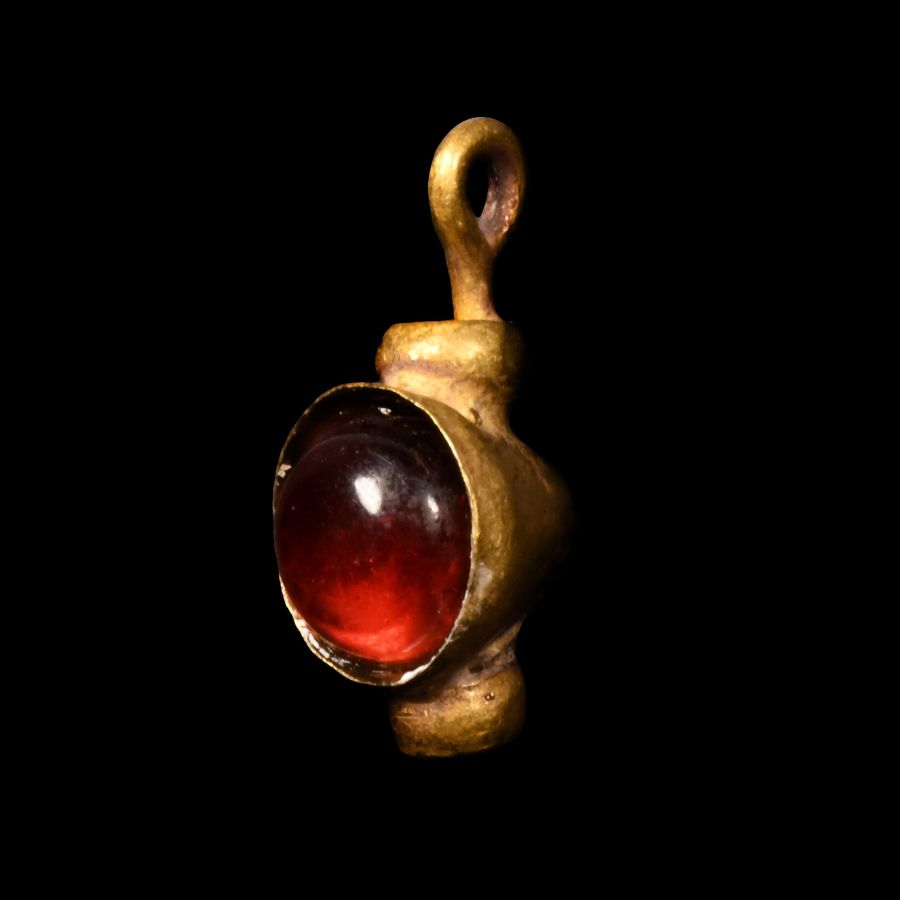
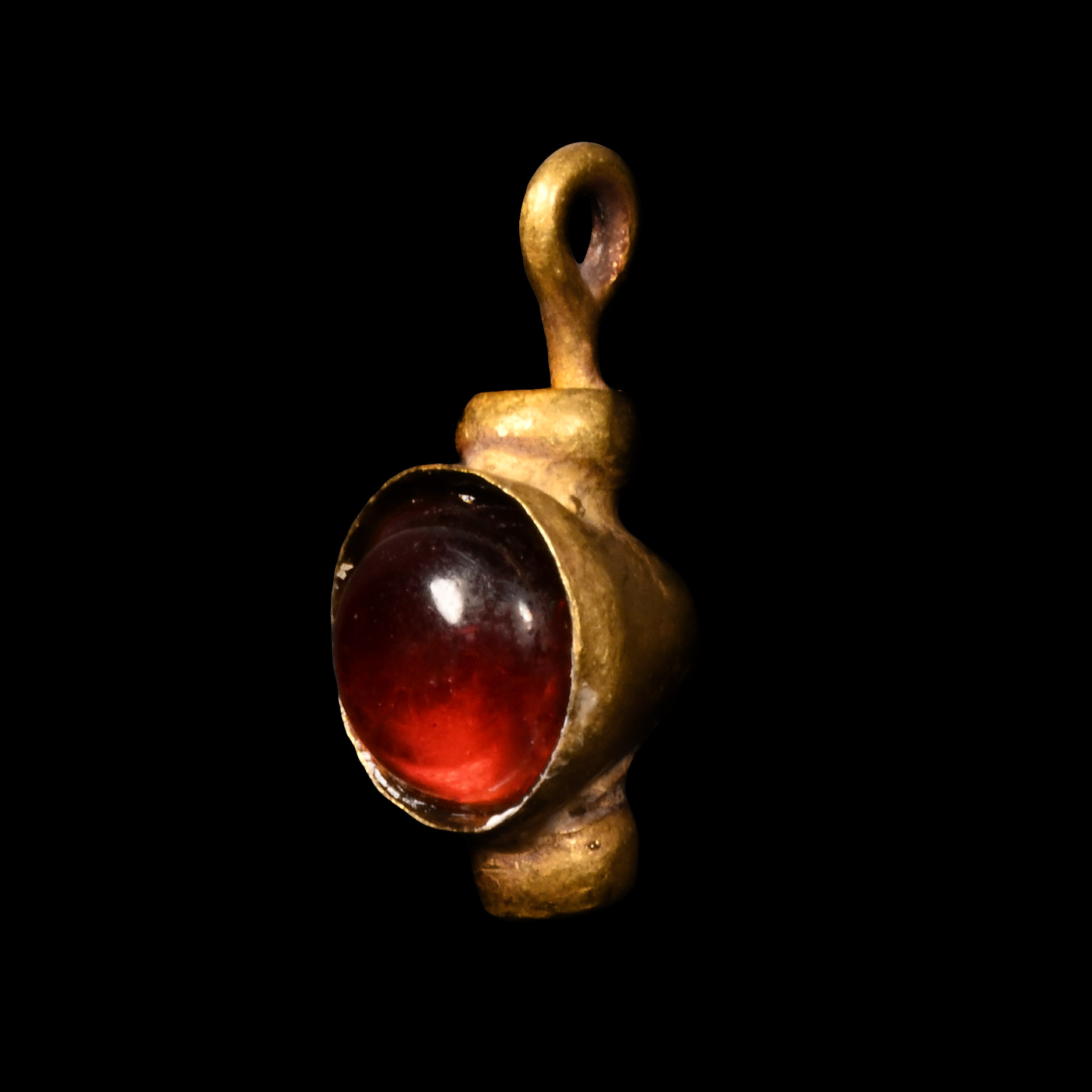
Roman Gold Pendant with Garnet
1ST-4TH CENTURY A.D.
1/2 in. (0.5 grams, 11 mm).
Polished garnet cabochon set in a conical sleeve with loop above and applied collar below.
ProvenanceEx property of a late Japanese collector, 1970-2000s.
This lot is accompanied by an illustrated lot declaration signed by the Head of the Antiquities Department, Dr Raffaele D'Amato.
TimeLine Auctions follows a vetting process to ensure the authenticity and legality of all items, reinforcing our commitment to integrity and responsible trading. Each antiquity, antique, and coin lot undergoes thorough examination by a vetting committee of at least ten external specialists, professional trade association members, scientists, and archaeologists: Our Vetting Process
AUCTIONS:
TimeLine is a leading auction house specialising in antiquities, ancient art, collectables, natural history, coins, medals, and books. Our auctions offer museums, collectors, historians, and enthusiasts the opportunity to acquire unique and historically significant pieces.
-
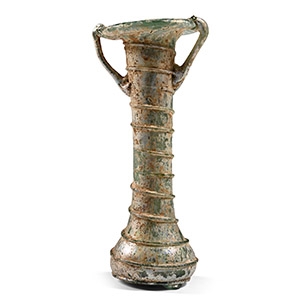
Roman Iridescent Glass Vessel with Spiral Trail
2nd-3rd century A.D.Estimate: £250 - 350 (+bp*)
Opening Bid: £139
Bulbous body with long funicular neck and everted rim, applied strap handles to the top, applied spiral decoration to the body. 14.6 grams, 76 mm
Ex London gallery, UK, 1986. Ex private UK collection. This lot is accompanied by an illustrated lot declaration signed by the Head of the Antiquities Department, Dr Raffaele D'Amato. -
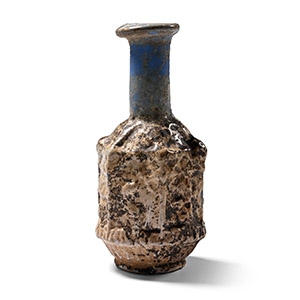
Roman Sidonian Pastel Blue Mould-Blown Glass Vessel with Birds
3rd-4th century A.D.Estimate: £3,000 - 4,000 (+bp*)
Opening Bid: £1,400
With hexagonal-section body decorated with an arcade, tubular neck and rolled rim. 40.8 grams, 84 mm
From an important London collection of glass, 1990s. This lot has been checked against the Interpol Database of stolen works of art and is accompanied by a search certificate number no.12675-235651. This lot has been cleared against the Art Loss Register database, and is accompanied by an illustrated lot declaration signed by the Head of the Antiquities Department, Dr Raffaele D'Amato. -
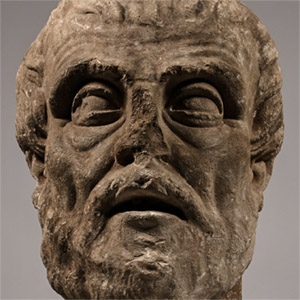
Monumental Marble Head of a Greek Philosopher
1st century B.C.-1st century A.D.Estimate: £25,000 - 35,000 (‡+bp*)
Opening Bid: £11,250
Carved in the round bust of a philosopher or a poet with short tousled hair and trimmed beard, exaggerated protruding eyes, the mouth modelled slightly open and teeth within; mounted on a custom-made stand. 47.6 kg total, 60 cm including stand
Private collection, Paris, 1980s. European private collection. Accompanied by a copy of French passport no.237041. Accompanied by an academic report by Professor Neritan Ceka. This lot has been checked against the Interpol Database of stolen works of art and is accompanied by a search certificate number no.12610-234690. This lot has been cleared against the Art Loss Register database, and is accompanied by an illustrated lot declaration signed by the Head of the Antiquities Department, Dr Raffaele D'Amato.
