
Loading, please wait...
LOT 0941
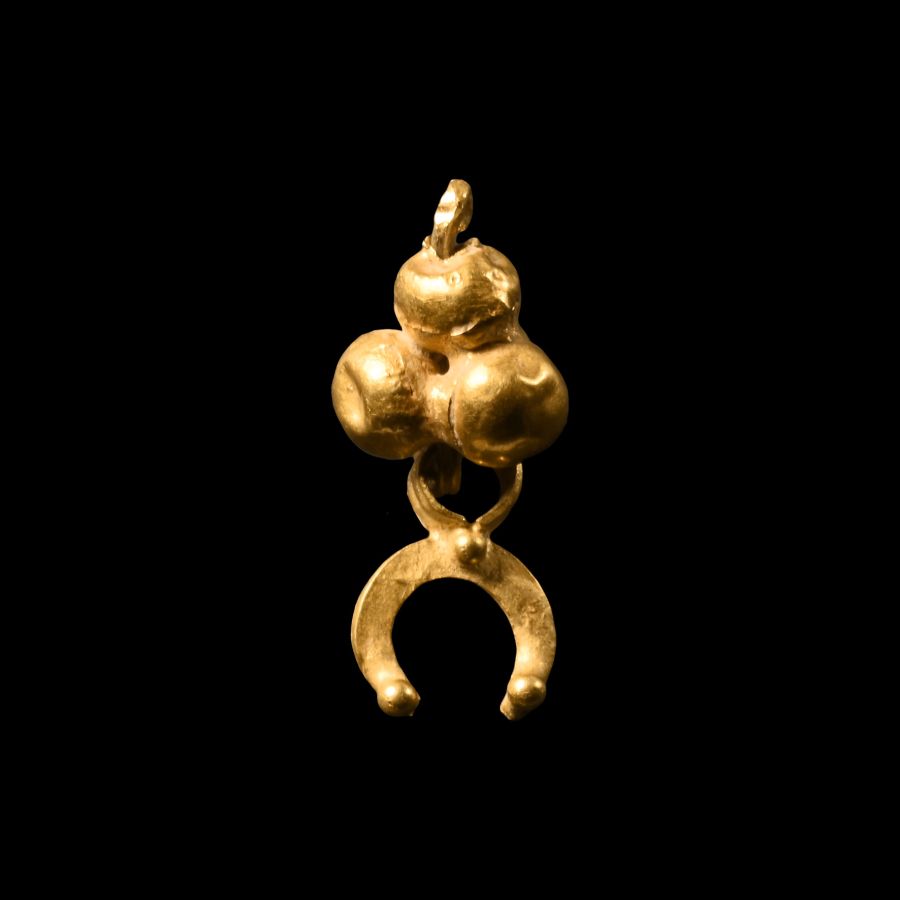
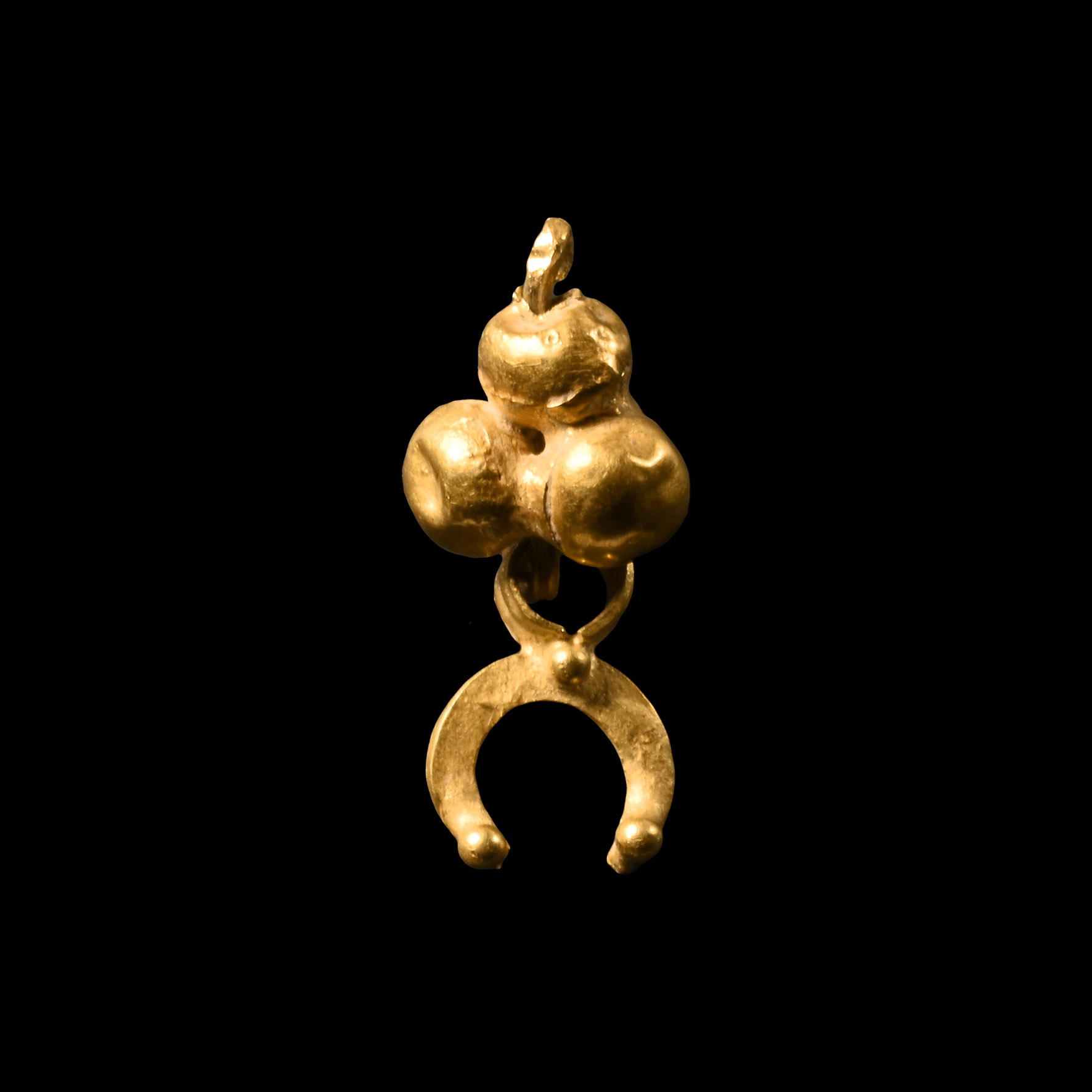
Roman Gold Pendant with Crescent Moon
1ST-2ND CENTURY A.D.
5/8 in. (0.76 grams, 17 mm).
Comprising a crescent with applied granules to the finials, ribbed loop below with granule supporting a cluster of hollow-formed spheres. [No Reserve]
ProvenanceAcquired London, UK, 1980-2015.
From the Abelita family collection.
TimeLine Auctions follows a vetting process to ensure the authenticity and legality of all items, reinforcing our commitment to integrity and responsible trading. Each antiquity, antique, and coin lot undergoes thorough examination by a vetting committee of at least ten external specialists, professional trade association members, scientists, and archaeologists: Our Vetting Process
AUCTIONS:
TimeLine is a leading auction house specialising in antiquities, ancient art, collectables, natural history, coins, medals, and books. Our auctions offer museums, collectors, historians, and enthusiasts the opportunity to acquire unique and historically significant pieces.
-
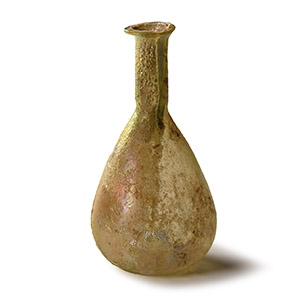
Roman Piriform Glass Flask
1st century A.D.Sold for (Inc. bp): £117
An iridescent glass unguentarium with piriform body, tubular neck with everted rolled rim. 6.65 grams, 69 mm
Acquired 1980-2015. Ex Abelita family collection. -
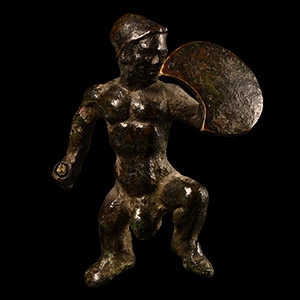
Roman Bronze Figure of a Grotesque Warrior
2nd-3rd century A.D.Estimate: £2,000 - 3,000 (‡+bp*)
Opening Bid: £1,000
Modelled in the round figure of a hoplite with later pelta shield and corinthian helmet; the figure modelled nude with exaggerated muscles and genitals; mounted on a custom-made stand. 227 grams total, 10 cm high including stand
Old private collection. Anonymous sale, Delorme du Bocage, Paris, 31 March 2010. This lot has been checked against the Interpol Database of stolen works of art and is accompanied by search certificate no.12050-211847. -
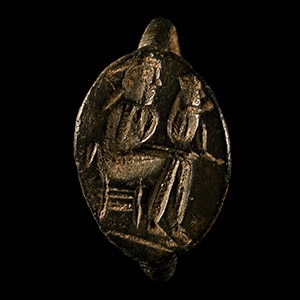
Romano-Parthian Ring with Trader and Seated Child
1st century B.C.-1st century A.D.Sold for (Inc. bp): £52
With round-section hoop, ellipsoid bezel, intaglio representing a Parthian trader with a child seated. 4.26 grams, 22.90 mm overall, 19.01 x 18.83 mm internal diameter (approximate size British R, USA 8 1/2, Europe 18 3/4, Japan 18)
UK private collection before 2000. UK art market. Property of a London gentleman.
