
Loading, please wait...
LOT 0593
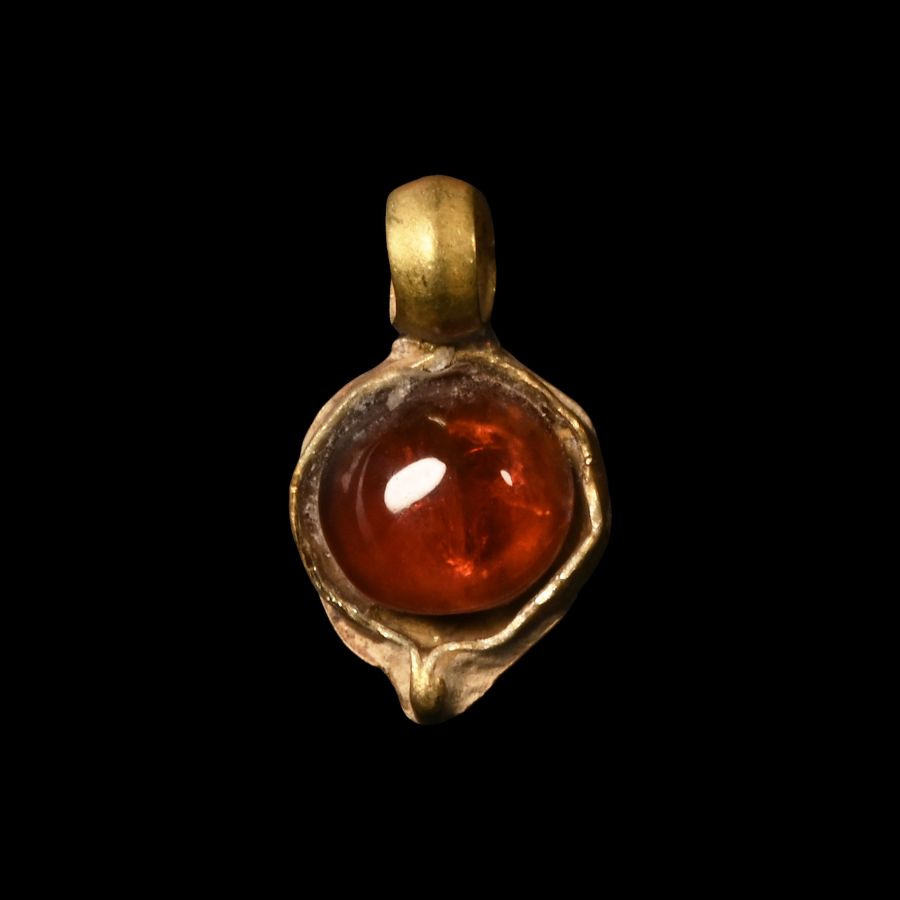
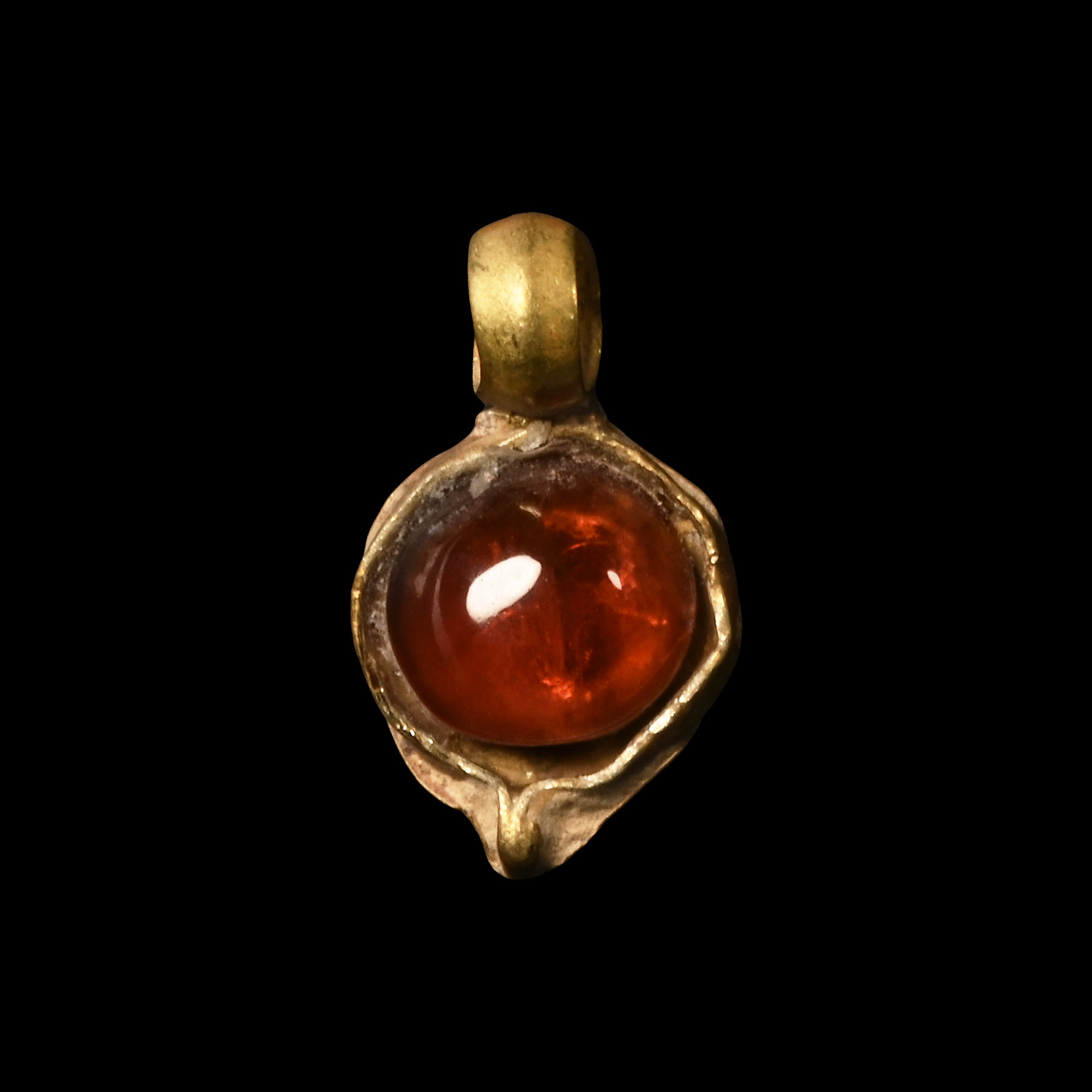
Roman Gold Pendant with Cabochon Garnet
1ST-4TH CENTURY A.D.
1/4 in. (0.16 grams, 8 mm).
Discoid pendant with cell, inset cabochon garnet, integral loop above. [No Reserve]
ProvenanceEx property of a late Japanese collector, 1970s.
CONDITIONTimeLine Auctions follows a vetting process to ensure the authenticity and legality of all items, reinforcing our commitment to integrity and responsible trading. Each antiquity, antique, and coin lot undergoes thorough examination by a vetting committee of at least ten external specialists, professional trade association members, scientists, and archaeologists: Our Vetting Process
AUCTIONS:
TimeLine is a leading auction house specialising in antiquities, ancient art, collectables, natural history, coins, medals, and books. Our auctions offer museums, collectors, historians, and enthusiasts the opportunity to acquire unique and historically significant pieces.
-
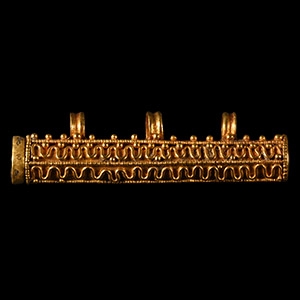
Roman Gold Amulet Holder
1st-4th century A.D.Estimate: £1,200 - 1,700 (+bp*)
Opening Bid: £600
Hexahedral in section, hollow with gusseted suspension loops, applied filigree meanders with granules. 7.40 grams, 47 mm
Ex German art market, 2000s. Acquired from an EU collector living in London. From the collection of Surrey, UK, gentleman. -
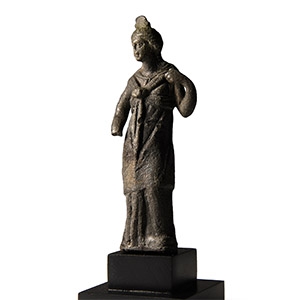
Roman Bronze Statuette of Isis
1st-3rd century A.D.Sold for (Inc. bp): £546
The goddess standing, wearing an Ionic chiton and himation secured by a characteristic knot tied between her breasts, the folds cascading to the floor; her left hand modelled open and held above her breast; her centre-parted wavy locks fastened with a band, pulled back in a chignon at the nape of her neck and surmounted by a hair-comb; mounted on a custom-made display stand. 280 grams total, 13.3 cm including stand
From a collection acquired on the UK art market from various auction houses and collections mostly before 2000. From an important Cambridgeshire estate; thence by descent.
Statuettes of Fortuna, the goddess of chance, were evidently popular during the Roman Imperial times judging by the large number that have been found, and with the advent of the cult of Isis within the Roman Empire, the two divinities were identified as a single goddess. -
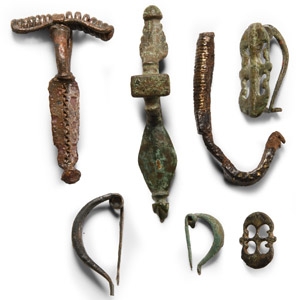
Roman and Other Bronze Brooch Group
2nd century B.C.-3rd century A.D.Sold for (Inc. bp): £156
Including two openwork La Tène style plate brooches; Colchester type bow brooch; and other items. 69 grams total, 20-77 mm
Property of the vendor's grandfather, thence by family descent, circa 1985. From the private collection of a New York, USA gentleman.
