
Loading, please wait...
LOT 0114
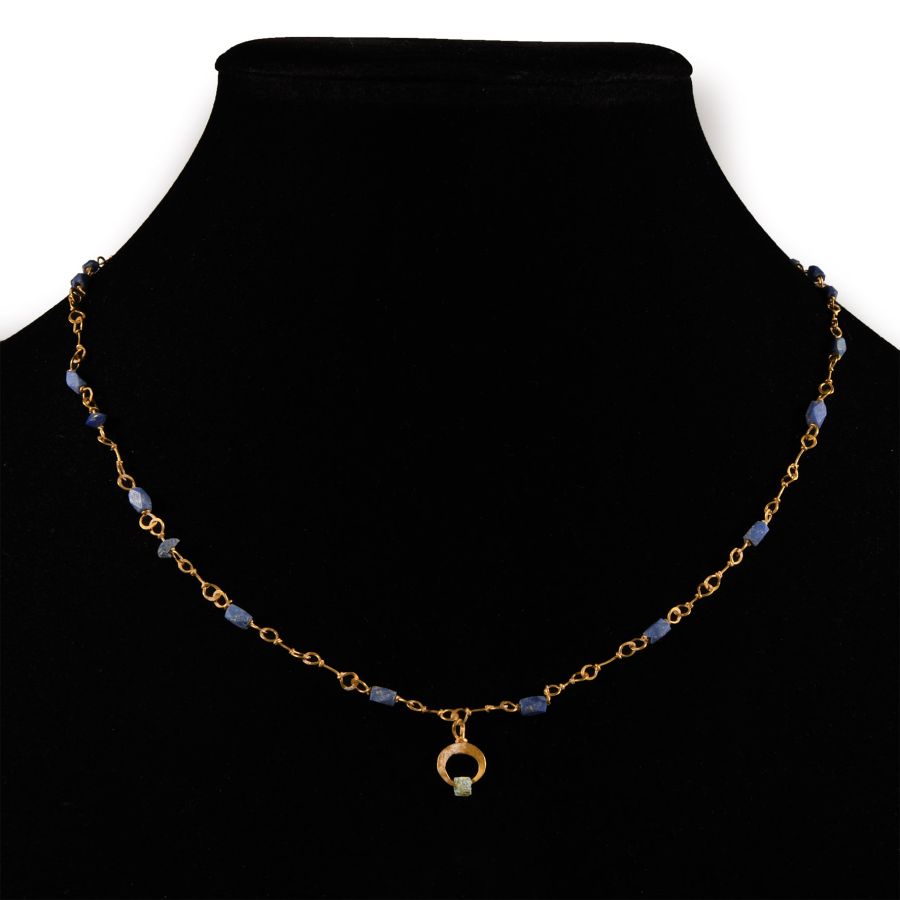
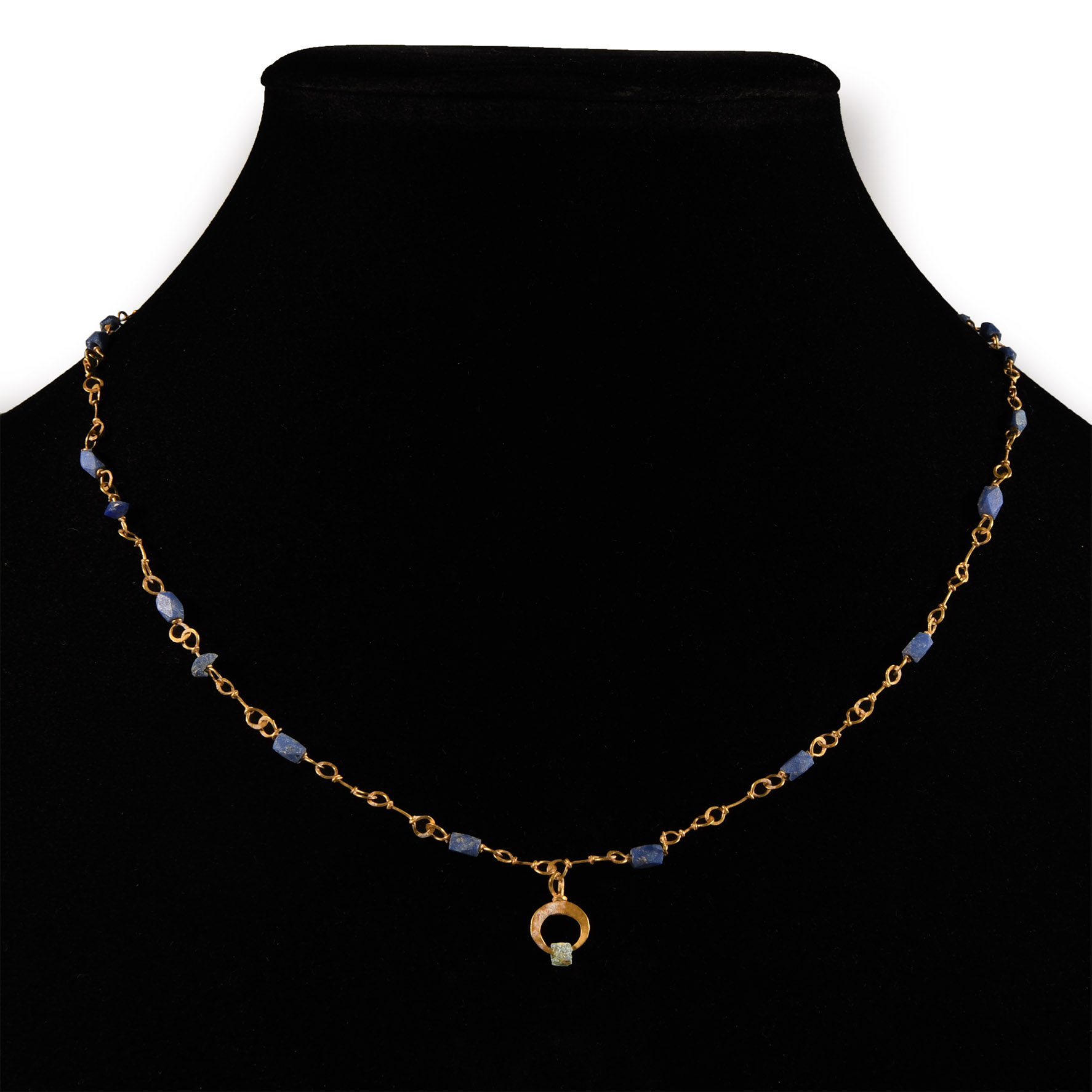
Roman Gold Necklace with Blue Glass Beads
3RD CENTURY A.D.
15 3/8 in. (4.66 grams, 39 cm long).
Comprising gold looped links with corner-less oblong and biconvex lapis lazuli beads, hook-and-eye closure, centrepiece a flat sheet gold hoop with iridescent turquoise-coloured glass bead.
ProvenancePrivate collection of Mr S.A., Switzerland, 1994, thence by descent.
LiteratureCf. Ruseva-Slokoska, L., Roman Jewellery, Sofia, 1991, item 99.
CONDITIONTimeLine Auctions follows a vetting process to ensure the authenticity and legality of all items, reinforcing our commitment to integrity and responsible trading. Each antiquity, antique, and coin lot undergoes thorough examination by a vetting committee of at least ten external specialists, professional trade association members, scientists, and archaeologists: Our Vetting Process
AUCTIONS:
TimeLine is a leading auction house specialising in antiquities, ancient art, collectables, natural history, coins, medals, and books. Our auctions offer museums, collectors, historians, and enthusiasts the opportunity to acquire unique and historically significant pieces.
-
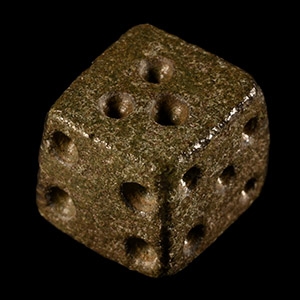
Romano-British 'Thetford' Bronze Gaming Die
Circa 2nd century A.D.Sold for (Inc. bp): £312
Cuboid with impressed spots disposed 1:4, 2:5, 3:6. 3.4 grams, 7.95 mm
Found on a Roman site at Thetford, Essex, UK, in 1997. From the important private collection of dice and gaming pieces of Colin Narbeth, London, UK, collection no.66. Accompanied by a Colin Narbeth catalogue identification card. -
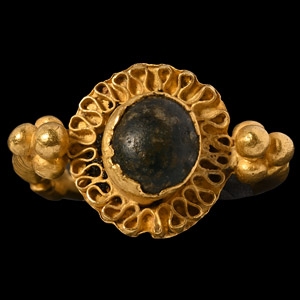
Late Roman or Merovingian Gold Ring with Rosette and Green Cabochon
5th-7th century A.D.Sold for (Inc. bp): £845
Comprising a round-section hoop with granule pyramids to the shoulder, decorative wire wrapped around the hoop on one side; rosette-shaped applied bezel with filigree decoration, raised setting with dark green glass cabochon; possibly a marriage. 5.14 grams, 22.93 mm overall, 17.05 mm internal diameter (approximate size British L 1/2, USA 6, Europe 11.87, Japan 11)
Private collection USA. From the Alexander Gallery, New York, USA, in the early 2000s. -
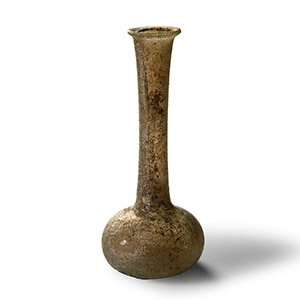
Roman Glass Candlestick Unguentarium
2nd-3rd century A.D.Sold for (Inc. bp): £143
Bulbous body with flat bottom, tall tapering neck with everted rim. 201 grams, 10.5 cm
Acquired 1980-2015. Ex Abelita family collection.
