
Loading, please wait...

LOT 0851
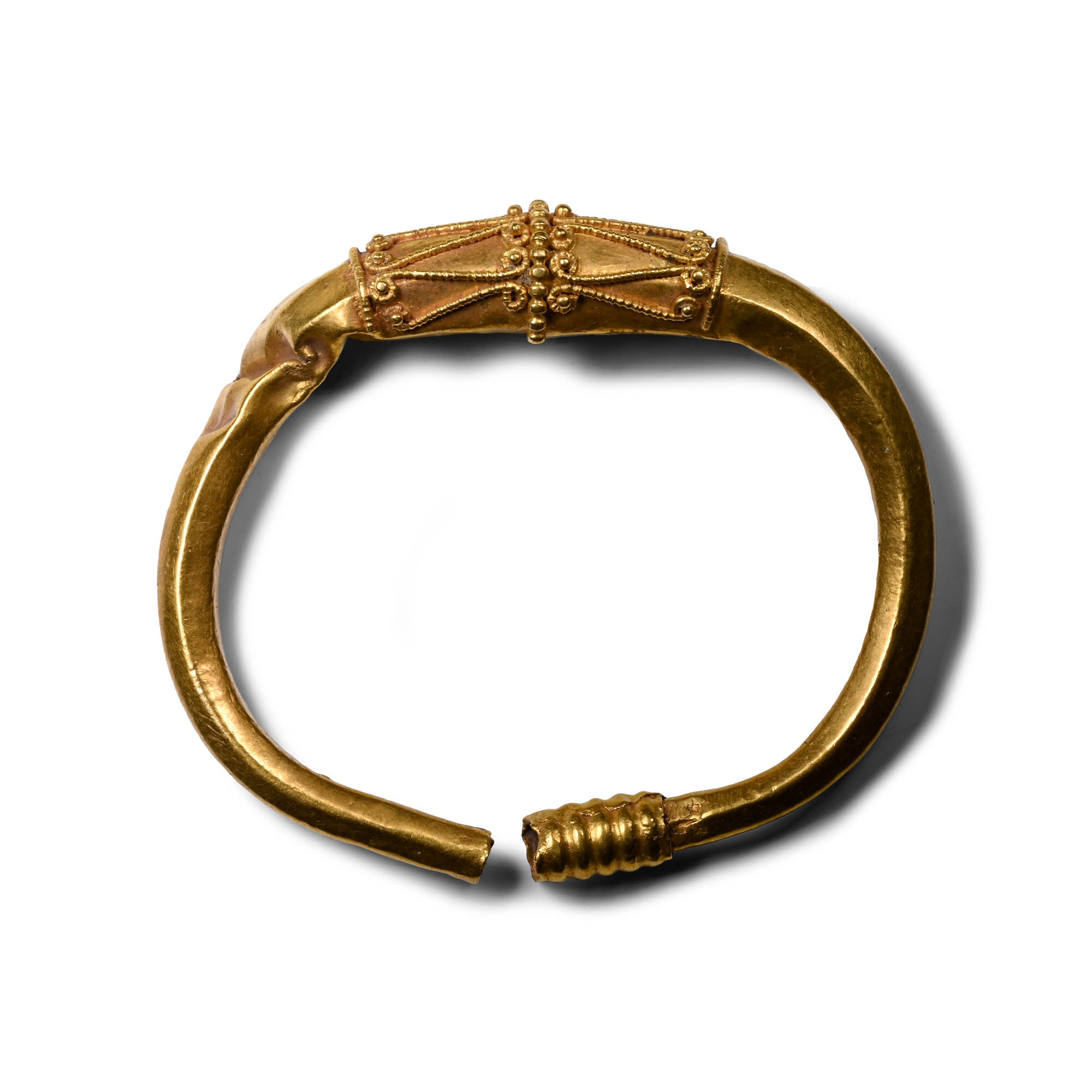
Roman Gold Filigree Bracelet
3RD-4TH CENTURY A.D.
2 in. (11.91 grams, 52 mm).
Hollow-formed sheet gold penannular form with ribbed finial, applied filigree and granule ornament.
ProvenanceAcquired in the mid 1980s-1990s.
Private collection, Switzerland, thence by descent.
Private collection, since the late 1990s.
This lot is accompanied by an illustrated lot declaration signed by the Head of the Antiquities Department, Dr Raffaele D'Amato.
Cf. Ruseva-Slokoska, L., Roman Jewellery, Sofia, 1991, item 171, for type.
FootnotesAccording to Slokoska’s classification, the bracelet belongs to type V, Variant 2 of the bronze bracelets, although this specimen is in gold. Close analogies can be seen on bracelets from the Balkans (Rousse) and from the Tyriataki necropolis in Southern Russia, dated slightly earlier.
CONDITIONTimeLine Auctions follows a vetting process to ensure the authenticity and legality of all items, reinforcing our commitment to integrity and responsible trading. Each antiquity, antique, and coin lot undergoes thorough examination by a vetting committee of at least ten external specialists, professional trade association members, scientists, and archaeologists: Our Vetting Process
AUCTIONS:
TimeLine is a leading auction house specialising in antiquities, ancient art, collectables, natural history, coins, medals, and books. Our auctions offer museums, collectors, historians, and enthusiasts the opportunity to acquire unique and historically significant pieces.
-
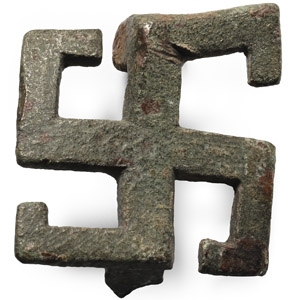
Roman Bronze Fylfot Brooch
2nd-3rd century A.D.Sold for (Inc. bp): £65
With hooked terminals, remains of hinge and catchplate to the reverse. 8.41 grams, 26 mm
Ex German art market, 2000s. Acquired from an EU collector living in London. From the collection of a Surrey, UK, gentleman. This lot is accompanied by an illustrated lot declaration signed by the Head of the Antiquities Department, Dr Raffaele D'Amato. -
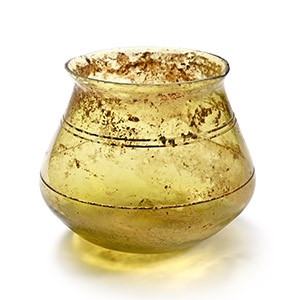
Roman Glass Cup with Wheel-Cut Lines
1st century A.D.Estimate: £800 - 1,000 (+bp*)
Opening Bid: £400
With biconvex body, dimple base, convex rim, wheel-cut circumferential bands. 131 grams, 95 mm
From an important London collection of glass, 1990s. This lot is accompanied by an illustrated lot declaration signed by the Head of the Antiquities Department, Dr Raffaele D'Amato. -
.jpg)
Roman Constantine I Terracotta Forger's Coin Mould
Circa early 4th century A.D.Sold for (Inc. bp): £130
Terracotta disc with possibly Constantine I (307-337) coin impression to each face from which to cast counterfeit coins. 4.68 grams, 28 mm
From the collection of a gentleman, acquired on the London art market in the 1990s. This lot is accompanied by an illustrated lot declaration signed by the Head of the Antiquities Department, Dr Raffaele D'Amato.
