
Loading, please wait...
LOT 0754
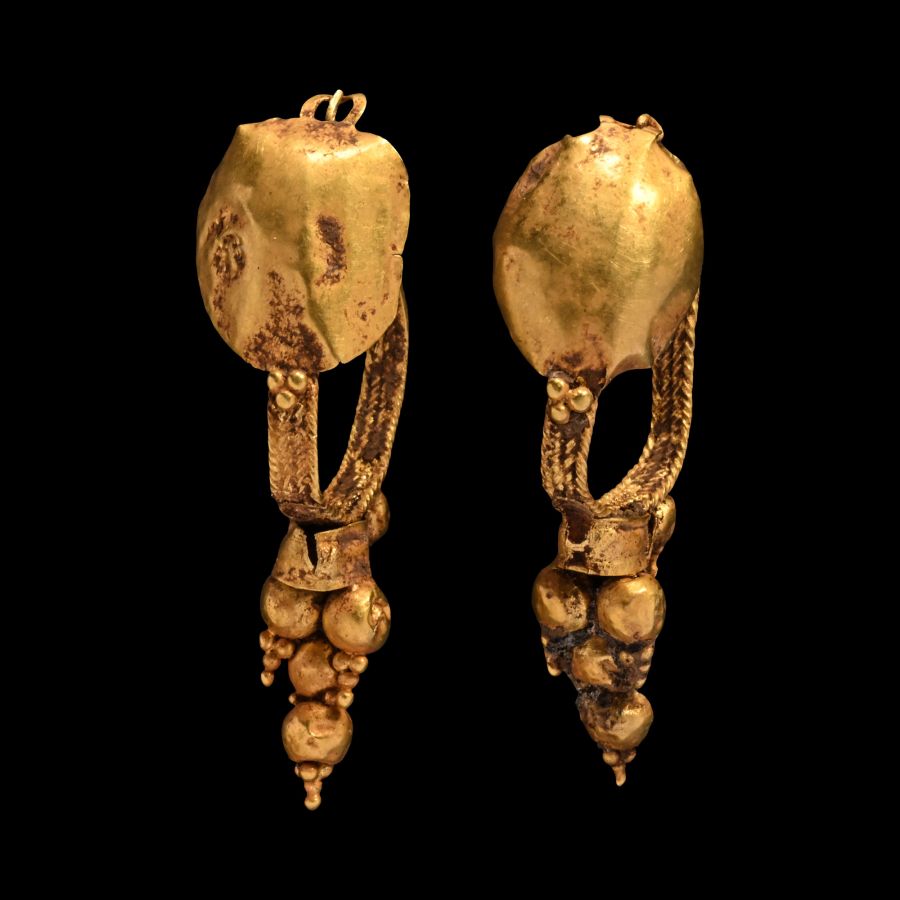
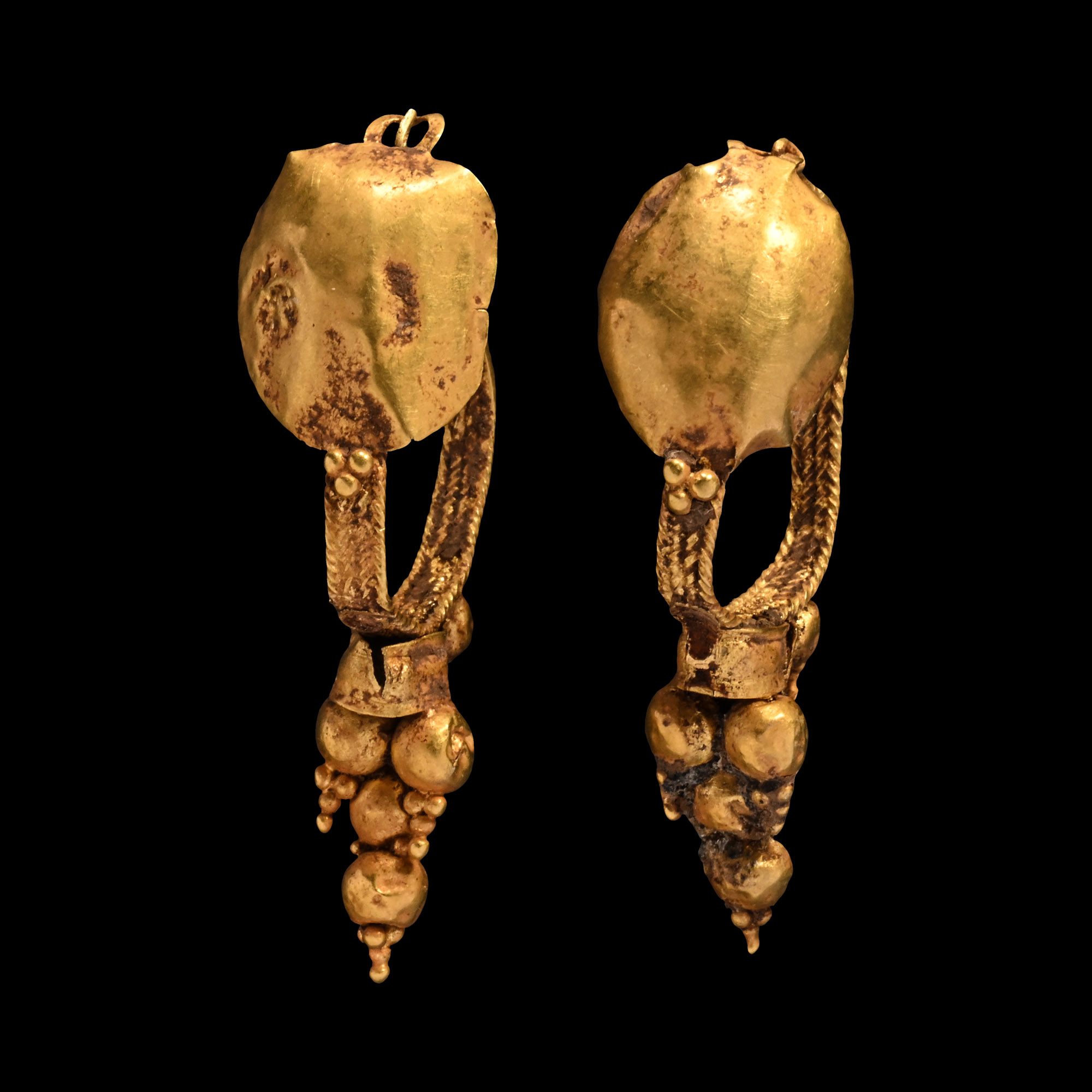
Roman Gold Earrings with Shield
3RD-4TH CENTURY A.D.
1 5/8 - 1 3/4 in. (6.57 grams total, 42-44 mm).
A matched pair, each a braided hoop with an applied shield-shaped disc, collar with a cluster of hollow spherical grapes with granule clusters below. [2]
ProvenanceAcquired in 1992.
Private collection, Switzerland, thence by descent.
Private collection, since the late 1990s.
See Ruseva-Slokoska, L., Roman Jewellery, Sofia, 1991, item32(a), for type.
CONDITIONTimeLine Auctions follows a vetting process to ensure the authenticity and legality of all items, reinforcing our commitment to integrity and responsible trading. Each antiquity, antique, and coin lot undergoes thorough examination by a vetting committee of at least ten external specialists, professional trade association members, scientists, and archaeologists: Our Vetting Process
AUCTIONS:
TimeLine is a leading auction house specialising in antiquities, ancient art, collectables, natural history, coins, medals, and books. Our auctions offer museums, collectors, historians, and enthusiasts the opportunity to acquire unique and historically significant pieces.
-
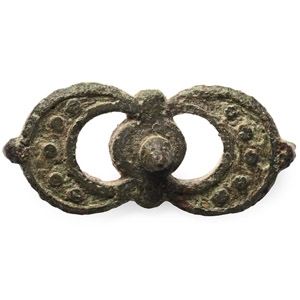
Romano-British Bronze Double Lunar Plate Brooch
2nd century A.D.Sold for (Inc. bp): £46
Comprising two opposing crescents with raised dot decoration, flanking a central disc with raised boss. 2.72 grams, 34 mm
Found East Anglia, UK. From a Kent collection formed in the 1990s. -
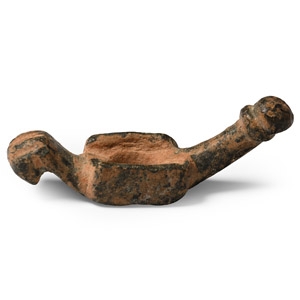
Roman Bronze Phallic Dagger Quillon or Pendant
1st-2nd century A.D.Estimate: £100 - 140 (+bp*)
Opening Bid: £40
With a rectangular plaque with central void, phallus to one short edge and a stylised fist to the other. 25.5 grams, 55 mm
Acquired 1980-2015. Ex Abelita family collection. This lot is accompanied by an illustrated lot declaration signed by the Head of the Antiquities Department, Dr Raffaele D’Amato.
In the Roman world the phallus was symbol of luck or fertility, and it as well was believed to have apotropaic functions. Pendants, amulets and small objects were worn by all sorts of people as symbols of protection, especially from young children according to Varro and Pliny the Elder. The phallus is commonly found on reliefs, frescoes and lamps from the Graeco-Roman world. This object can have been the quillon of a small dagger, but also hung as a charm from a tintinnabulum, a wind chime adorned with bells and intended to ward off evil. -
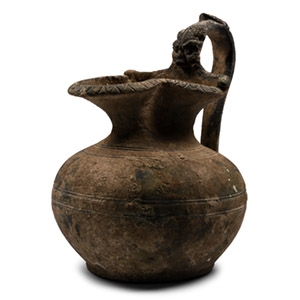
Roman Vessel with Actor's Mask Handle
Early 3rd century A.D.Estimate: £2,500 - 3,500 (‡+bp*)
Opening Bid: £1,250
A squat jar in lead-rich copper-alloy with concentric rings to the base, bulbous body, trefoil mouth with egg-and-dart detailing, strap handle with vine-leaf detailing, actor's mask at the lower end and a lion's head with open mouth at the other. 695 grams, 13.2 cm
Acquired on the Swiss art market, 2001. Private European collection. Accompanied by an academic report by Dr Raffaele D'Amato. This lot has been checked against the Interpol Database of stolen works of art and is accompanied by search certificate number no.12586-232162.
