
Loading, please wait...

LOT 0965
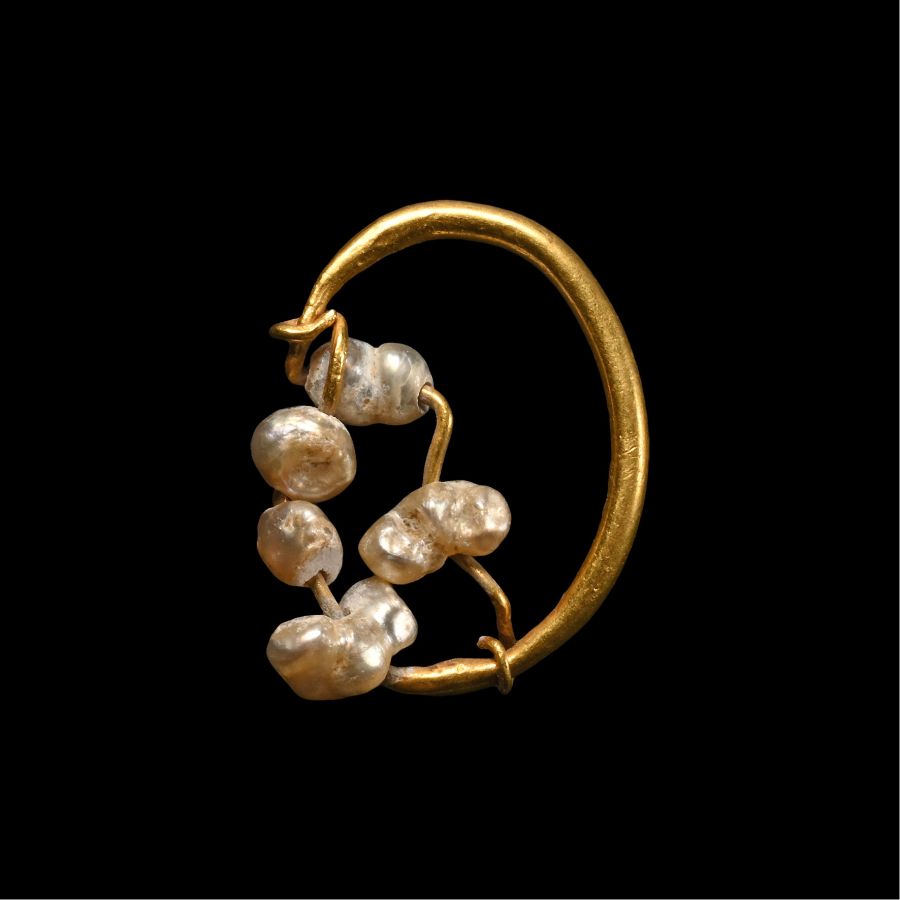
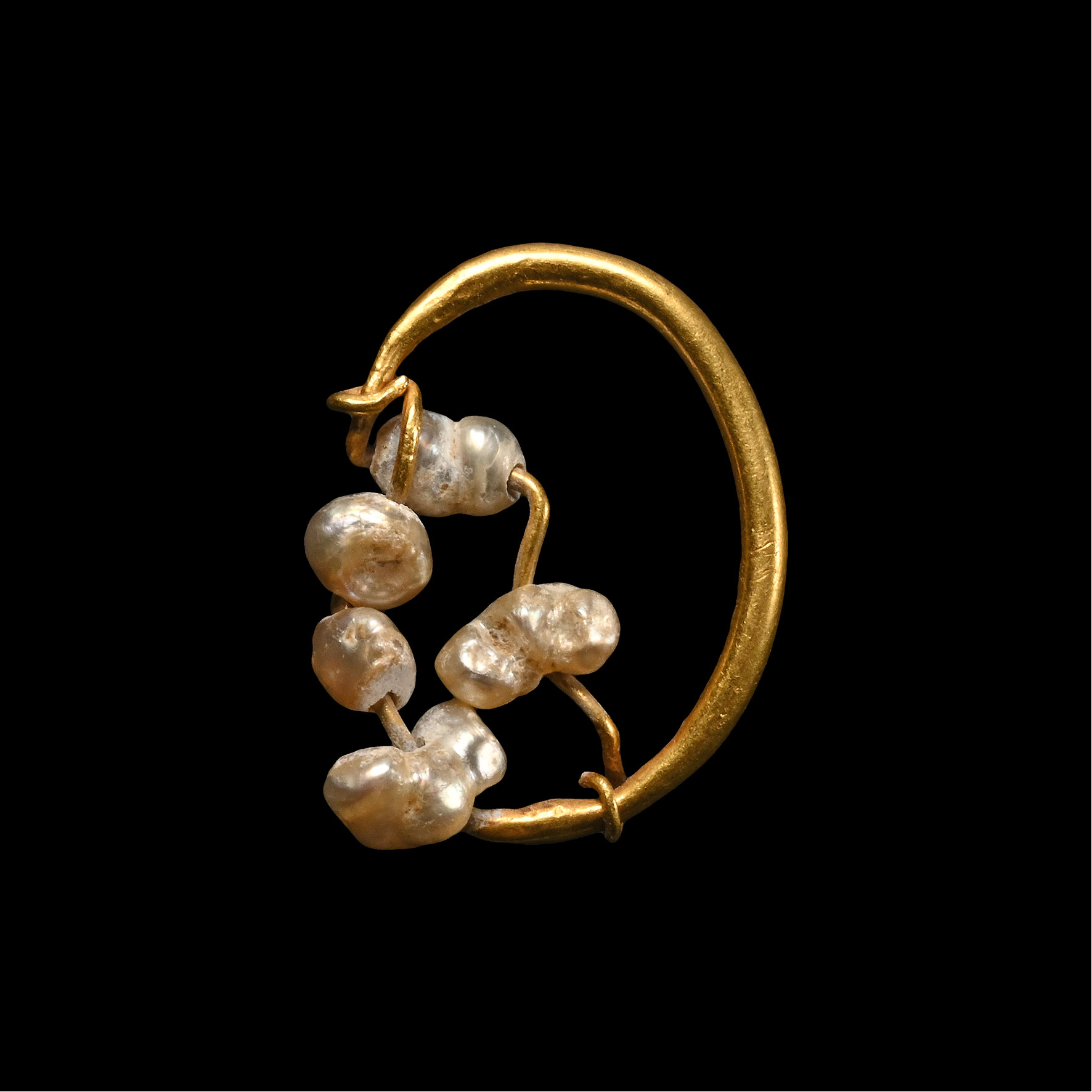
Roman Gold Earring with Pearls
3RD CENTURY A.D.
3/4 in. (1.99 grams, 20 mm).
Gold wire hoop with hook-and-eye closure, threaded with seed pearls. [No Reserve]
ProvenanceEx H.
Norry collection, 1980s-1990s.
Cf. Ruseva-Slokoska, L., Roman Jewellery, Sofia, 1991, item 54a, for type.
CONDITIONTimeLine Auctions follows a vetting process to ensure the authenticity and legality of all items, reinforcing our commitment to integrity and responsible trading. Each antiquity, antique, and coin lot undergoes thorough examination by a vetting committee of at least ten external specialists, professional trade association members, scientists, and archaeologists: Our Vetting Process
AUCTIONS:
TimeLine is a leading auction house specialising in antiquities, ancient art, collectables, natural history, coins, medals, and books. Our auctions offer museums, collectors, historians, and enthusiasts the opportunity to acquire unique and historically significant pieces.
-
.jpg)
Roman Marble Head of a Lady
2nd century A.D. or laterSold for (Inc. bp): £234
Carved in the round with detailed hairstyle comprising a braid and coil to the rear of the head; the facial features soft and rounded, mouth in a half-smile; mounted on a display-stand. 520 grams total, 11.5 cm including stand
4 1/2 in.
Acquired before 2000. From an English private collection. -
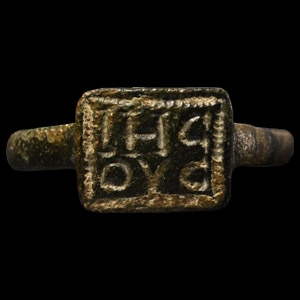
Late Roman Bronze Ring Inscribed 'Jesus'
4th-5th century A.D.Sold for (Inc. bp): £182
With rectangular bezel, inscribed 'IHC / OYC' (Iesous = 'Jesus'); shank split. 3.74 grams, 22.53 mm overall, 17.86 mm internal diameter (approximate size British N 1/2, USA 6 3/4, Europe 14.35, Japan 13)
From an old UK collection, 1980s. -
.jpg)
Roman Bronze Neptune Statuette
1st century B.C.-1st century A.D.Sold for (Inc. bp): £39
Standing nude with arms raised, legs in advancing pose. 37 grams, 60 mm
From a collection acquired on the UK art market from various auction houses and collections mostly before 2000. From an important Cambridgeshire estate; thence by descent.
The condition of the statuette does not allow a easy identification of its original characterization, but the position of the body shows a certain affinity with provincial statuettes of the god Neptune, especially produced in Gallo-Roman ateliers. Some statuettes of Sucellus, the Gallic divinity assimilated into the Roman Pantheon as the equivalent of the Dispater, brother of Jupiter, could possibly also bear resemblance with our statuette for the position of the body.
