
Loading, please wait...
LOT 0798
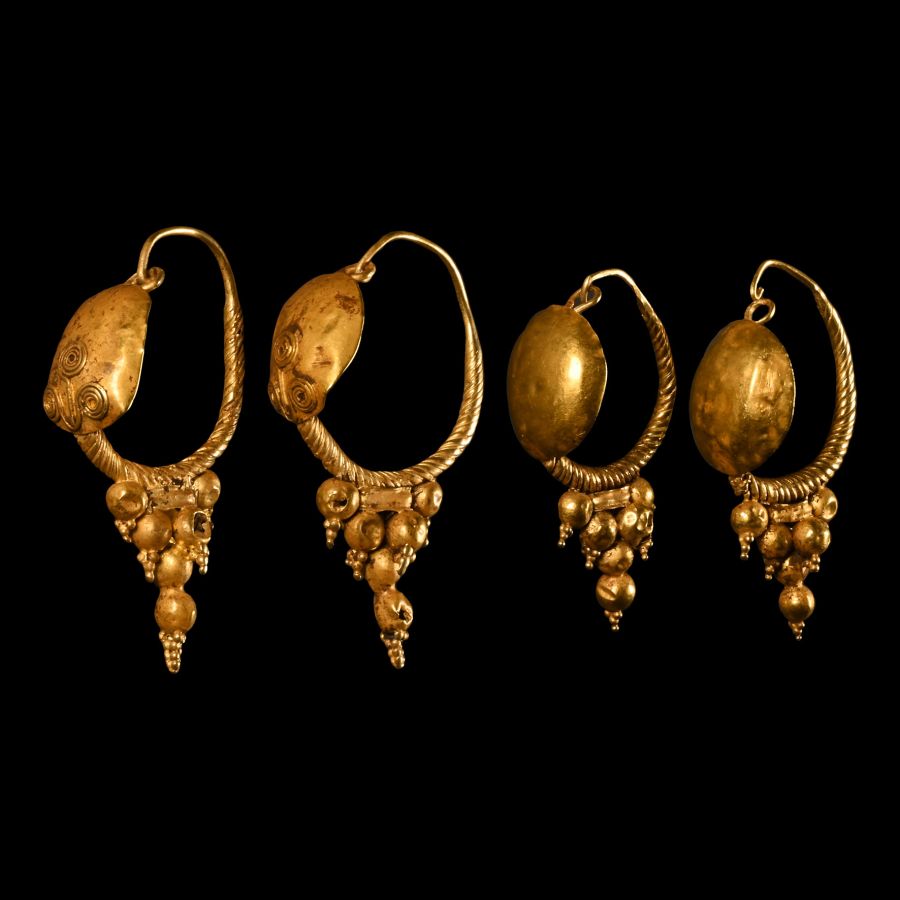
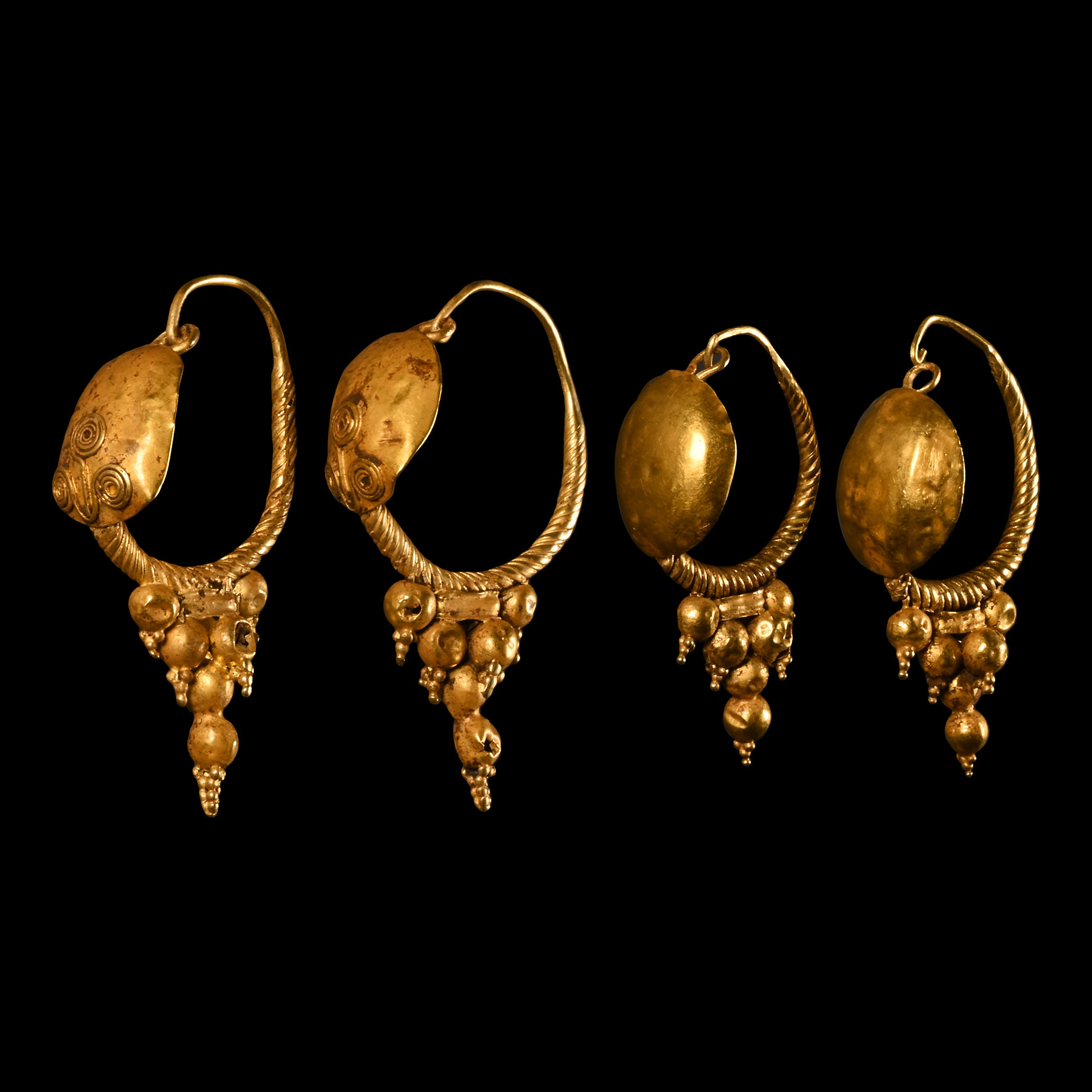
Roman Gold Earring Pairs
2ND-3RD CENTURY A.D. OR EARLIER
1 5/8 - 2 in. (16.97 grams total, 42-50 mm).
Two pairs of earrings with decoratively twisted hoops, domed plaques and pyramid bulbs embellished with granule clusters; one pair with gold wire spirals to the plaques. [4]
ProvenanceAcquired between 1950-1970s.
Ex Swiss private collection.
Cf. The Metropolitan Museum, New York, accession number 08.251.5, .6, for a broadly similar earring.
CONDITIONTimeLine Auctions follows a vetting process to ensure the authenticity and legality of all items, reinforcing our commitment to integrity and responsible trading. Each antiquity, antique, and coin lot undergoes thorough examination by a vetting committee of at least ten external specialists, professional trade association members, scientists, and archaeologists: Our Vetting Process
AUCTIONS:
TimeLine is a leading auction house specialising in antiquities, ancient art, collectables, natural history, coins, medals, and books. Our auctions offer museums, collectors, historians, and enthusiasts the opportunity to acquire unique and historically significant pieces.
-
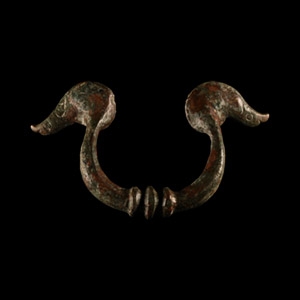
Roman Bronze Helmet Handle
1st-2nd century A.D.Sold for (Inc. bp): £104
Comprising a crescentic tapering shank with ribbed baluster to the centre; attachment points formed as wings with punched detailing. 65 grams, 92 mm
From a collection acquired on the UK art market from various auction houses and collections mostly before 2000. From an important Cambridgeshire estate; thence by descent.
Many such handles are formed as a pair of opposed dolphins, whence the conventional name 'dolphin mounts'. They were attached to infantry helmets so that they could be carried when not in use, or slung from a strap. -
.jpg)
Roman Black Glass Bead Necklace String
1st century A.D. and laterSold for (Inc. bp): £39
Graduated restrung group of irregular-shaped beads. 12.26 grams, 84 cm long
Acquired 1980-2015. Ex Abelita family collection. -
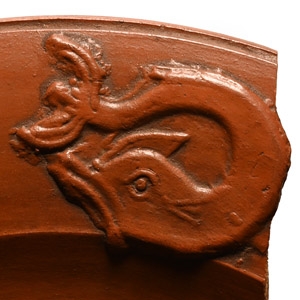
Roman Redware Plate Sherd with Dolphin
4th-5th century A.D.Sold for (Inc. bp): £124
Section of the rim with carination below, high-relief dolphin with its tail curled over above its head. 77 grams, 13 cm
From the collection of a late East Anglian teacher and antiquarian who retired to the Isle of Wight in Hampshire, UK. He amassed a large collection of objects between the 1960s-1980s.
