
Loading, please wait...
LOT 0632
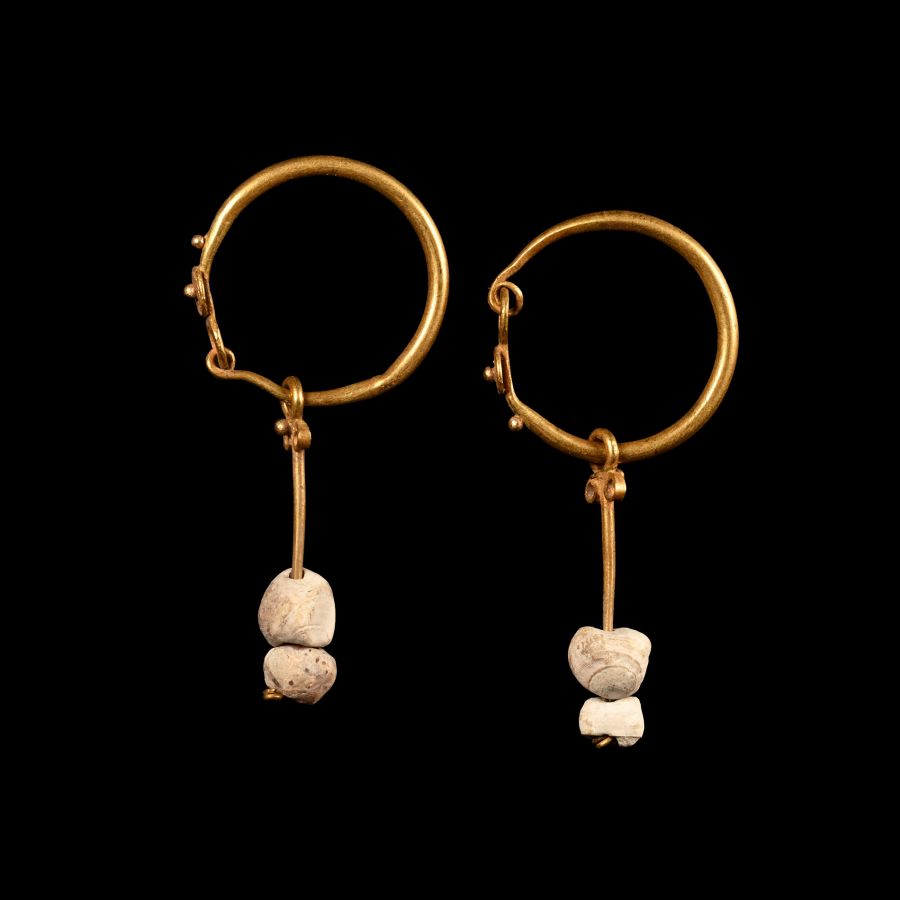
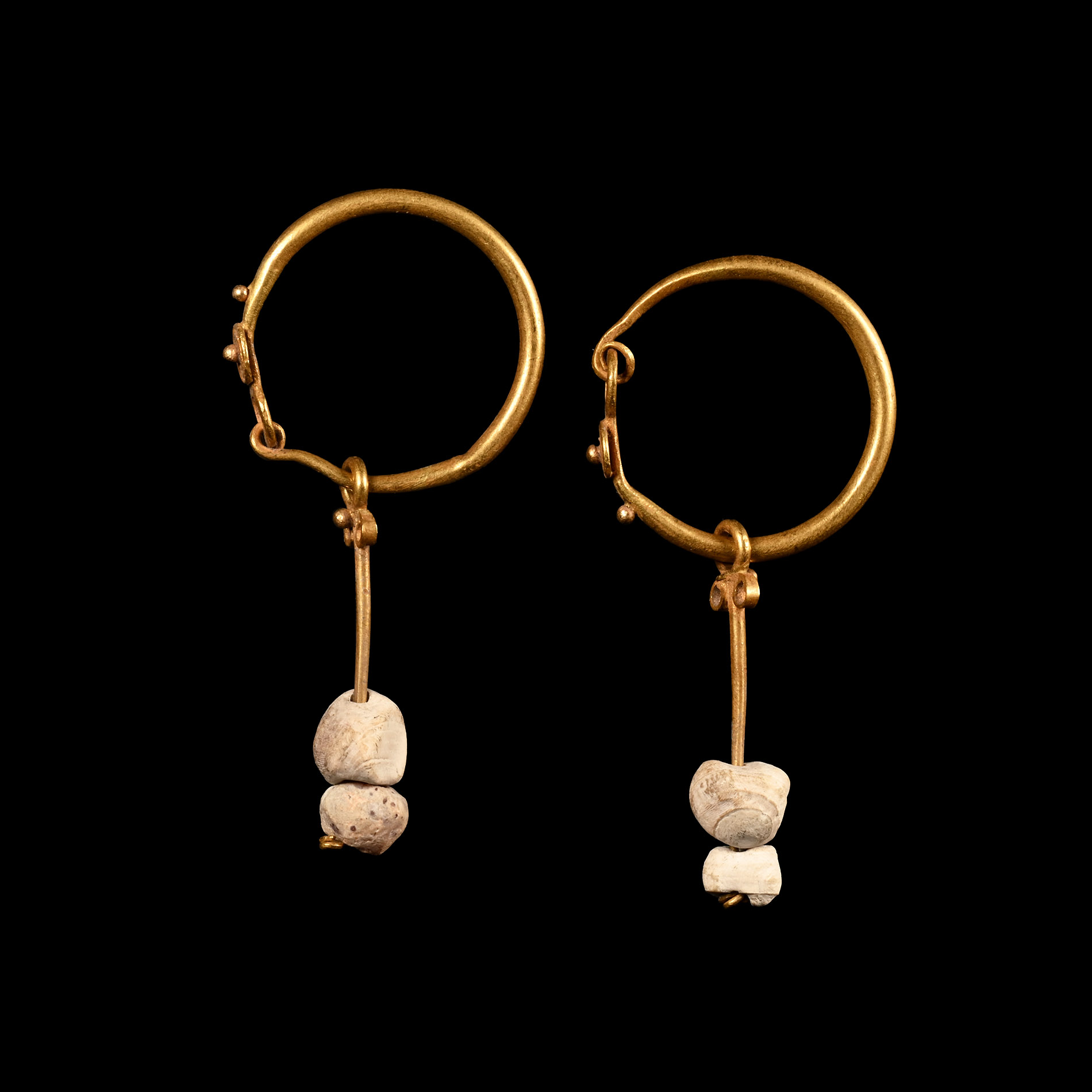
Roman Gold Earring Pair with Beads
CIRCA 2ND CENTURY A.D.
1 7/8 in. (6.13 grams total, 48 mm each).
Comprising a matched pair of hoop earrings with loop closure, a coiled plaque next to the closure with a decorative pellet; each with a pendant drop with scrolls to each side of the loop, set with two white beads. [2]
ProvenancePreviously in a Japanese collection.
From a South coast, UK, collection.
See Ruseva-Slokoska, L., Roman Jewellery, Sofia, 1991, items 15, 16, for hoop type.
CONDITIONTimeLine Auctions follows a vetting process to ensure the authenticity and legality of all items, reinforcing our commitment to integrity and responsible trading. Each antiquity, antique, and coin lot undergoes thorough examination by a vetting committee of at least ten external specialists, professional trade association members, scientists, and archaeologists: Our Vetting Process
AUCTIONS:
TimeLine is a leading auction house specialising in antiquities, ancient art, collectables, natural history, coins, medals, and books. Our auctions offer museums, collectors, historians, and enthusiasts the opportunity to acquire unique and historically significant pieces.
LOT 0632
Roman Gold Earring Pair with Beads
Estimate £400 - 600€460 - 700 (for guidance only)$540 - 810 (for guidance only)
-
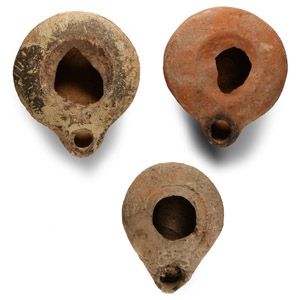
Roman Terracotta Oil Lamp Group
2nd-4th century A.D.Sold for (Inc. bp): £78
Each of low profile with stub nozzle and large filler hole. 122 grams total, 73-86 mm
From the H.N. collection, Milton Keynes, Berkshire, UK, 1990s. -
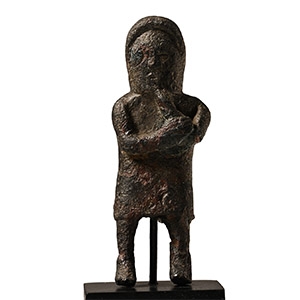
'The East Lindsey' Romano-British Bronze Hooded Male Statuette
43-150 A.D.Sold for (Inc. bp): £1,170
Standing adorant, wearing a knee-length tunic, the right arm held across the body to support the left hand raised to the mouth; mounted on a custom-made display stand. 102 grams total, 83 mm including stand
Found whilst searching with a metal detector in East Lindsey, Lincolnshire, UK, on Wednesday 19th August 1998. From a collection acquired on the UK art market from various auction houses and collections mostly before 2000. From an important Cambridgeshire estate; thence by descent. Accompanied by a copy of the British Museum's Portable Antiquities Scheme (PAS) report no.NLM995.
This small statuette of a male figure in short hooded cloak (cucullus) has the left arm raised towards the chin, and the right arm lies on left arm just below the wrist. A similar statuette in PAS is identified as possibly depicting an adorant. -
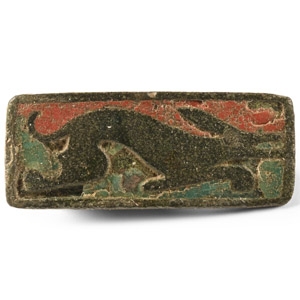
Roman Enamelled Bronze Hound Plate Brooch
Circa 2nd century A.D.Sold for (Inc. bp): £416
Rectangular plate with reserved running hound in a two-cell panel, spring and catch to reverse; complete with pin. 4.6 grams, 27 mm
Found Wiltshire, UK, before 1974.
