
Loading, please wait...
LOT 0729
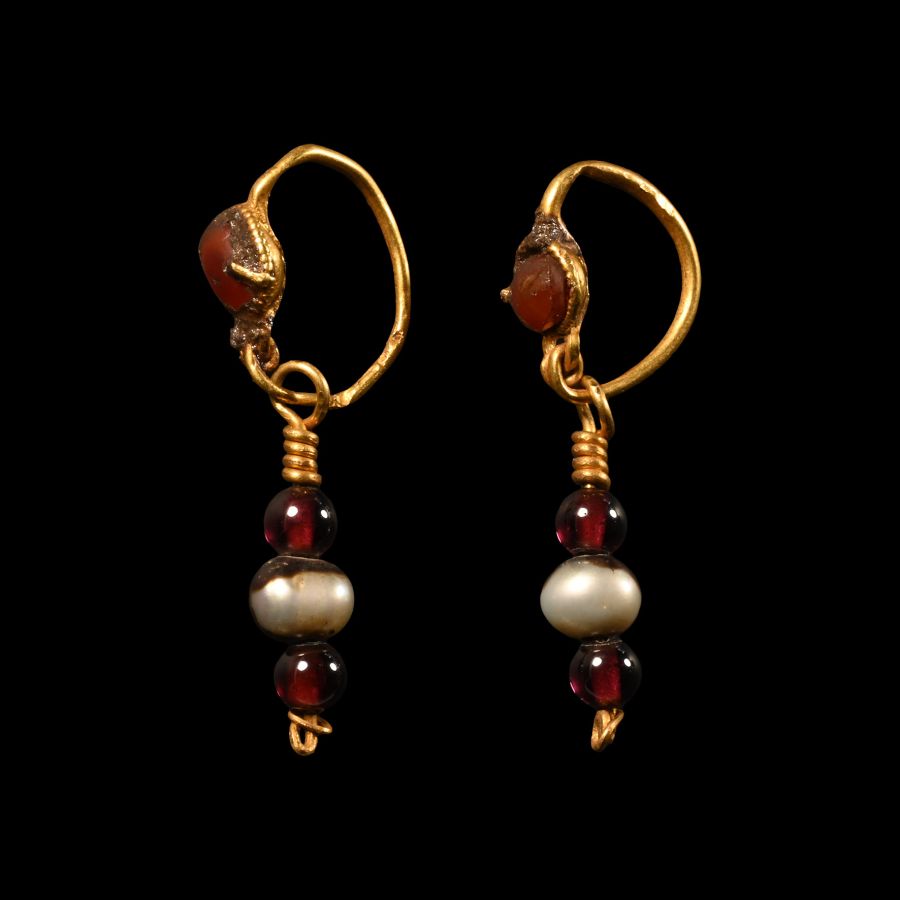
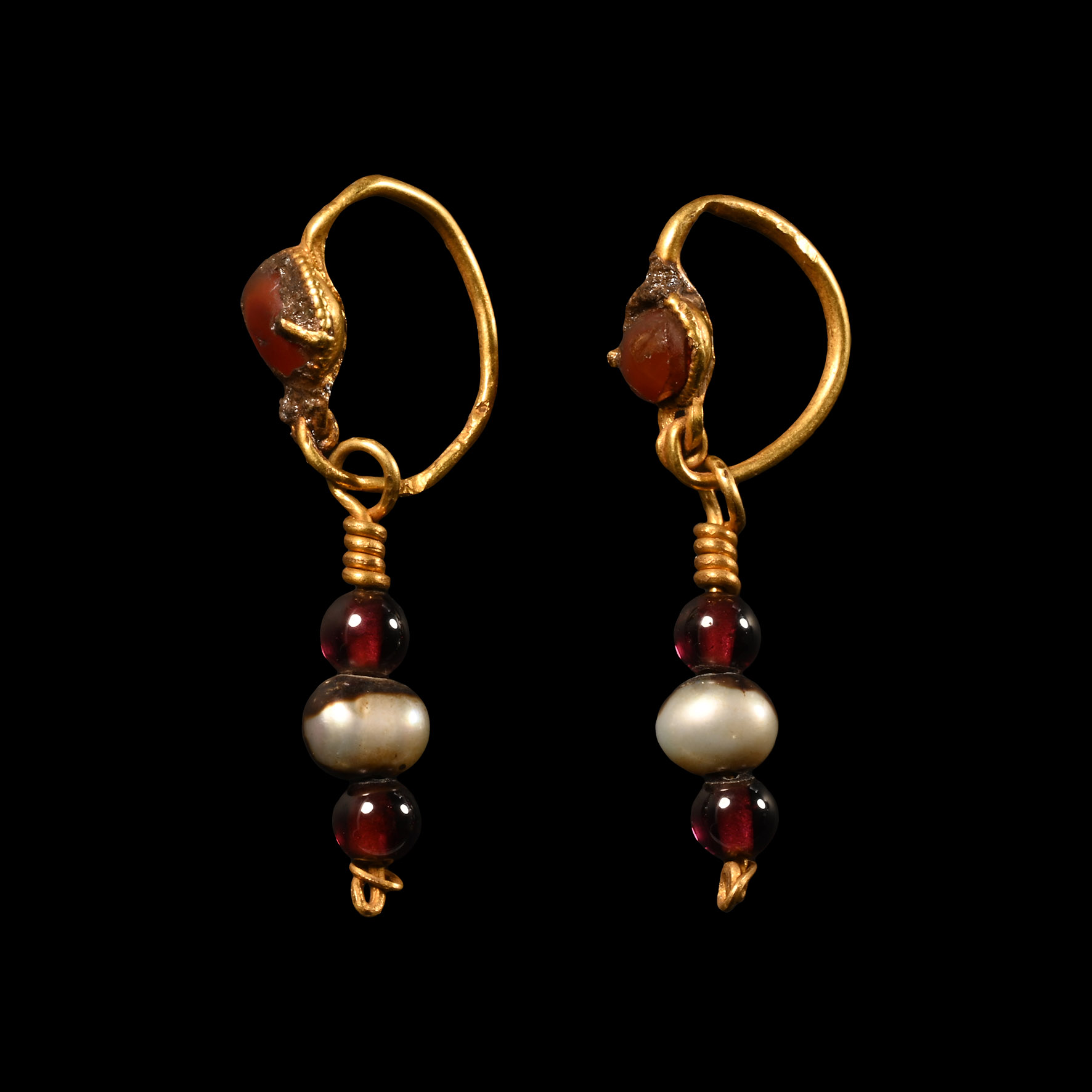
Roman Gold Drop Earrings
CIRCA 2ND-3RD CENTURY A.D.
1 1/8 - 1 1/4 in. (2.51 grams total, 29-32 mm).
Matched pair each with carnelian cabochon on the ring, garnet and pearl seed beads on the dangle. [2]
ProvenanceFrom a late Japanese specialist collector, 1970-2000s.
Accompanied by a previous catalogue identification card.
TimeLine Auctions follows a vetting process to ensure the authenticity and legality of all items, reinforcing our commitment to integrity and responsible trading. Each antiquity, antique, and coin lot undergoes thorough examination by a vetting committee of at least ten external specialists, professional trade association members, scientists, and archaeologists: Our Vetting Process
AUCTIONS:
TimeLine is a leading auction house specialising in antiquities, ancient art, collectables, natural history, coins, medals, and books. Our auctions offer museums, collectors, historians, and enthusiasts the opportunity to acquire unique and historically significant pieces.
LOT 0729
Roman Gold Drop Earrings
Estimate £400 - 600€460 - 700 (for guidance only)$540 - 810 (for guidance only)
-
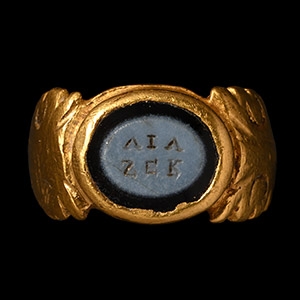
Roman Gold Ring with Gemstone for Servius
Mid 3rd century A.D.Sold for (Inc. bp): £2,340
With balustered hoop, broad shoulders with scrolled foliage detailing, discoid bezel with cell, inset nicolo gemstone with reversed 'SER/VIV' for SER(VI) VIV(AS) inscription in seriffed capitals, meaning 'Long may you live Servius'. 11.63 grams, 20.37 mm overall, 16.48 mm internal diameter (approximate size British J, USA 4 3/4, Europe 8.69, Japan 8)
UK private collection formed before 2000. Ex North London, UK, gallery. Accompanied by an academic report by Dr Raffaele D’Amato. This lot has been checked against the Interpol Database of stolen works of art and is accompanied by a search certificate number no.11995-211017.
'Serviu[s]' is a second declension praenomen (Glare, P.G.W., A Latin Dictionary, London, 1968-82, page 1,746/3) apparently based on the noun 'servus' (servant, minister, office-holder). The name was in use in Consular and Imperial times, and was the patronym of important Roman Gens, like the Gens Servilia. -
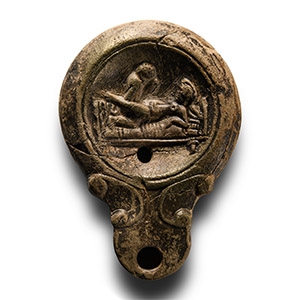
Roman Terracotta Oil Lamp with Erotic Scene
Circa 2nd century A.D.Sold for (Inc. bp): £1,950
Squat burnished pottery lamp with stub nozzle, high-relief scene of two lovers on a couch; maker's mark 'LMVNSVC' to the underside. 64 grams, 95 mm
From the collection of French archaeologist Suzanne Gozlan (1921-2022).
The lamp belongs to the Bailey type B group ii (Loeschke type IV), usually dated from Tiberian to Trajanic times. Erotic lamps were particularly popular before the Christianisation of the Roman Empire. Roman sexuality differed considerably from later Christian European attitudes. Roman religion promoted sexuality as one of the fundamental aspects of prosperity for the entire state; individuals could turn to private religious practice, or even magic, to improve their erotic life or health and reproductive capacity; moreover, prostitution in ancient Rome was legal, public and widespread. Artistic subjects that today we would define without hesitation as pornography, were present among the art collections of the most respectable and high status Roman families. -
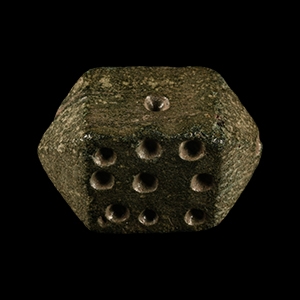
Romano-British 'Published' Bronze Knuckle Bones Gaming Dice
Circa 1st century A.D.Sold for (Inc. bp): £312
Square in section with pyramidal ends, impressed spots disposed on the flat faces: 1, 3, 6, 9. 5.9 grams, 15 mm
Found UK prior to 2000. From the important private collection of dice and gaming pieces of Colin Narbeth, London, UK, collection no.54. Accompanied by a copy of the relevant Celtic & Roman Artefacts book pages where this object is published.
