
Loading, please wait...
LOT 0748
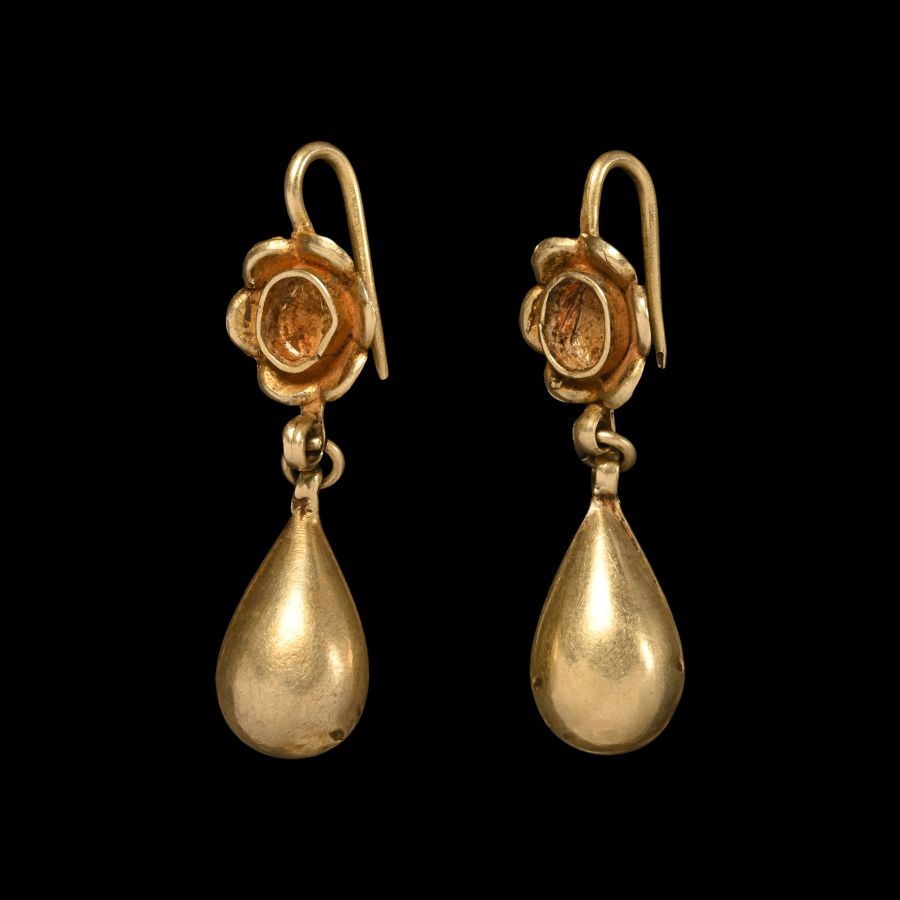
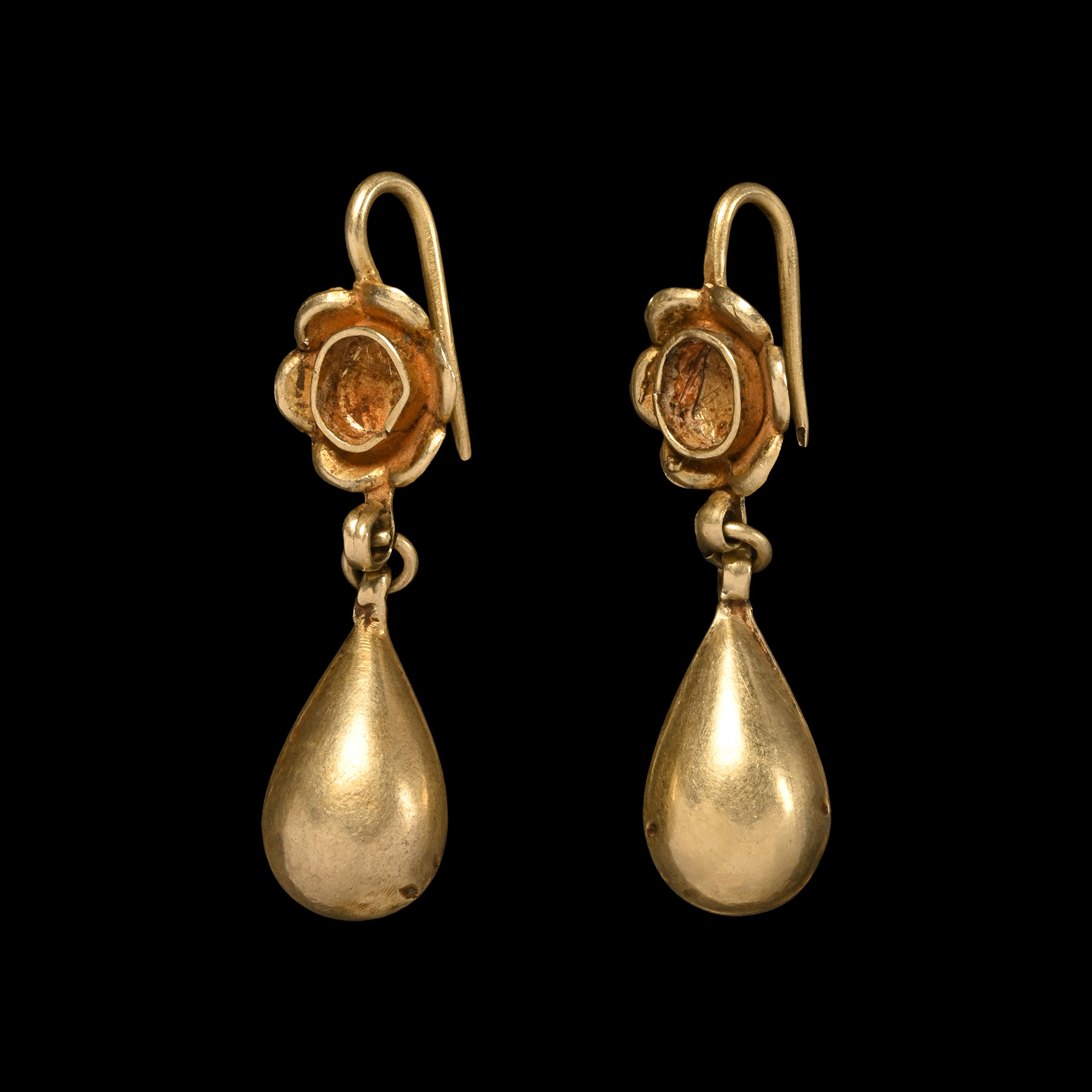
Roman Gold Drop Earring Pair
3RD-4TH CENTURY A.D.
1 3/8 in. (4.17 grams total, 37-38 mm).
Matched pair, each an ellipsoid cell with rosette surround, hook to the reverse, hollow teardrop dangle below. [2]
ProvenanceEx European private collection, 1990s.
Acquired from a London, UK, gallery.
property of an Essex gentleman.
TimeLine Auctions follows a vetting process to ensure the authenticity and legality of all items, reinforcing our commitment to integrity and responsible trading. Each antiquity, antique, and coin lot undergoes thorough examination by a vetting committee of at least ten external specialists, professional trade association members, scientists, and archaeologists: Our Vetting Process
AUCTIONS:
TimeLine is a leading auction house specialising in antiquities, ancient art, collectables, natural history, coins, medals, and books. Our auctions offer museums, collectors, historians, and enthusiasts the opportunity to acquire unique and historically significant pieces.
-
Late Roman Bronze Twisted Snake Bracelet Pair
4th-6th century A.D.Sold for (Inc. bp): £182
Matched pair each formed from two twisted rods, with snake-head detailing to the finials. 123 grams total, 71-74 mm
From the private collection of a London gentleman, from his grandfather's collection formed before the early 1970s. -
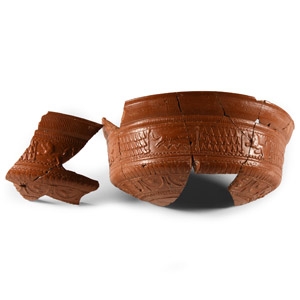
Romano-British Samian Ware Bowl Fragments
1st century A.D.Sold for (Inc. bp): £312
Burnished redware bowl fragments, partly re-assembled, with carinated profile, everted rim, moulded frieze to the shoulder of leaping beasts and ivy leaves, swags to the underside with birds and other detailing. 390 grams total, 12.3-22.5 cm
Found UK. From the collection of a late East Anglian teacher and antiquarian who retired to the Isle of Wight in Hampshire, UK. He amassed a large collection of objects between the 1960s-1980s. -
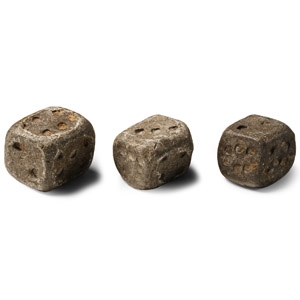
Large Roman Lead Gaming Dice Group
1st-4th century A.D.Sold for (Inc. bp): £130
Cuboid and rectangular types with impressed point markings irregularly disposed 1:4, 3:6, 3:5; 1:2, 3:5, 4:6; 2:2, 5:5, 3:6. 79 grams total, 14-17 mm
From the important private collection of dice and gaming pieces of Colin Narbeth, London, UK, collection no.27.
