
Loading, please wait...
LOT 0821
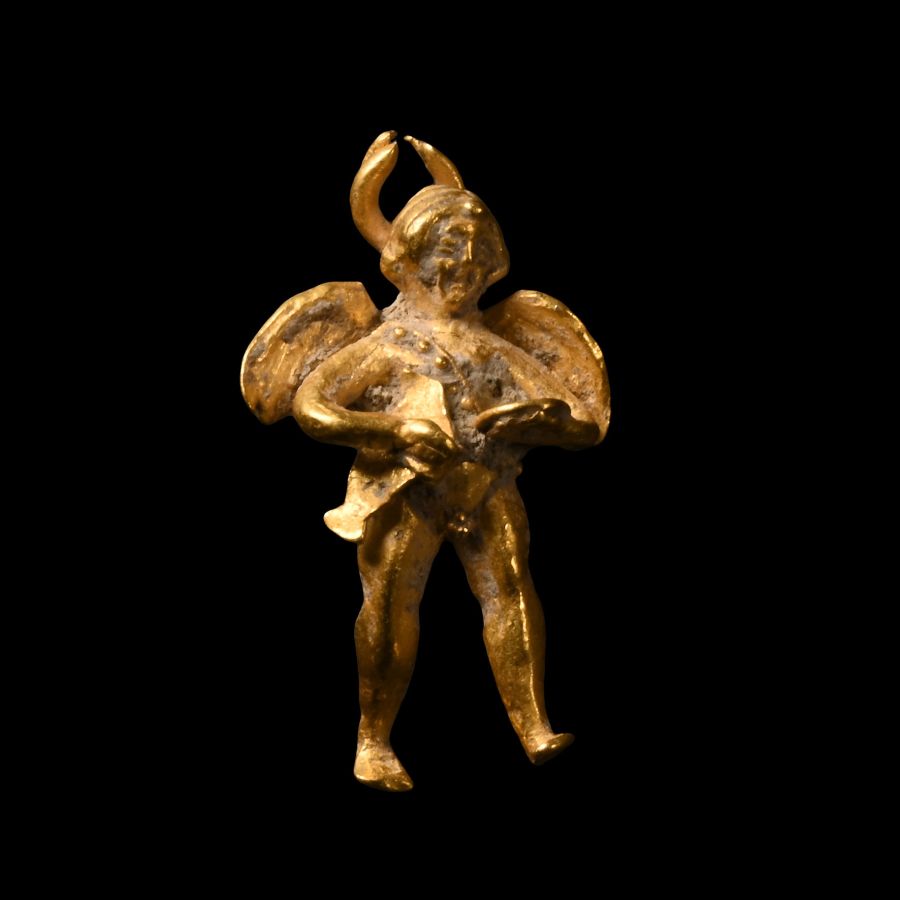
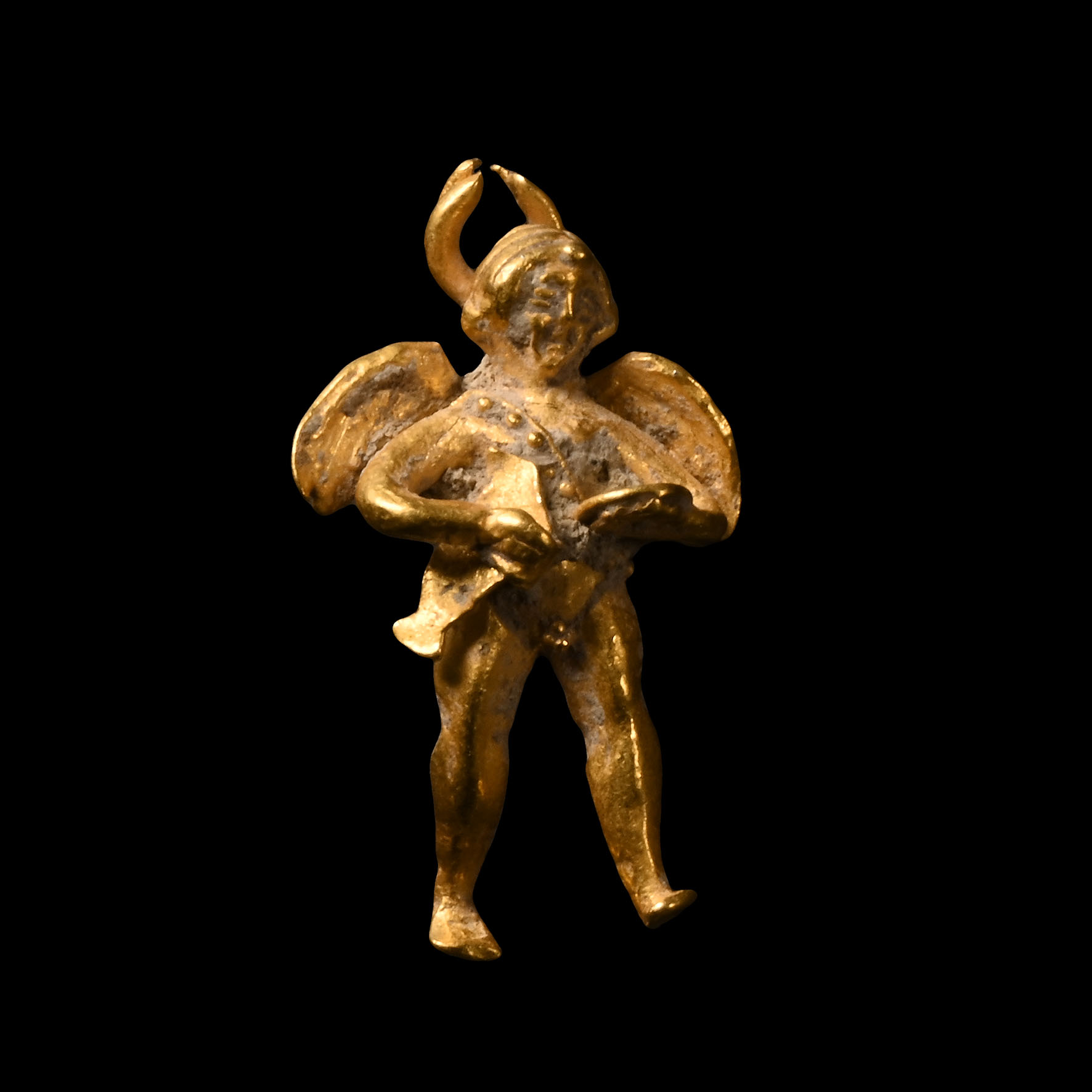
Roman Gold Cupid Pendant
CIRCA 1ST-4TH CENTURY A.D.
3/4 in. (2.44 grams, 18 mm).
Standing nude and holding a patera and lyre, wings spread to the rear, suspension loop to rear of head.
ProvenanceFrom the collection of a gentleman, acquired on the London art market in the 1990s.
CONDITIONTimeLine Auctions follows a vetting process to ensure the authenticity and legality of all items, reinforcing our commitment to integrity and responsible trading. Each antiquity, antique, and coin lot undergoes thorough examination by a vetting committee of at least ten external specialists, professional trade association members, scientists, and archaeologists: Our Vetting Process
AUCTIONS:
TimeLine is a leading auction house specialising in antiquities, ancient art, collectables, natural history, coins, medals, and books. Our auctions offer museums, collectors, historians, and enthusiasts the opportunity to acquire unique and historically significant pieces.
-
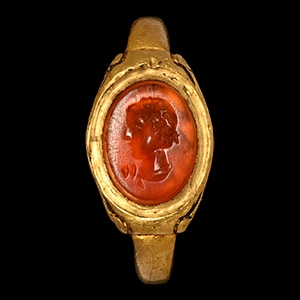
Roman Gold Ring with Portrait Gemstone
2nd-3rd century A.D. and laterEstimate: £2,500 - 3,500 (+bp*)
Opening Bid: £1,250
With ellipsoid plaque, stepped cell with inset later carnelian gemstone, intaglio female profile bust; supplied with a museum-quality impression. 6.51 grams, 24.31 mm overall, 20.37 mm internal diameter (approximate size British M, USA 6, Europe 12.46, Japan 12)
From the collection of a London, UK, gentleman, 1980-1990s. This lot has been checked against the Interpol Database of stolen works of art and is accompanied by a search certificate number no.12106-217761. -
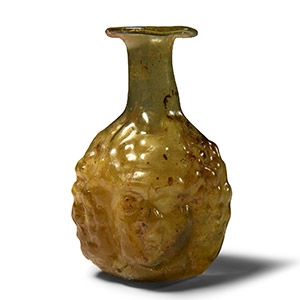
Roman Golden Glass Janus Head Flask
Circa 1st-2nd century A.D.Estimate: £800 - 1,000 (+bp*)
Opening Bid: £400
Formed as two addorsed heads with a short cylindrical neck and flaring mouth; both heads with abundant hair framing the face. 22 grams, 77 mm
Ex property of a late Japanese collector, 1970-2000s. -
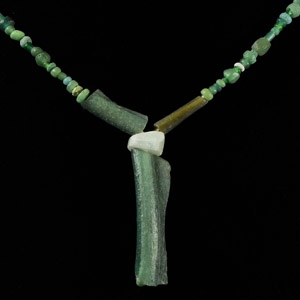
Roman and Other Bead Necklace
1st-4th century A.D. and laterSold for (Inc. bp): £59
Restrung designer necklace with fusiform and graduated seed beads, the centrepiece a hollow-formed rim fragment. 12.3 grams, 31.5 cm
Acquired on the London, UK, art market in the 1990s. Ex London, UK, gallery.
