
Loading, please wait...
_900x900.jpg "Roman Gold Child's Ring")
_200x200.jpg "Roman Gold Child's Ring")
.jpg "Roman Gold Child's Ring")
LOT 1042
Roman Gold Child's Ring
3RD CENTURY A.D.
1/2 in. (1.06 grams, 13.02 mm overall, 11.30 mm internal diameter).
With broad hoop, incised lines to shoulders, plaque with cell. [No Reserve]
ProvenanceAcquired from Brigantia Antiques, York, UK, in the early 1990s.
Ian Wilkinson collection, Nottinghamshire, UK, formed since 1985.
Cf. Ruseva-Slokoska, L., Roman Jewellery, Sofia, 1991, item 218, for type.
CONDITIONTimeLine Auctions follows a vetting process to ensure the authenticity and legality of all items, reinforcing our commitment to integrity and responsible trading. Each antiquity, antique, and coin lot undergoes thorough examination by a vetting committee of at least ten external specialists, professional trade association members, scientists, and archaeologists: Our Vetting Process
AUCTIONS:
TimeLine is a leading auction house specialising in antiquities, ancient art, collectables, natural history, coins, medals, and books. Our auctions offer museums, collectors, historians, and enthusiasts the opportunity to acquire unique and historically significant pieces.
-
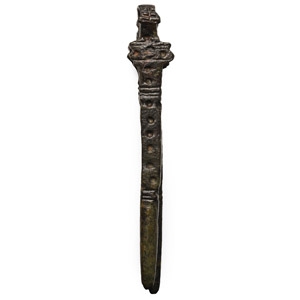
Late Roman Bronze Tweezers
4th-6th century A.D.Sold for (Inc. bp): £46
Formed as two narrow D-section arms with transverse ribbing and impressed point ornament. 4.35 grams, 59 mm
From a private Tyneside collection, formed since the early 2000s. -
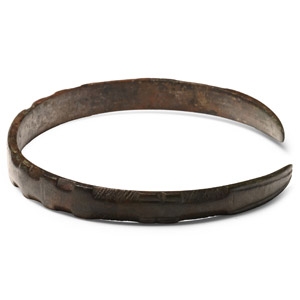
Late Roman Bronze Bracelet
4th-6th century A.D.Sold for (Inc. bp): £78
Penannular rectangular-section body with notched edges and tapering finials. 20.3 grams, 63 mm
Ex German art market, 2000s. Acquired from an EU collector living in London. From the collection of a Surrey, UK, gentleman. -
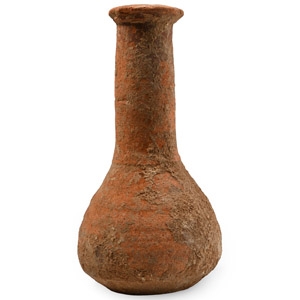
Roman Terracotta Unguentarium Bottle
1st-4th century A.D.Sold for (Inc. bp): £78
Comprising a bulbous body and tall tubular neck with everted rim. 180 grams, 13.3 cm
From the collection of Mr W.A. Stewart, Director of School of Arts and Crafts, Cairo, 1919-1929. Acquired Christie's, London, Antiquities, Works of Art and Important Renaissance Bronzes, Plaquettes and Limoges Enamels, 8 July 1981, no.126 (part). From a private Wiltshire, UK, collection. Accompanied by a copy of the relevant Christie's catalogue page.
