
Loading, please wait...
LOT 0113
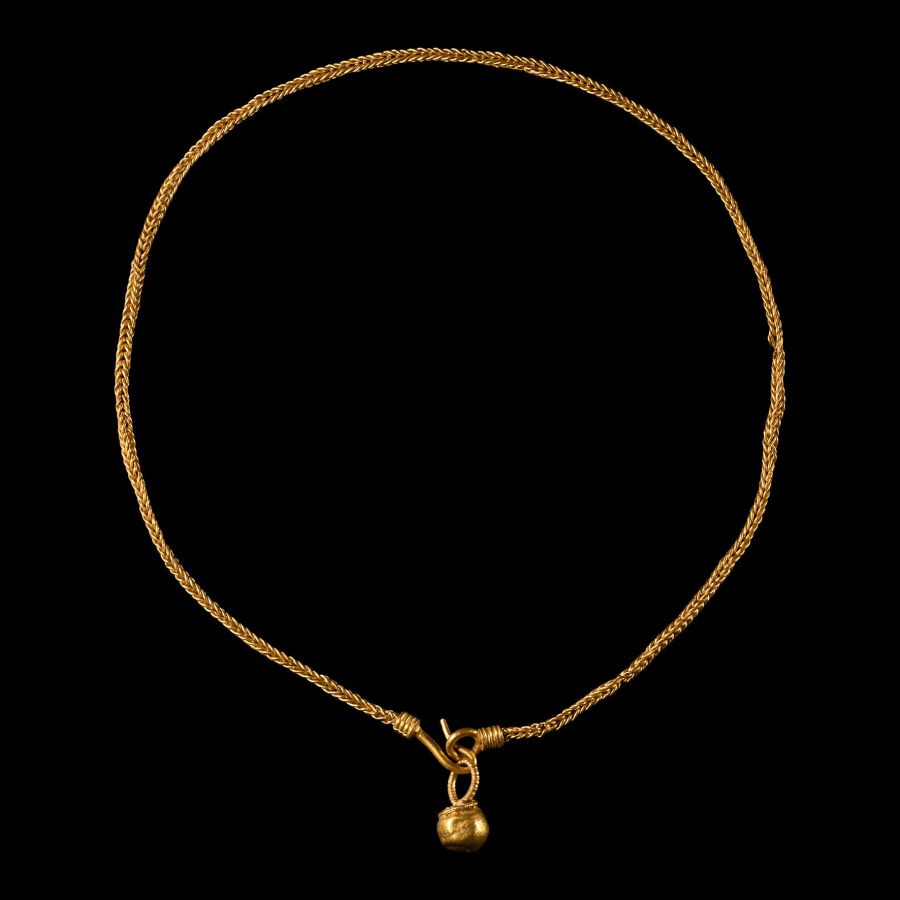
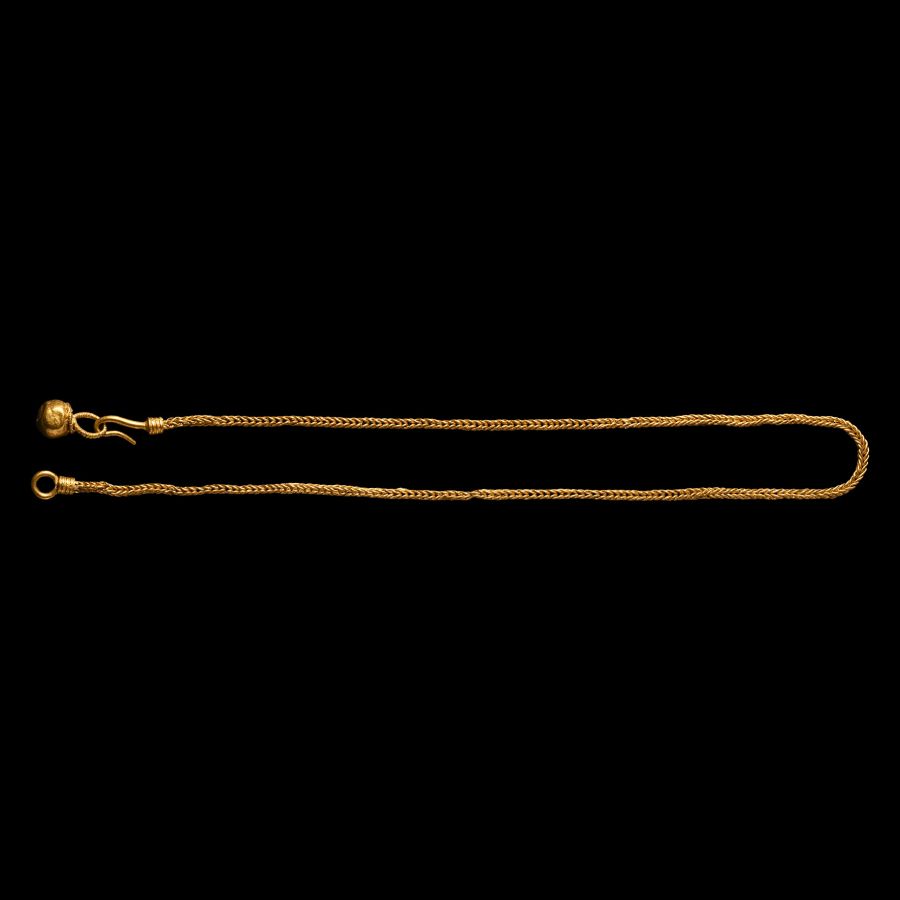
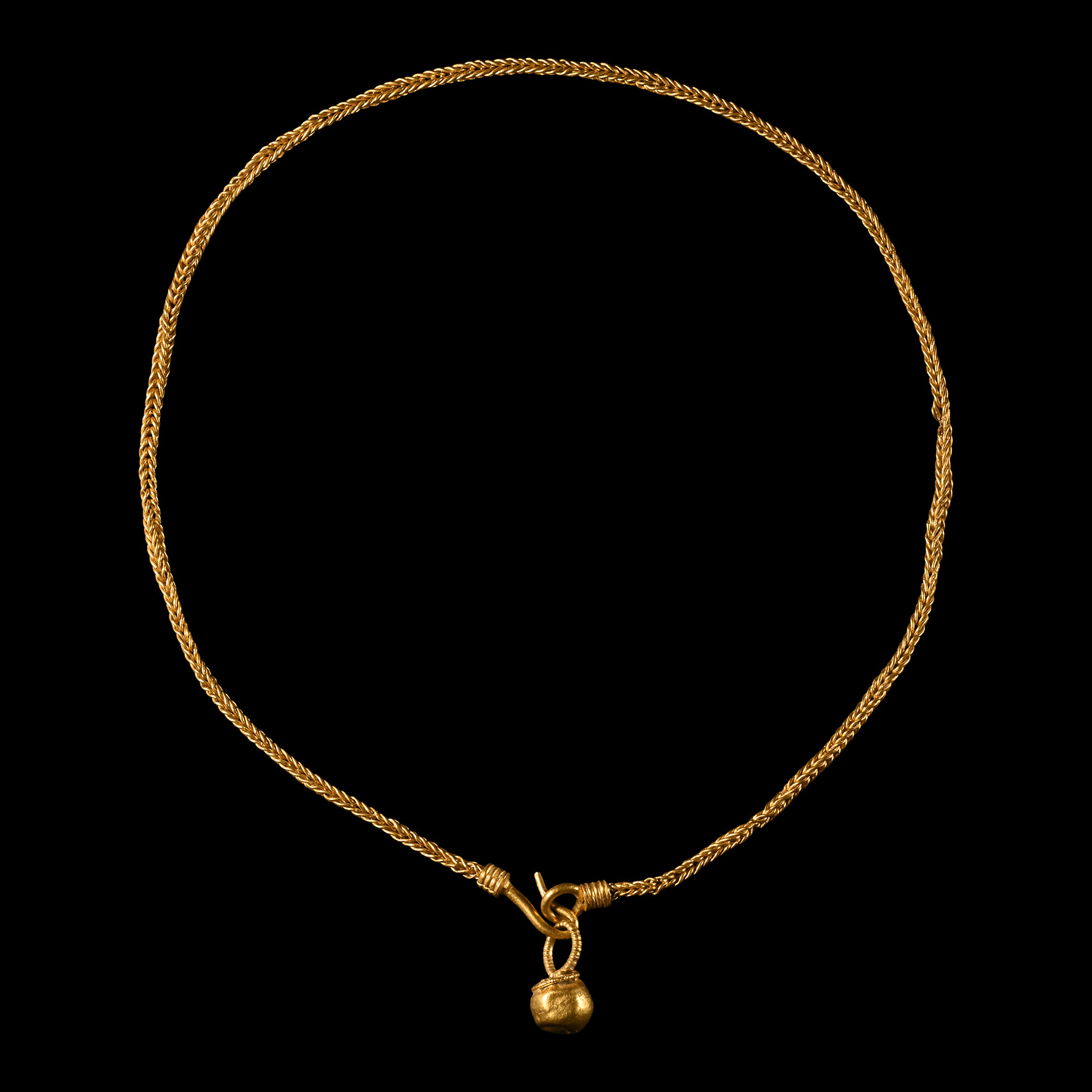
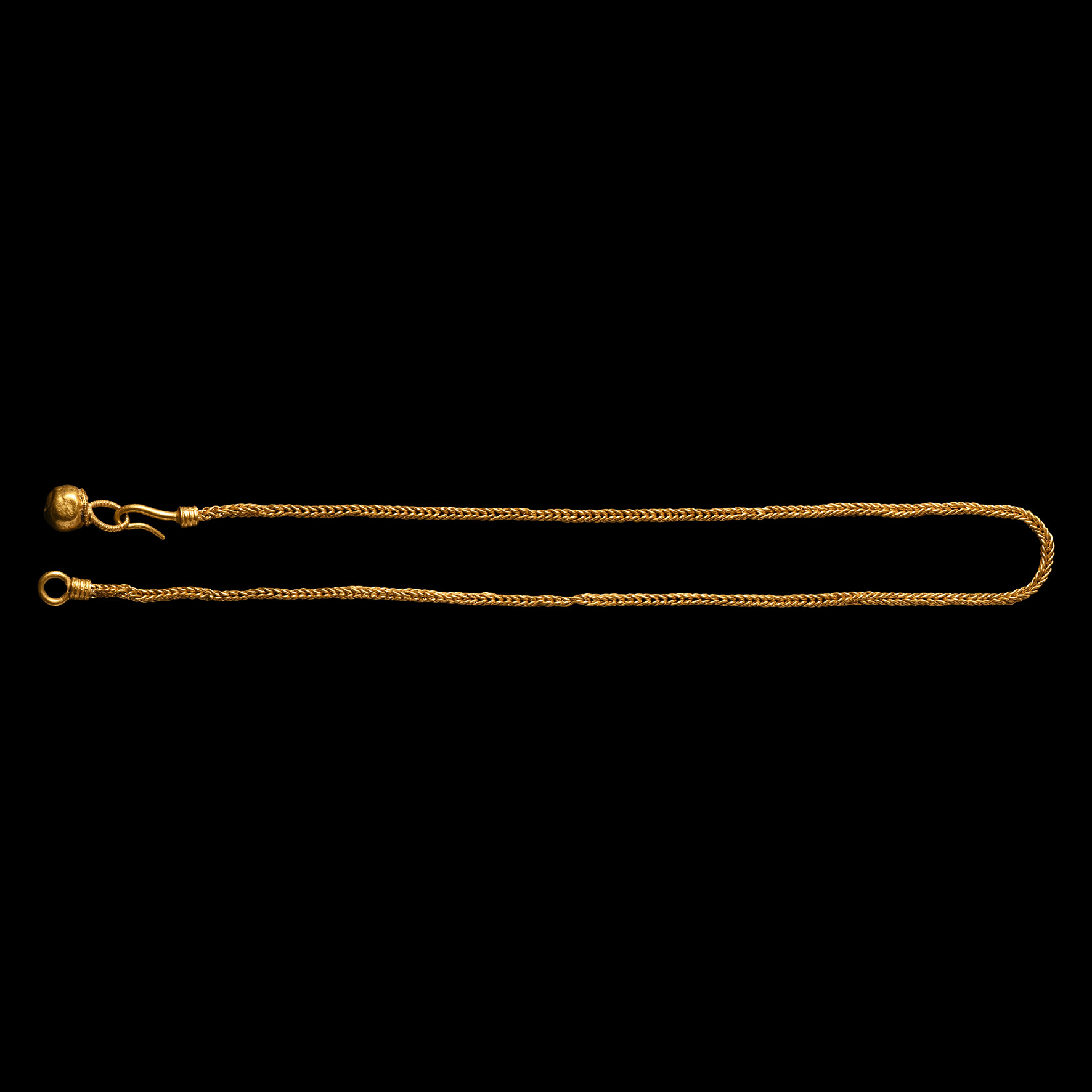
Roman Gold Chain with Ball Pendant
5TH CENTURY A.D.
14 3/8 in. (15.02 grams, 36.5 cm long).
Trichinopoly chain with hook-and-eye closure, ball pendant with beaded wire collar.
ProvenanceFrom the collection of a Cambridgeshire lady, UK, 1990s.
LiteratureCf. Spier, J., Byzantium and the West: Jewelry in the First Millennium, London, 2012, fig.14a.2, for identical chain with cross pendant.
FootnotesThe chain is composed of links in the form of pairs of broad, ribbed bands soldered together at a right angle. It is of fine loop-in-loop construction, terminating on one side in a ribbed cap with loops. The chain of ribbed loops placed at right angles is one of several popular varieties introduced in the late Roman period. The ball pendant was very common in Graeco-Roman times, substituted by Christian symbols during the late empire.
CONDITIONTimeLine Auctions follows a vetting process to ensure the authenticity and legality of all items, reinforcing our commitment to integrity and responsible trading. Each antiquity, antique, and coin lot undergoes thorough examination by a vetting committee of at least ten external specialists, professional trade association members, scientists, and archaeologists: Our Vetting Process
AUCTIONS:
TimeLine is a leading auction house specialising in antiquities, ancient art, collectables, natural history, coins, medals, and books. Our auctions offer museums, collectors, historians, and enthusiasts the opportunity to acquire unique and historically significant pieces.
-
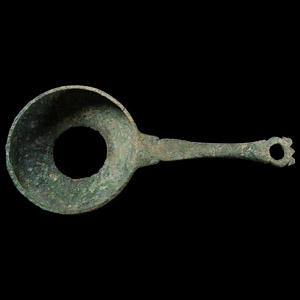
Graeco-Roman Bronze Patera with Duck-Head Handle
3rd century B.C.-3rd century A.D.Estimate: £300 - 400 (‡+bp*)
Opening Bid: £150
The bowl with a convex outer face and notched lip, decoratively waisted handle with addorsed duck heads to the apex of the suspension loop; base of bowl absent. 314 grams, 30 cm
Acquired in Europe before 1995. -
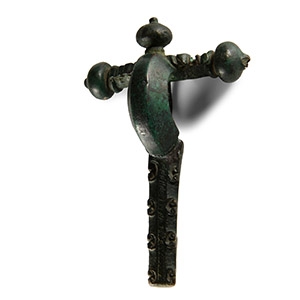
Very Large Roman Bronze Crossbow Brooch
4th century A.D.Sold for (Inc. bp): £169
With plain bow of trapezoidal section, the foot embellished with four pairs of scroll ornaments, complete with pin. 120 grams, 11 cm
with TimeLine Auctions, 19 March 2010, no.546. Acquired from JS Fine Art, item no.3345. Property of a Shropshire private collector. Accompanied by TimeLine Auctions and JS Fine Art lot tags. -
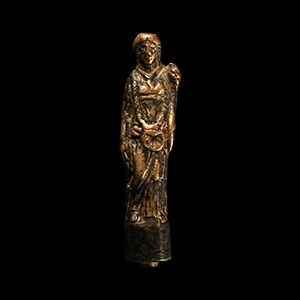
Romano-British Bronze Figural Knife Handle
2nd century A.D.Sold for (Inc. bp): £130
Standing female modelled in the round wearing a floor-length robe and a draped mantle; with scallop-shaped purse on a shoulder-strap, holding a cornucopia in the left hand; handle or finial with round block and peg beneath. 28.5 grams, 55 mm
Reportedly found in the Thames in the 1920s. Accompanied by a previous CNG catalogue information ticket.
