
Loading, please wait...
LOT 0095
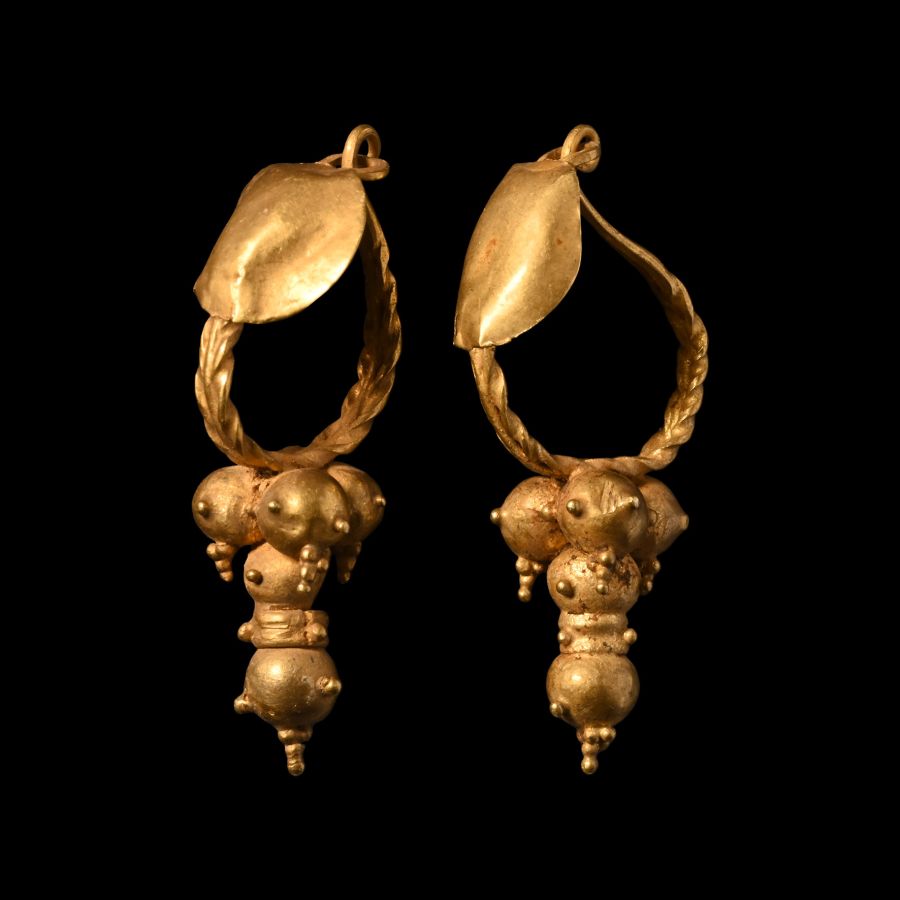
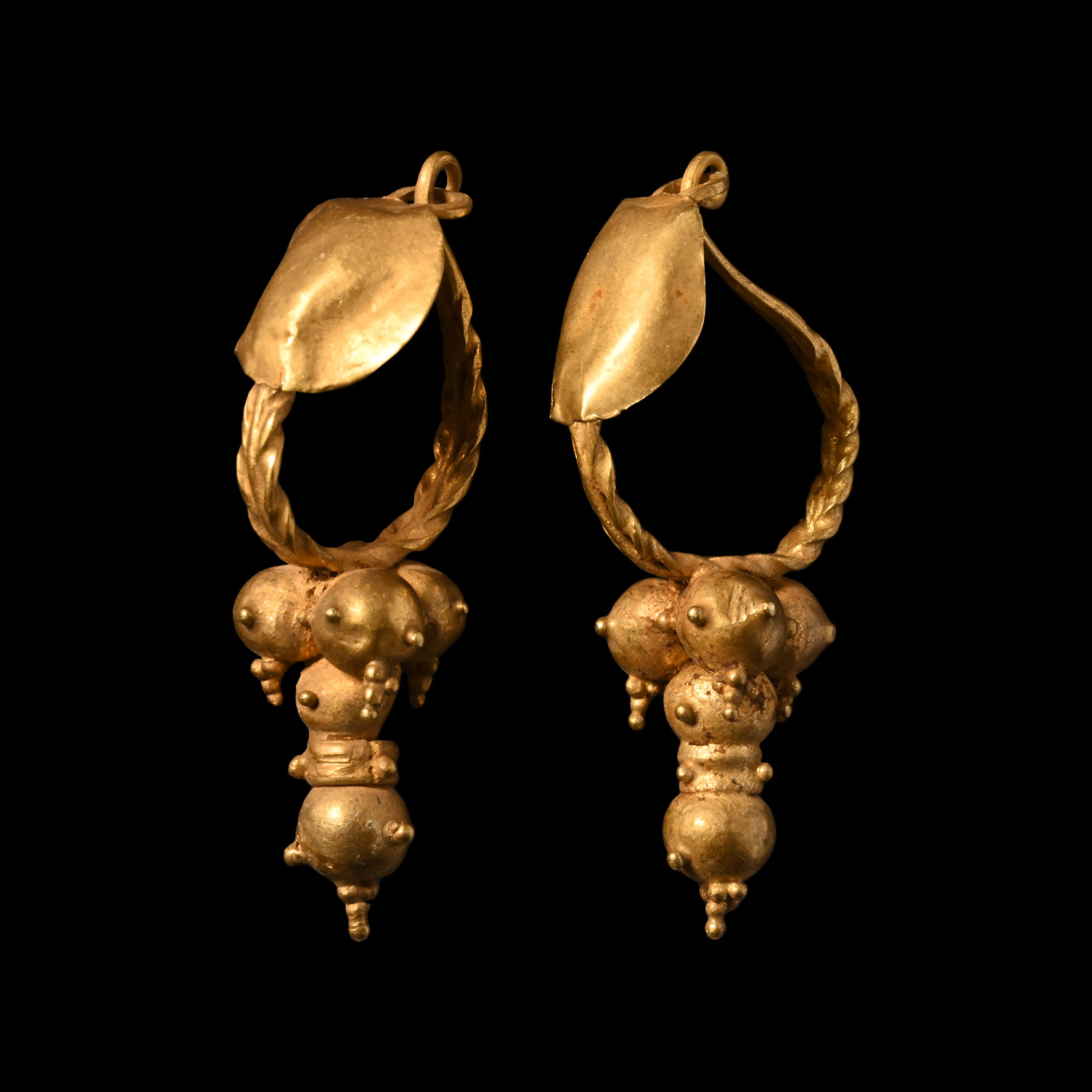
Roman Gold Boss Earrings
2ND-3RD CENTURY A.D.
1 1/4 in. (3.84 grams total, 33 mm each).
Each composed of a central slender hoop flanked by a single strand of decoratively twisted filigree wire, domed plaque to upper body, granulated bulbs below. [2]
ProvenanceFrom the private collection of the late Mr S.M., London, UK, thence by descent.
LiteratureCf. The British Museum, museum numbers 1981,0905.16 and 1981,0905.15, for comparable examples; cf. The Metropolitan Museum, accession numbers 74.51.3257 and 74.51.3746, for comparable.
CONDITIONTimeLine Auctions follows a vetting process to ensure the authenticity and legality of all items, reinforcing our commitment to integrity and responsible trading. Each antiquity, antique, and coin lot undergoes thorough examination by a vetting committee of at least ten external specialists, professional trade association members, scientists, and archaeologists: Our Vetting Process
AUCTIONS:
TimeLine is a leading auction house specialising in antiquities, ancient art, collectables, natural history, coins, medals, and books. Our auctions offer museums, collectors, historians, and enthusiasts the opportunity to acquire unique and historically significant pieces.
-
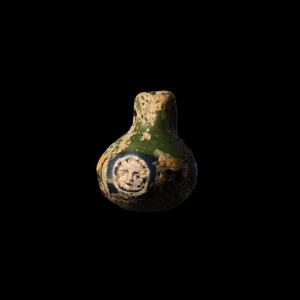
Roman Glass Face Bead
Eastern Mediterranean, 1st century B.C.-1st century A.D.Sold for (Inc. bp): £390
With integral suspension lug, decorated with millefiori face cane slices and geometric motifs. 2.29 grams, 16 mm
Fine condition.
Acquired 1970-2010. Collection of a late Japanese gentleman. -
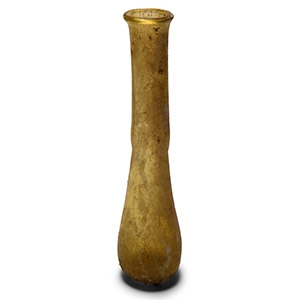
Roman Pale Green Glass Unguentarium
1st-2nd century A.D.Sold for (Inc. bp): £91
The lower body of piriform shape, cylindrical neck and everted rim; iridescent surfaces. 27.2 grams, 12.5 cm high
Acquired 1969-1999. From the private collection of the late Mr S.M., London, UK, thence by descent. -
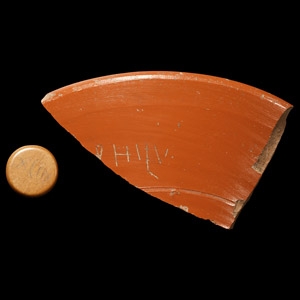
Roman 'Thames' Bone Gaming Piece and Pottery with Graffiti
1st-4th century A.D.Sold for (Inc. bp): £208
Comprising: a Samian ware fragment bearing graffiti to one face; a polished, coin-shaped bone gaming counter engraved 'XIIIX'. 38 grams total, 1.7-9 cm
Found Billingsgate spoil from the Thames foreshore, London, UK.
